• STREET ART ARGENTEUIL / Lumieres, a Striking Cyberpunk Mural by Alex Kanos

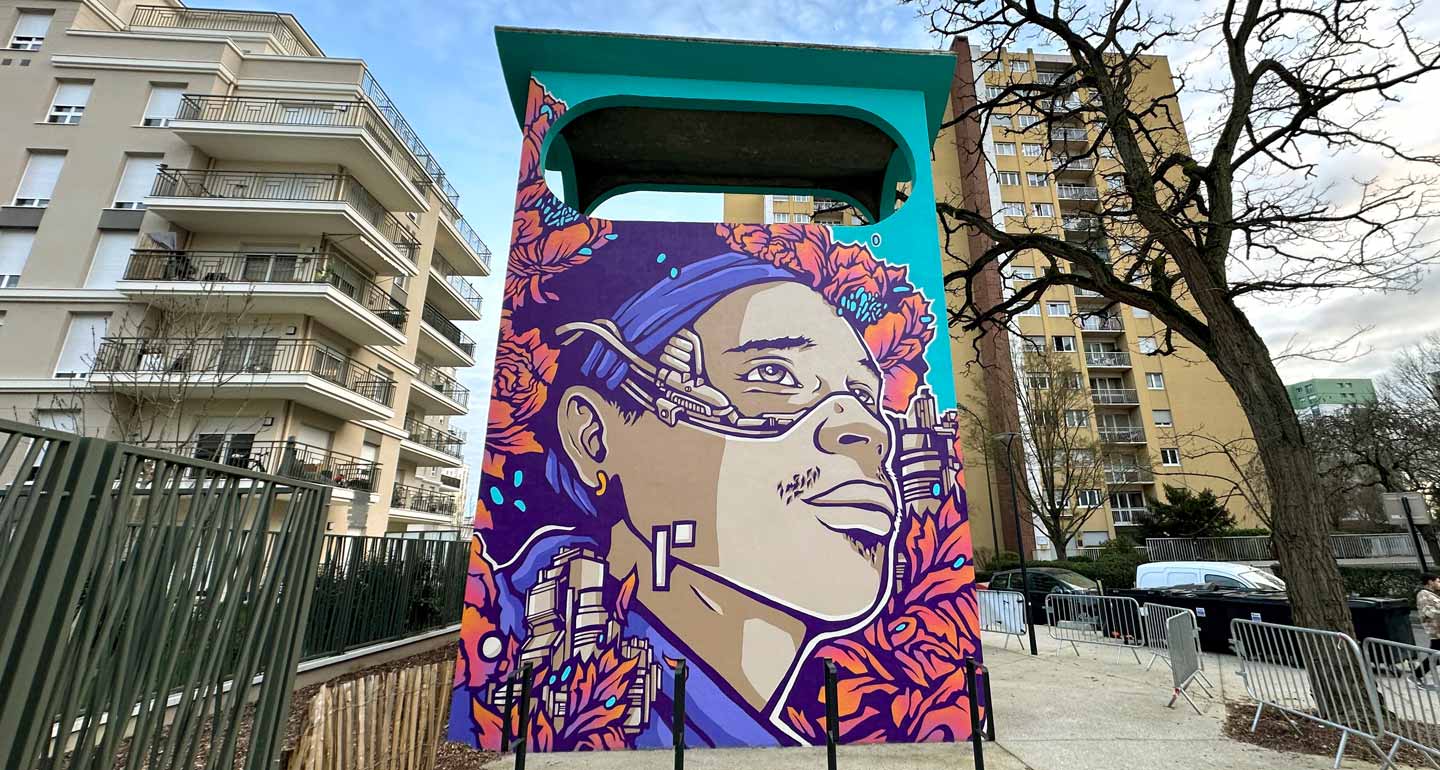
    Cyberpunk male portrait painted for the Lumières mural in Argenteuil
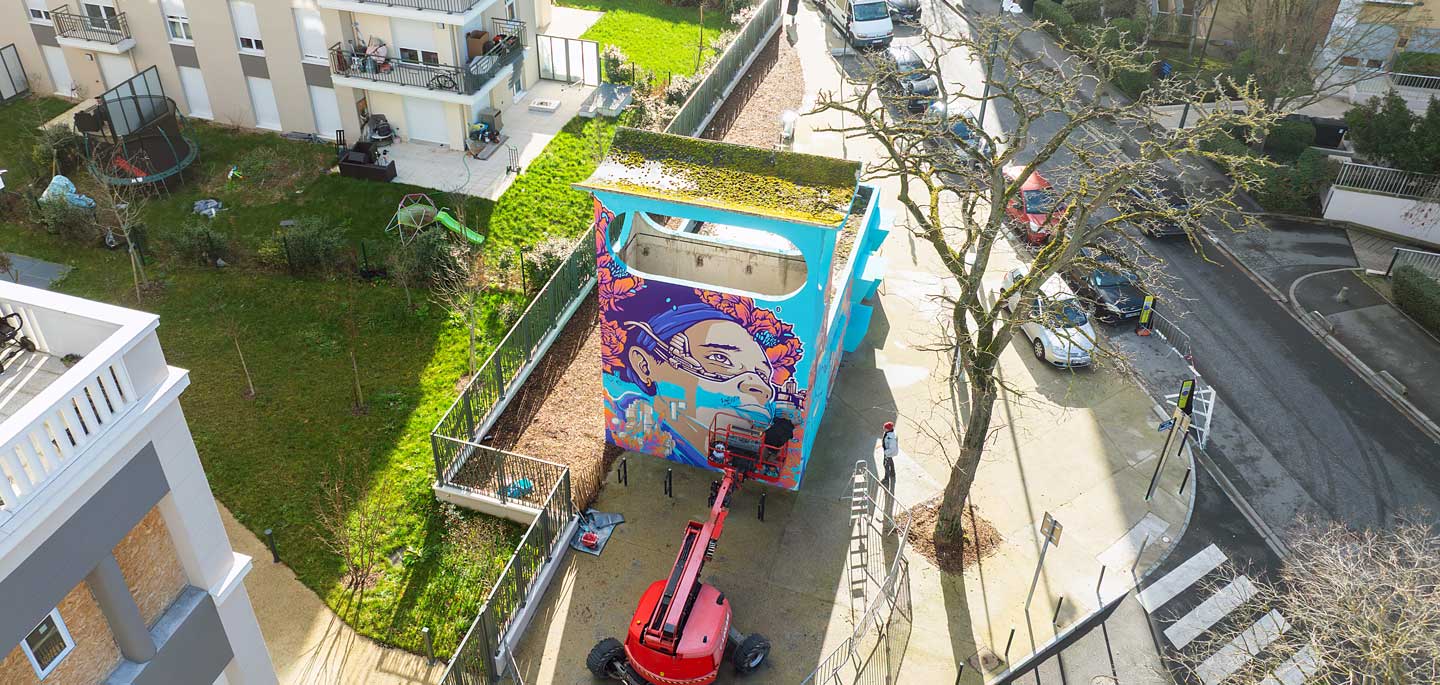
    Aerial perspective of the Lumières street art mural during production
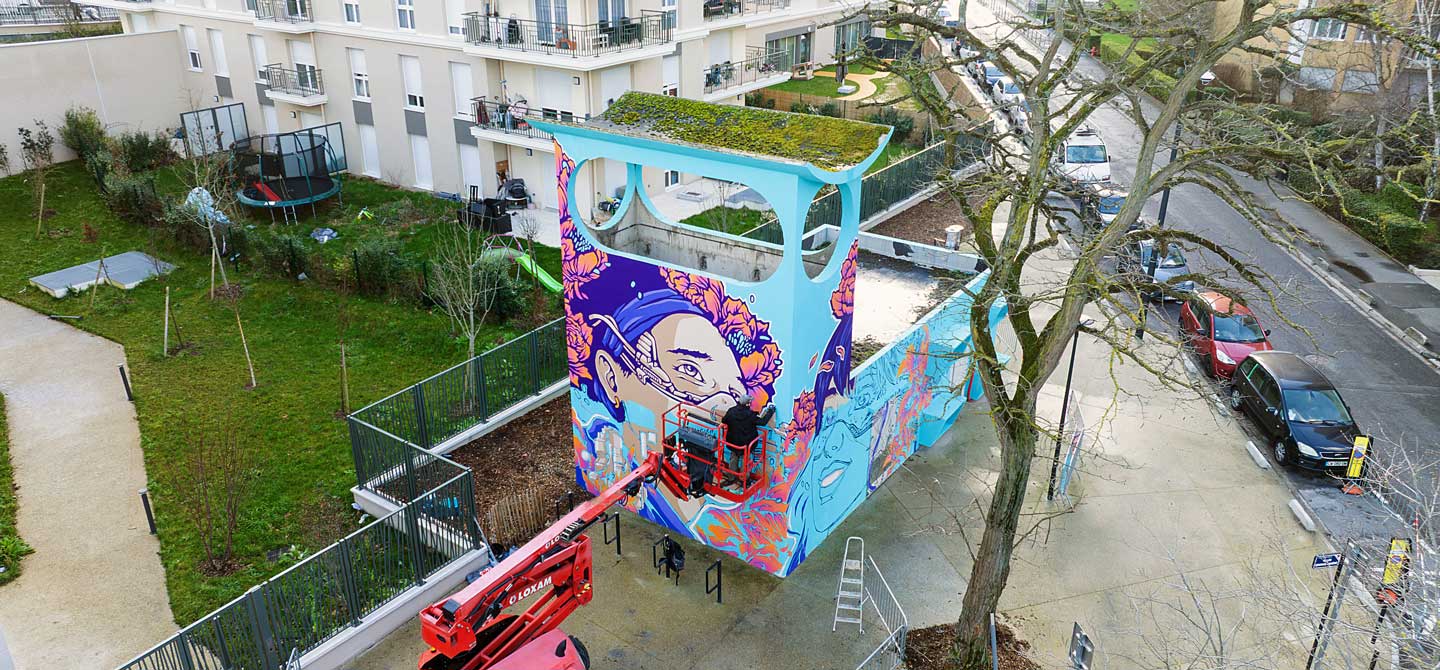
    Large-scale public mural being painted in Argenteuil seen from above
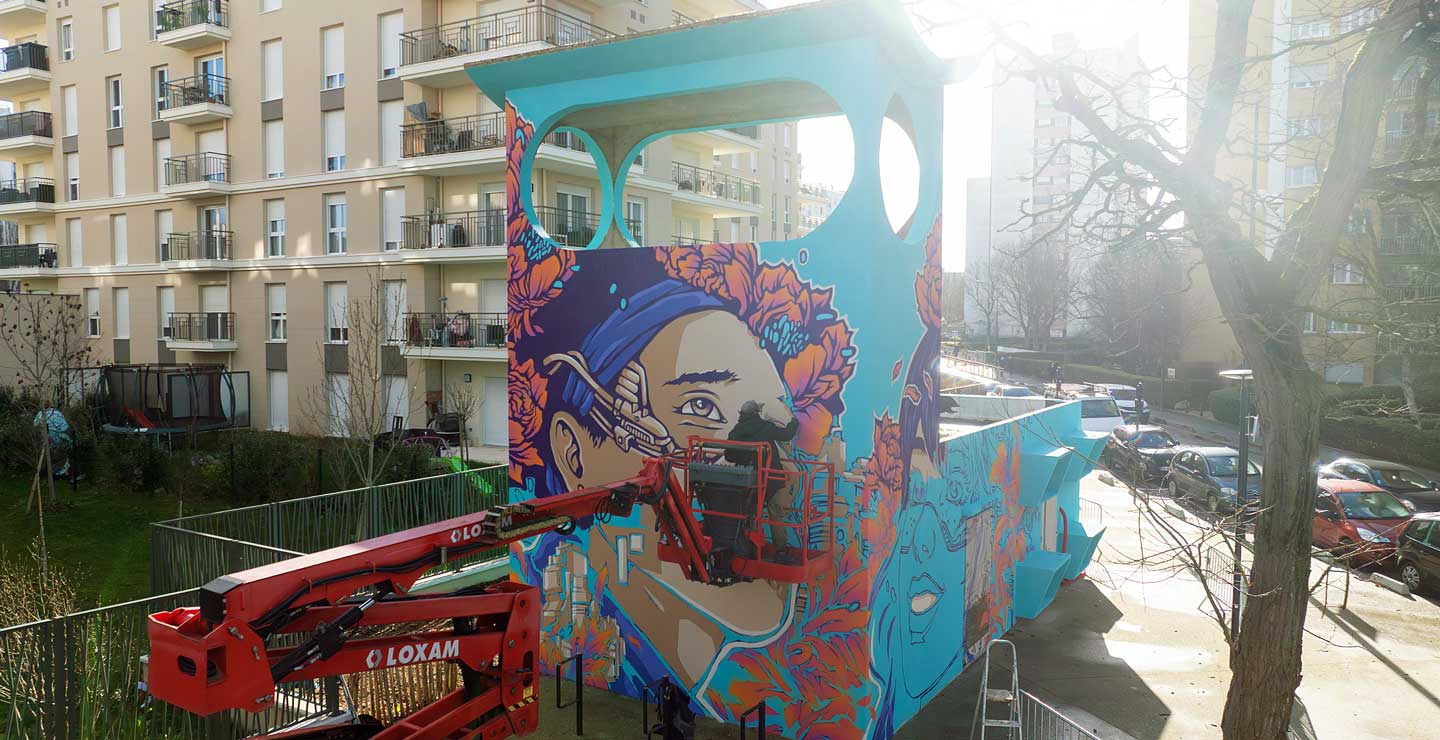
    Drone view of the Lumières mural in progress in Argenteuil by Alex Kanos
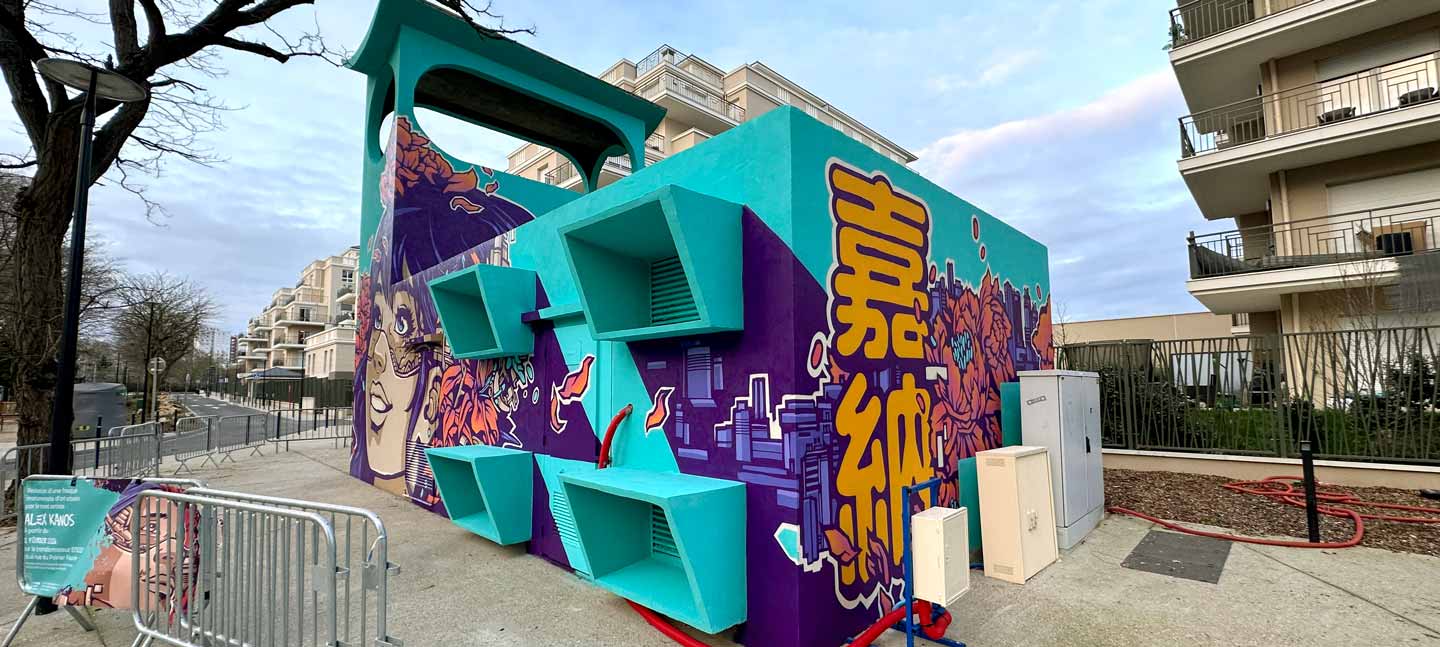
    Kanji 嘉納 integrated into the Lumières mural in Argenteuil
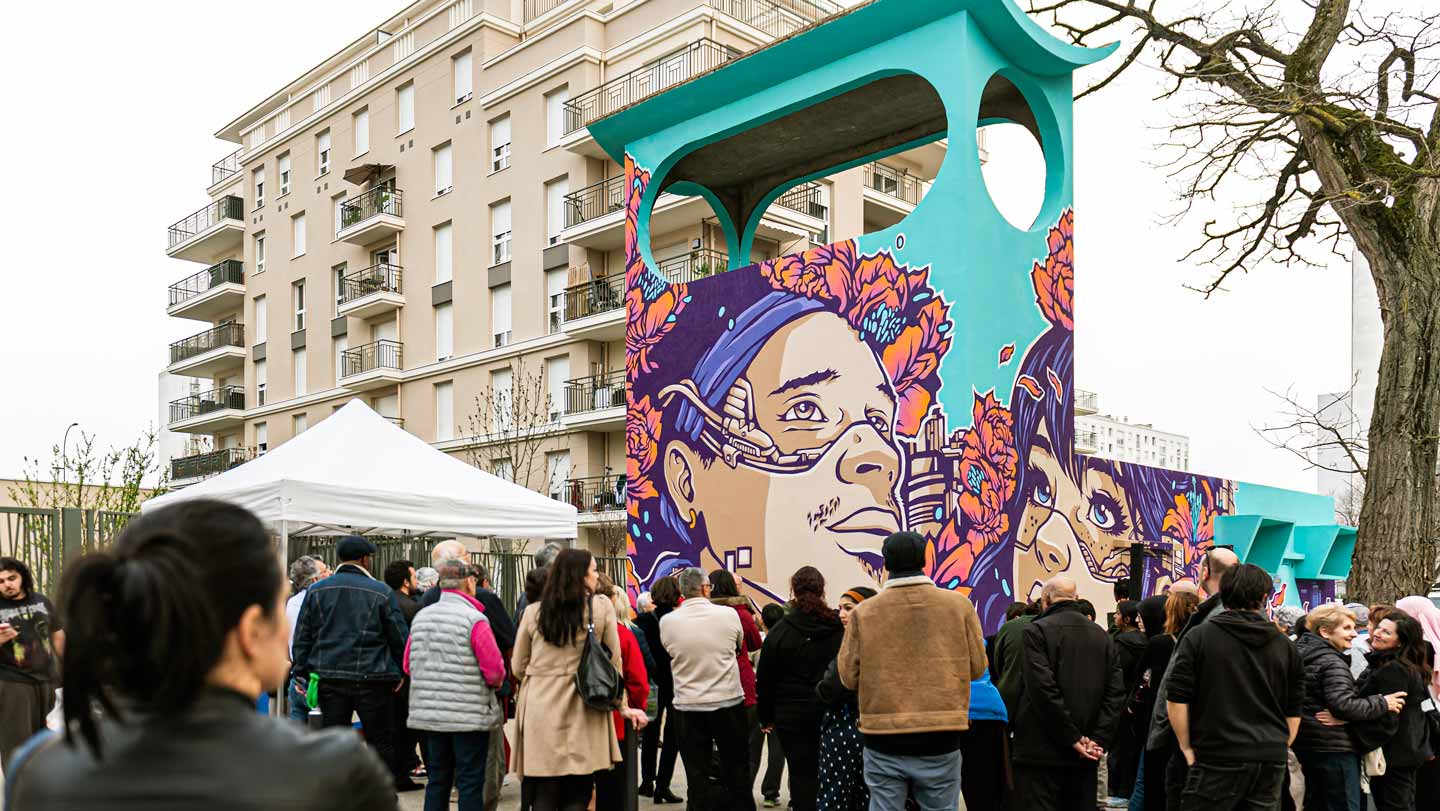
    Visitors gathering around the Lumières mural during the public inauguration
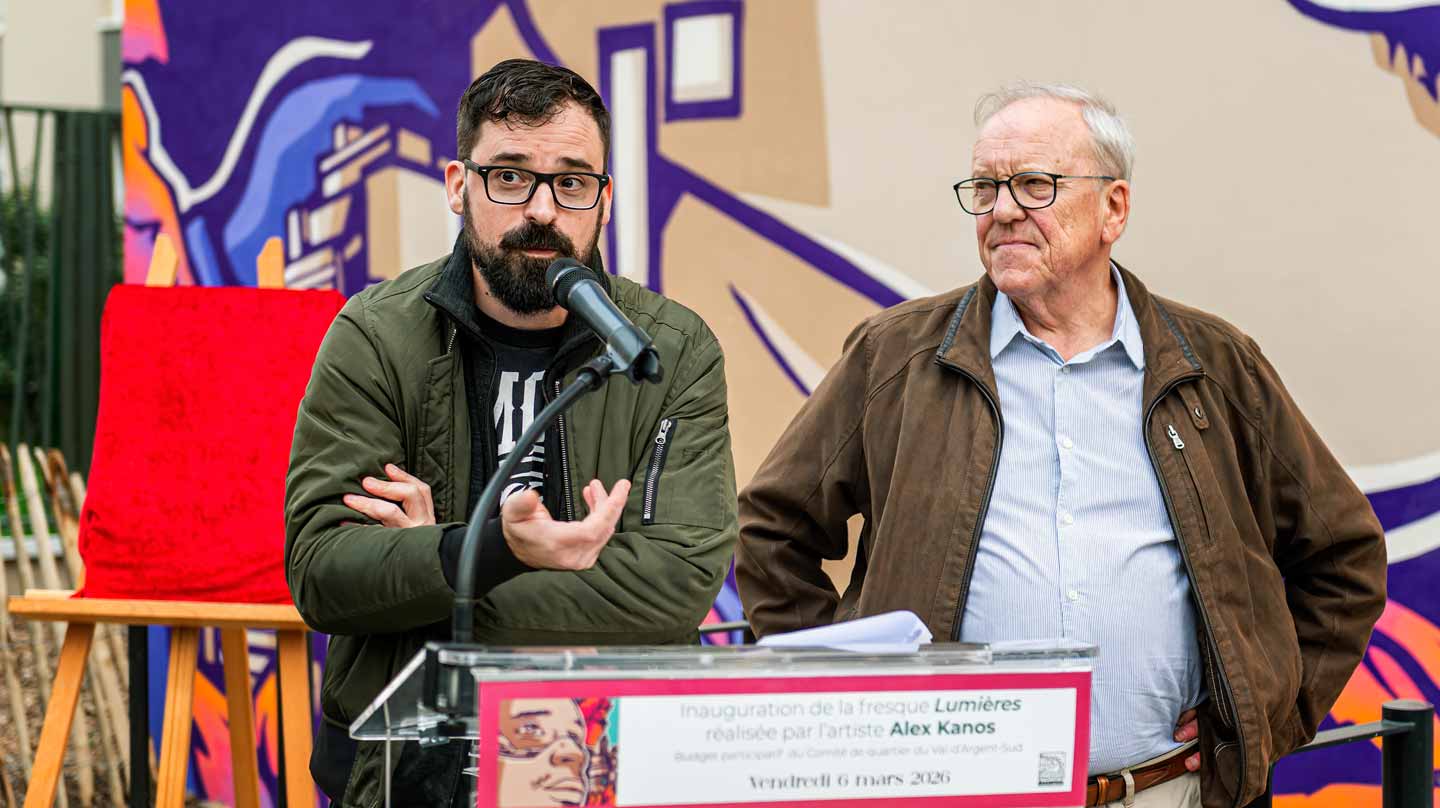
    Mayor Georges Mothron speaking during the inauguration of the Lumières mural in Argenteuil
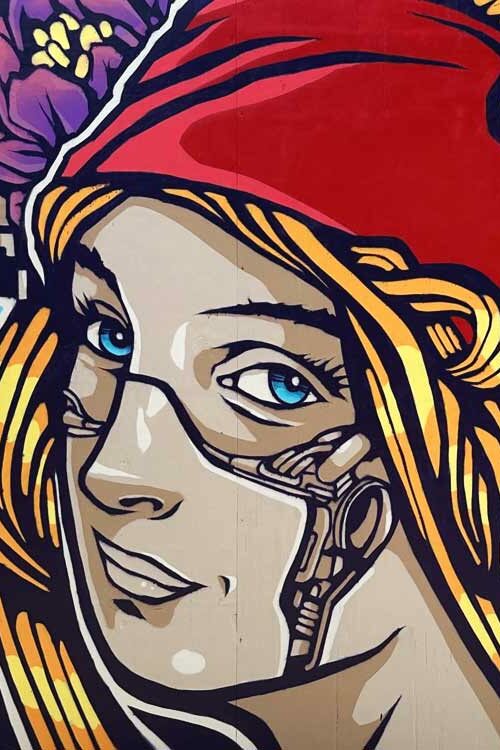
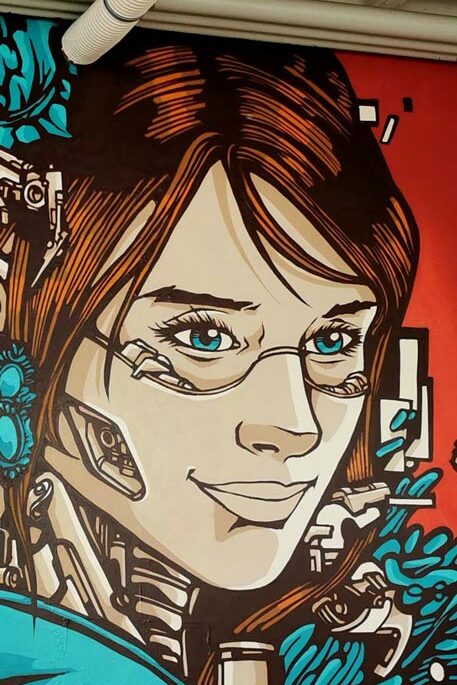
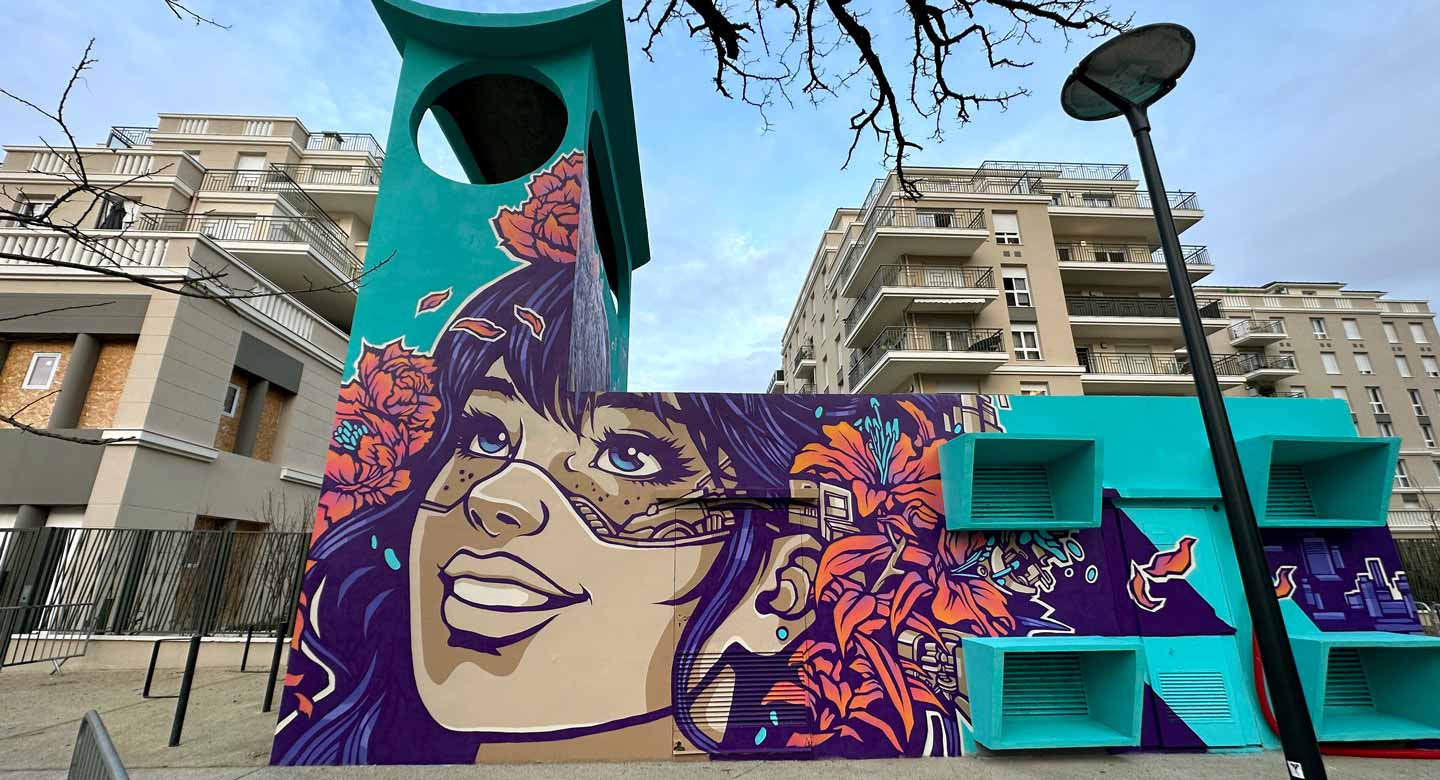
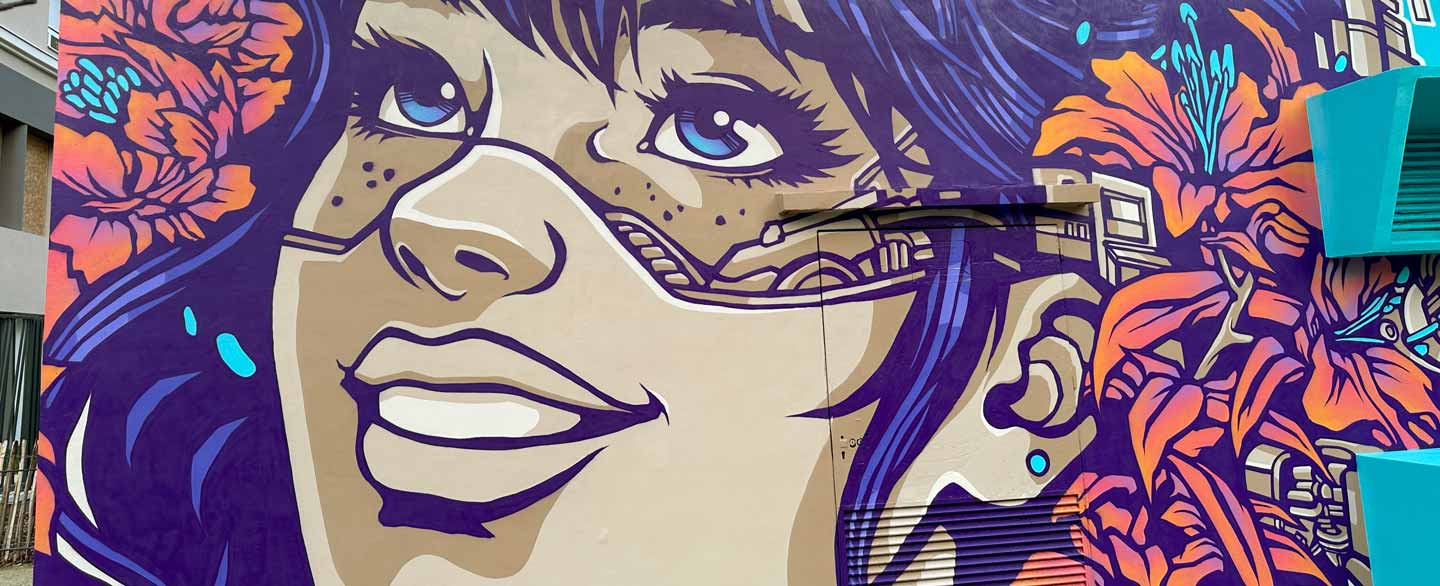
    Cyberpunk female portrait on the Lumières mural in Argenteuil
    Close-up of the cyberpunk female portrait from the Lumières mural
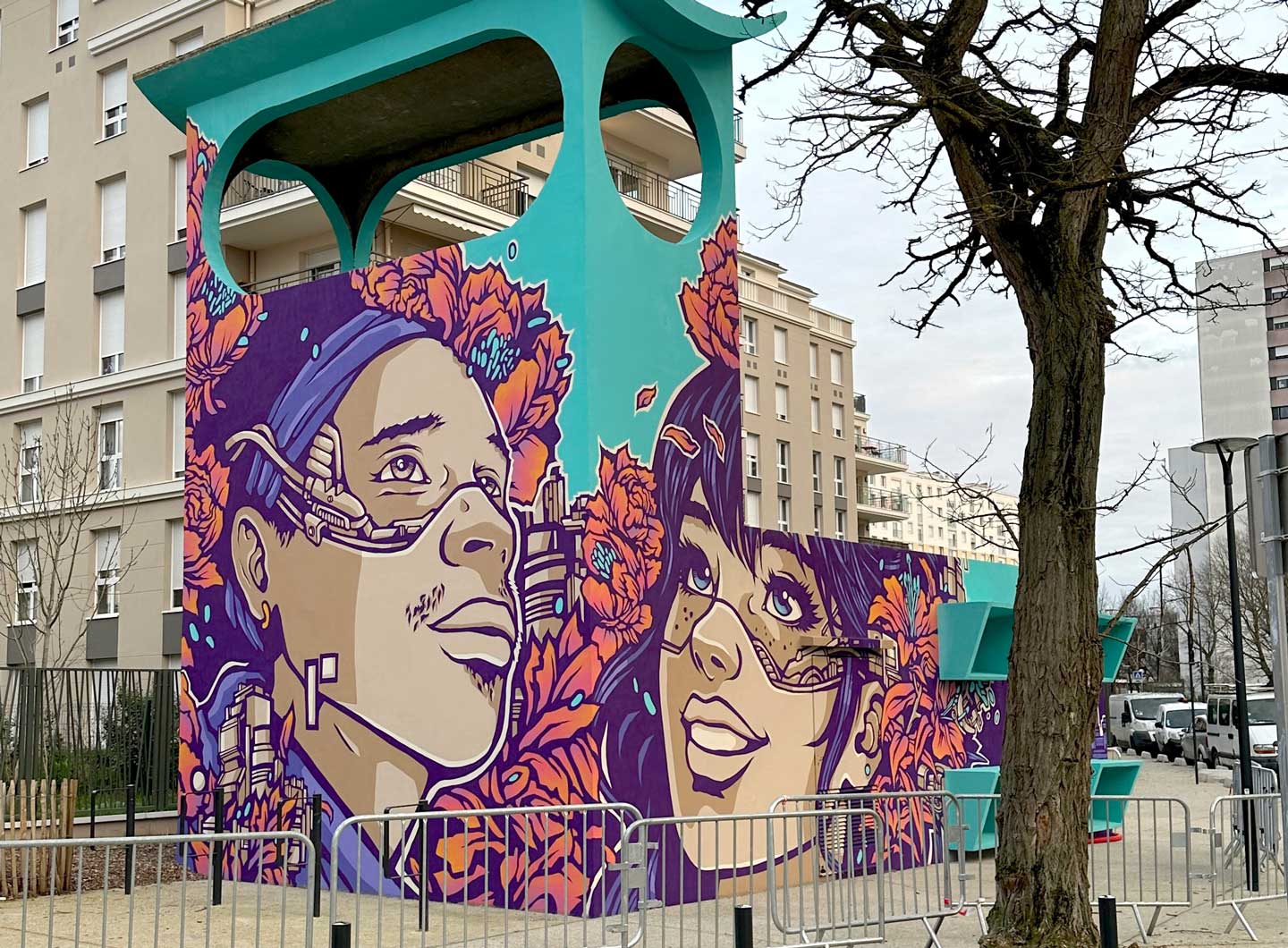
    Dual portrait mural showing the male and female characters facing each other in Argenteuil

    Street Art Argenteuil Lumières / a Cyberpunk Public Mural

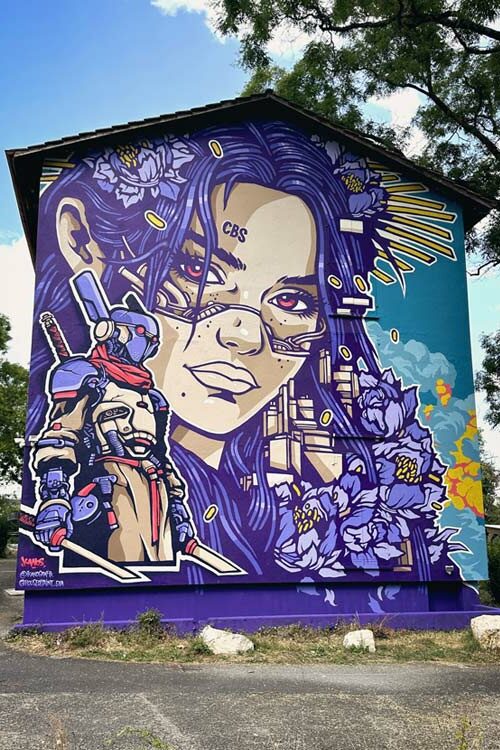
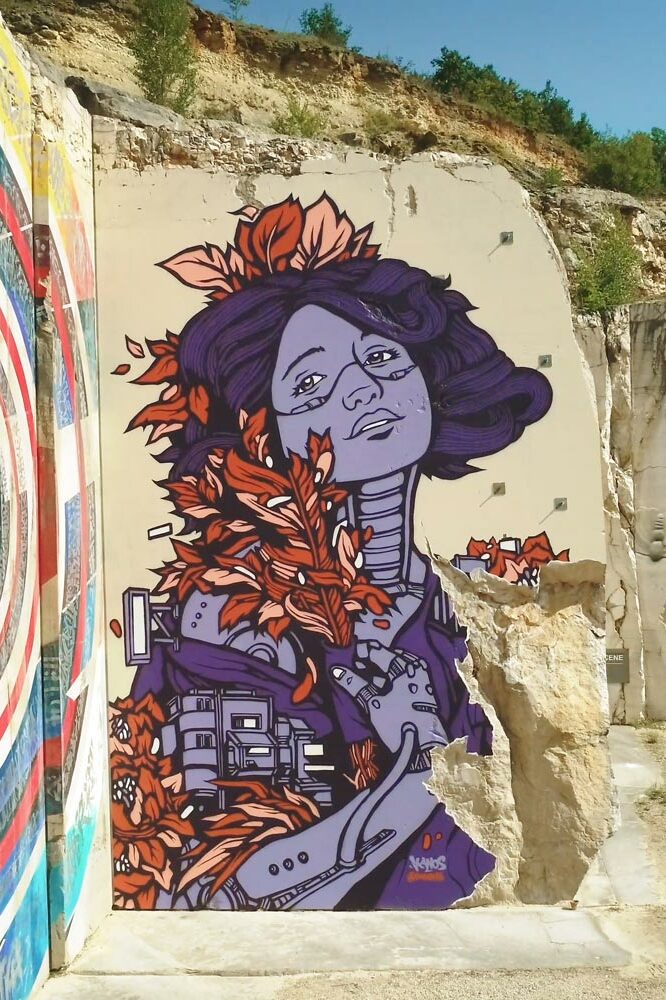
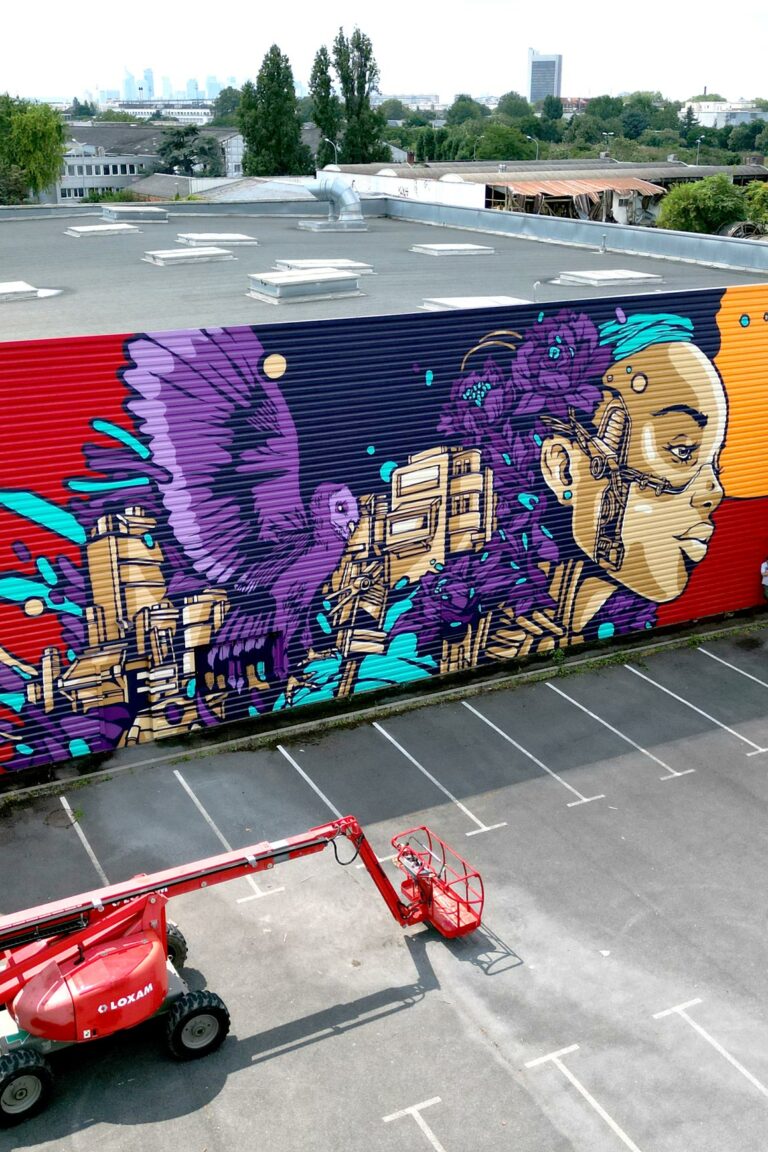
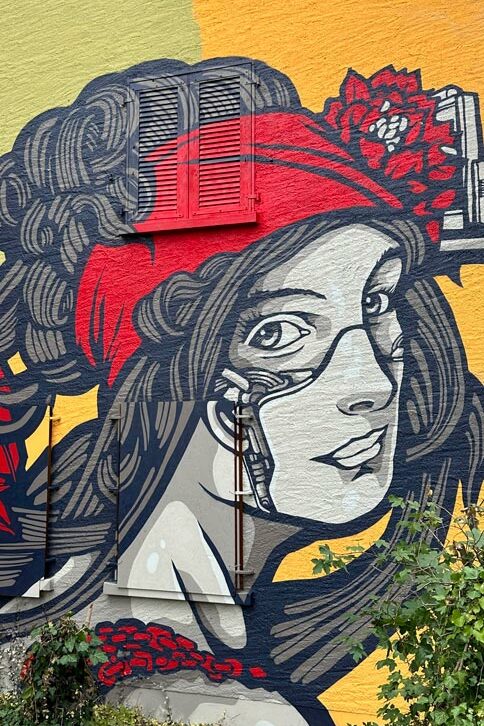
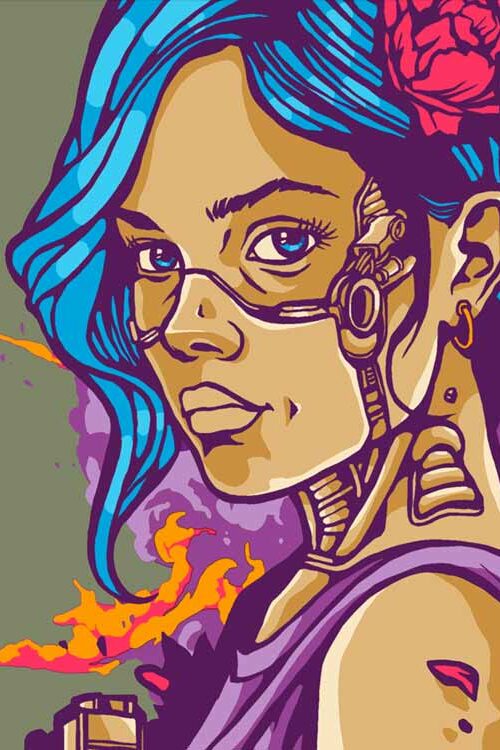
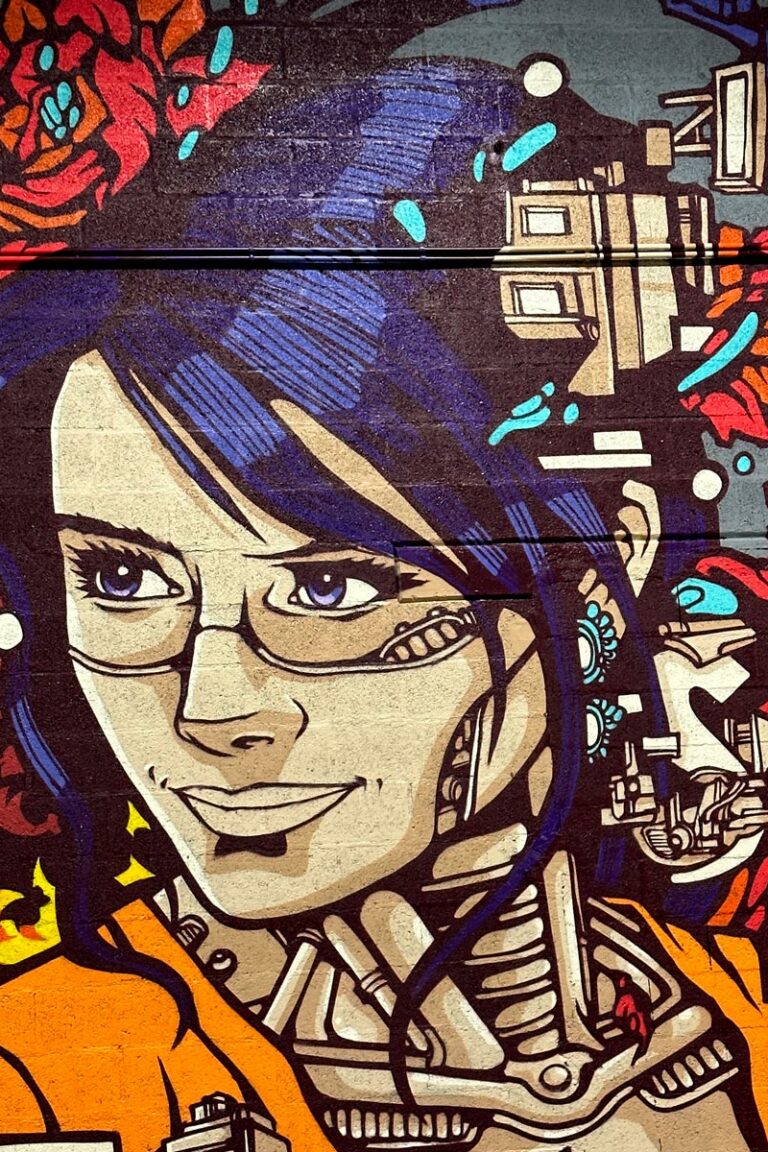
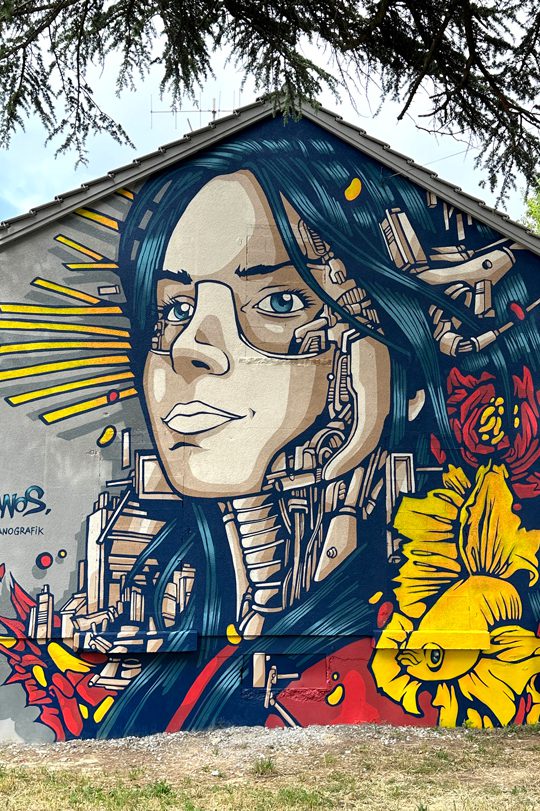
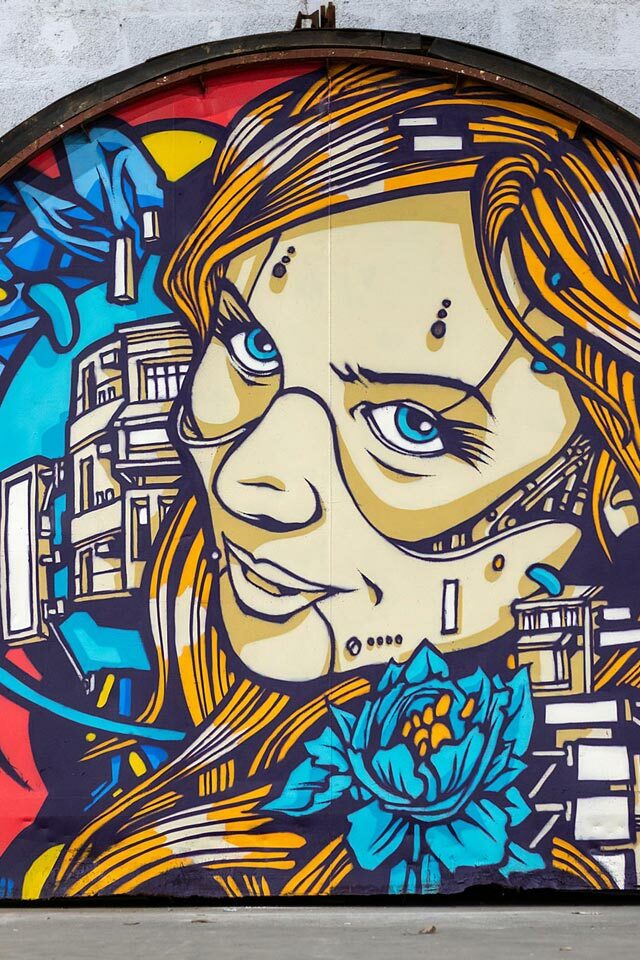
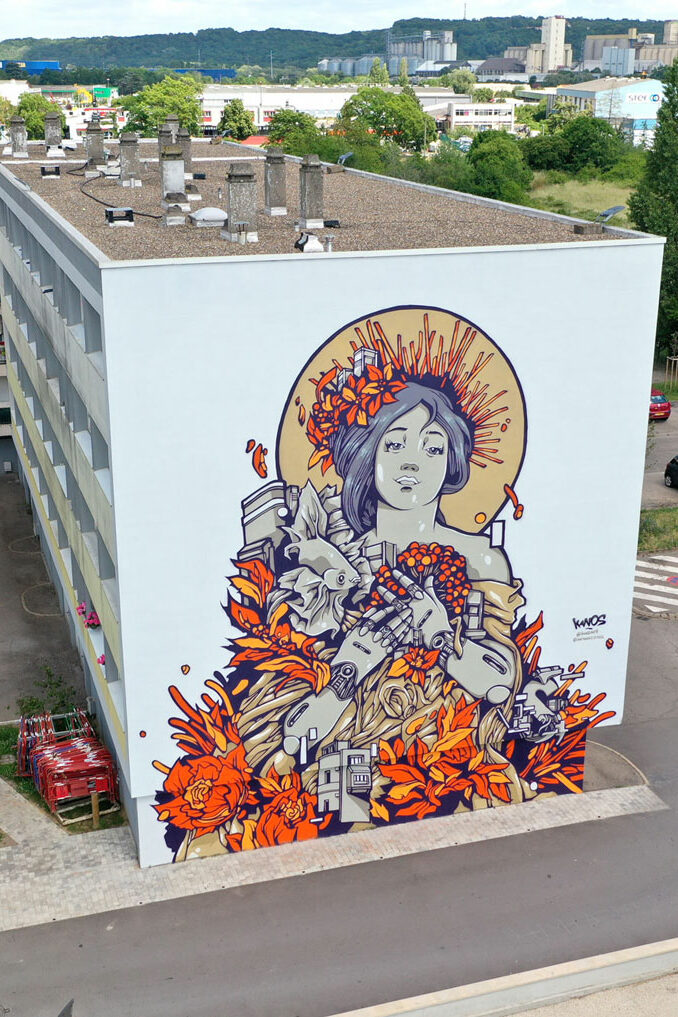
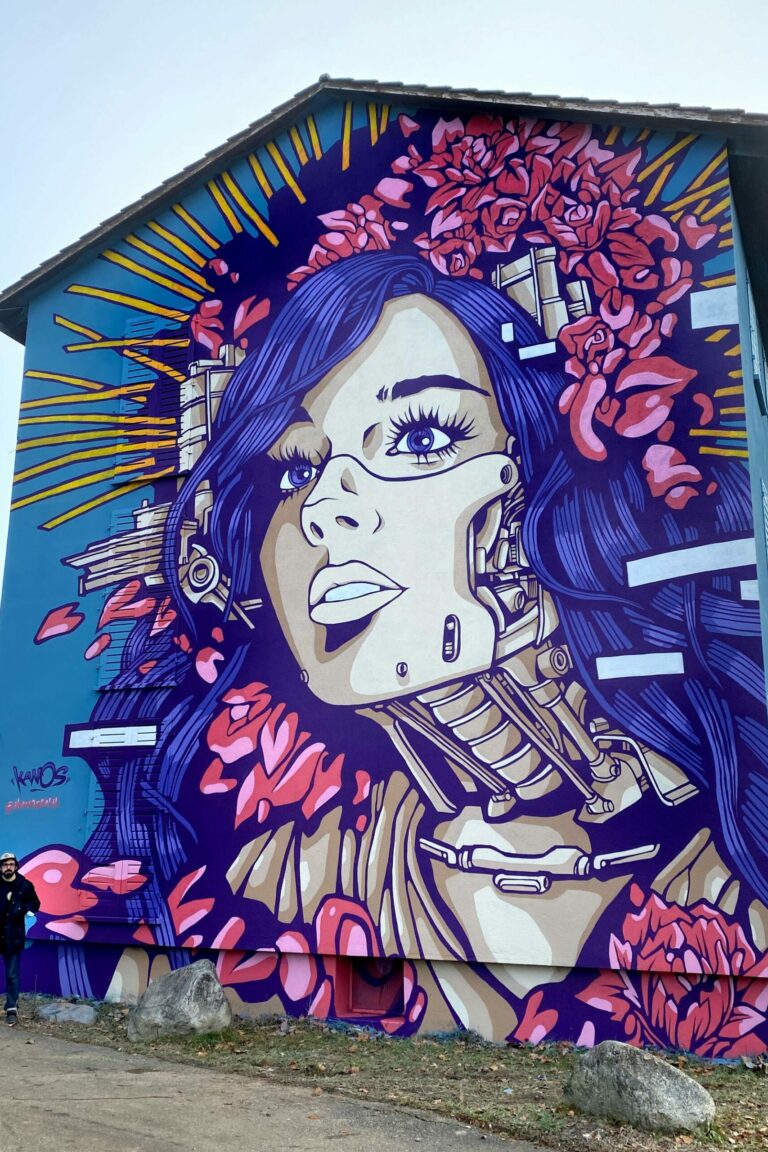
    Public art has the power to transform everyday spaces into places of reflection, dialogue and discovery. Created for the City of Argenteuil, Lumières is a large-scale mural exploring the relationship between humanity and technology through the visual language of cyberpunk. The artwork depicts a man and a woman whose faces merge with mechanical elements, creating a hybrid vision that reflects our increasingly close relationship with digital technologies while affirming a central idea: technological progress should always remain at the service of humanity.

    Commissioned as part of the participatory budget of the Val-d’Argent Sud neighbourhood committee, the mural was designed to become a visual landmark for residents while celebrating the diversity and openness of Argenteuil.

    The central figures look towards the future with calm and determination. Rather than presenting technology as a threat, the mural proposes a more balanced perspective. Mechanical elements become extensions of the human body rather than replacements for it, suggesting that innovation and humanity can evolve together. Their expressions carry a message of hope for future generations: progress should remain under human control, preserving empathy, creativity and human values. This reflection has become one of the recurring themes throughout my artistic practice, where cyberpunk aesthetics serve as a visual language for questioning the future rather than predicting it.

    Although the mural embraces a futuristic visual identity, it also establishes a dialogue with cultural heritage. The architecture of the building naturally suggested references to Japan, which became an important source of inspiration for the composition. In the background, a stylised skyline of Tokyo reinforces the connection between tradition and innovation. Tokyo represents one of the world’s most emblematic cities where advanced technology coexists with centuries-old cultural heritage, making it a fitting symbol for the themes explored by the mural. This contrast between past and future echoes the broader dialogue between contemporary public art and the historical identity of the city.

    Hidden within the composition is the kanji 嘉納 (Kanō). The character carries a dual meaning. It refers first to my artist name, Kanos, while also referencing Jigoro Kano, the founder of judo. Beyond this historical connection, the reference evokes values such as discipline, balance, knowledge and transmission between generations. These ideas resonate with the overall message of the mural, where technological innovation should never come at the expense of human wisdom. Rather than functioning as a decorative detail, the kanji becomes another layer of interpretation for viewers willing to look more closely at the artwork.

    One of the objectives of Lumières was to establish a strong visual identity within the urban landscape of Argenteuil. Bold colours, dynamic compositions and high-contrast graphic elements were carefully designed to interact with the existing architecture instead of overwhelming it. Public murals inevitably become part of the daily lives of local residents. They are encountered during commutes, walks or neighbourhood events, gradually becoming familiar reference points within the city. For this reason, the mural was conceived not simply as an image but as a lasting component of the local environment.

    Like many of my public artworks, Lumières is intended to reward curiosity. From a distance, viewers first encounter two monumental portraits. As they move closer, additional details begin to emerge: mechanical structures, graphic elements, Japanese references, architectural dialogue and symbolic layers gradually reveal themselves. This progressive reading encourages passersby to slow down, observe and build their own interpretation of the mural. Rather than imposing a single meaning, the artwork remains open to multiple readings depending on each viewer’s experience.

    This mural was made possible thanks to the trust of the City of Argenteuil and the many people involved throughout the project. Special thanks to Mayor Georges Mothron, Chantal Juglard, Martine Rousseau, the neighbourhood committee, the Department of Community Engagement and Territorial Development, the Department of Culture and Tourism, and Lucie Buathier for their support. I would also like to thank René Marc for sharing the project on site despite the winter weather, JeaBodv for serving as the model for one of the portraits, photographer Michaël Tixador and Nicolas Laverroux for documenting the mural.

    Frequently Asked Questions

    Where is the Lumières mural located?

    The mural is located in Argenteuil, France, and was commissioned by the City of Argenteuil as part of a public art project.

    What does Lumières represent?

    The mural explores the relationship between humanity and technology through two cyberpunk-inspired portraits carrying a message of hope for future generations.

    Why are Japanese references included?

    The composition incorporates Japanese visual references, including a Tokyo skyline and the kanji 嘉納 (Kanō), creating a dialogue between cultural heritage and contemporary creation.

    What does the kanji 嘉納 mean?

    Within the mural, 嘉納 refers both to the artist name Kanos and to Jigoro Kano, founder of judo, symbolising discipline, balance and transmission.

    Who commissioned the project?

    The mural was commissioned by the City of Argenteuil as part of the participatory budget of the Val-d’Argent Sud neighbourhood committee.
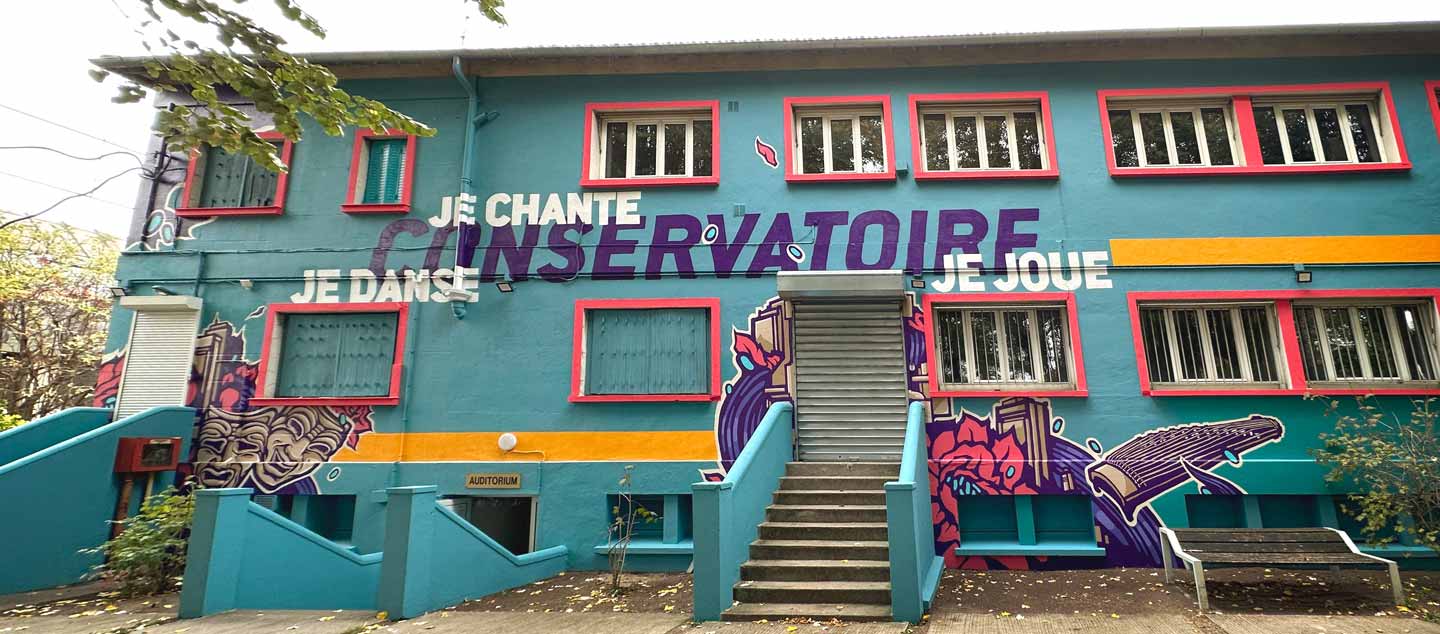
  • URBAN SCORE / Gentilly Conservatory Stunning Street Art Mural by Alex Kanos

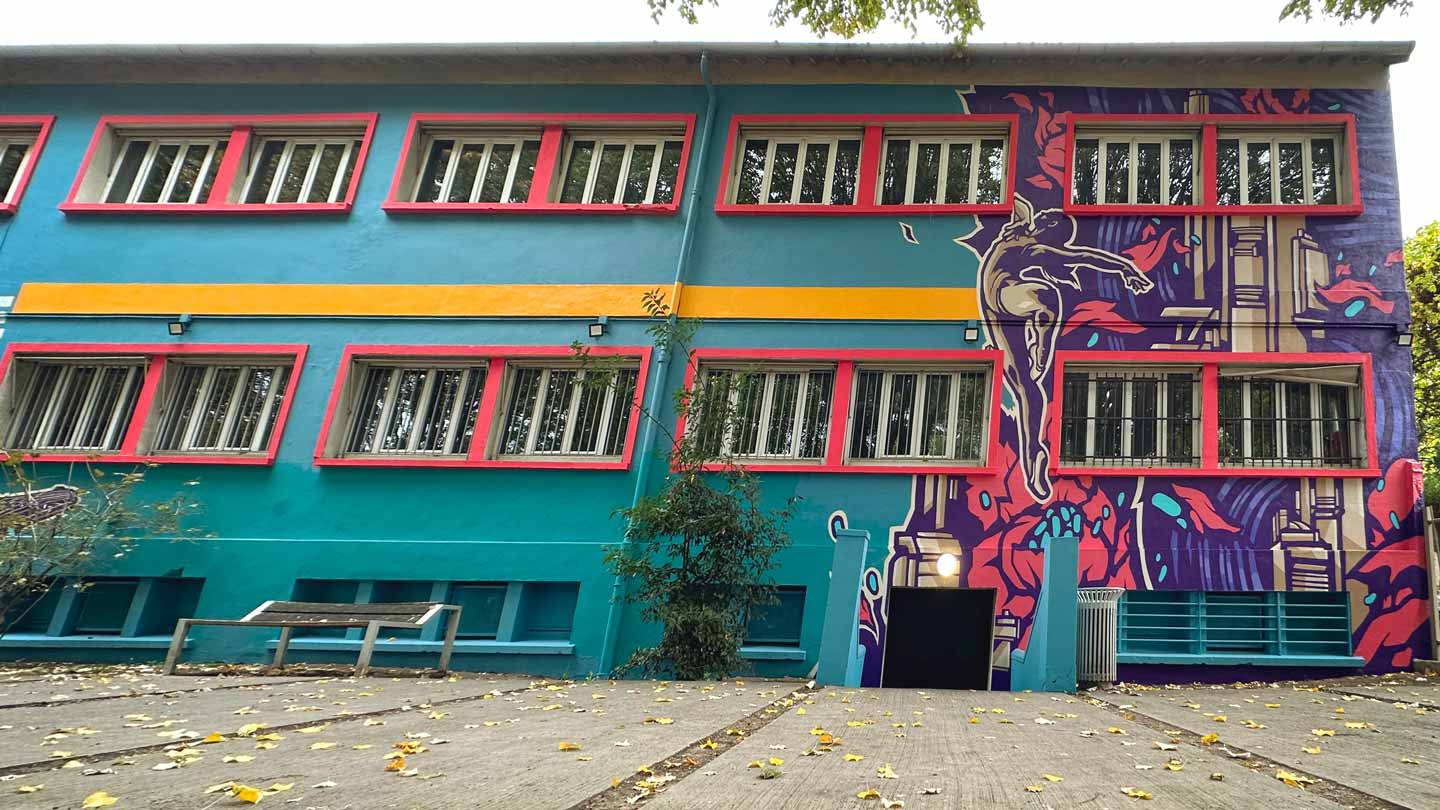
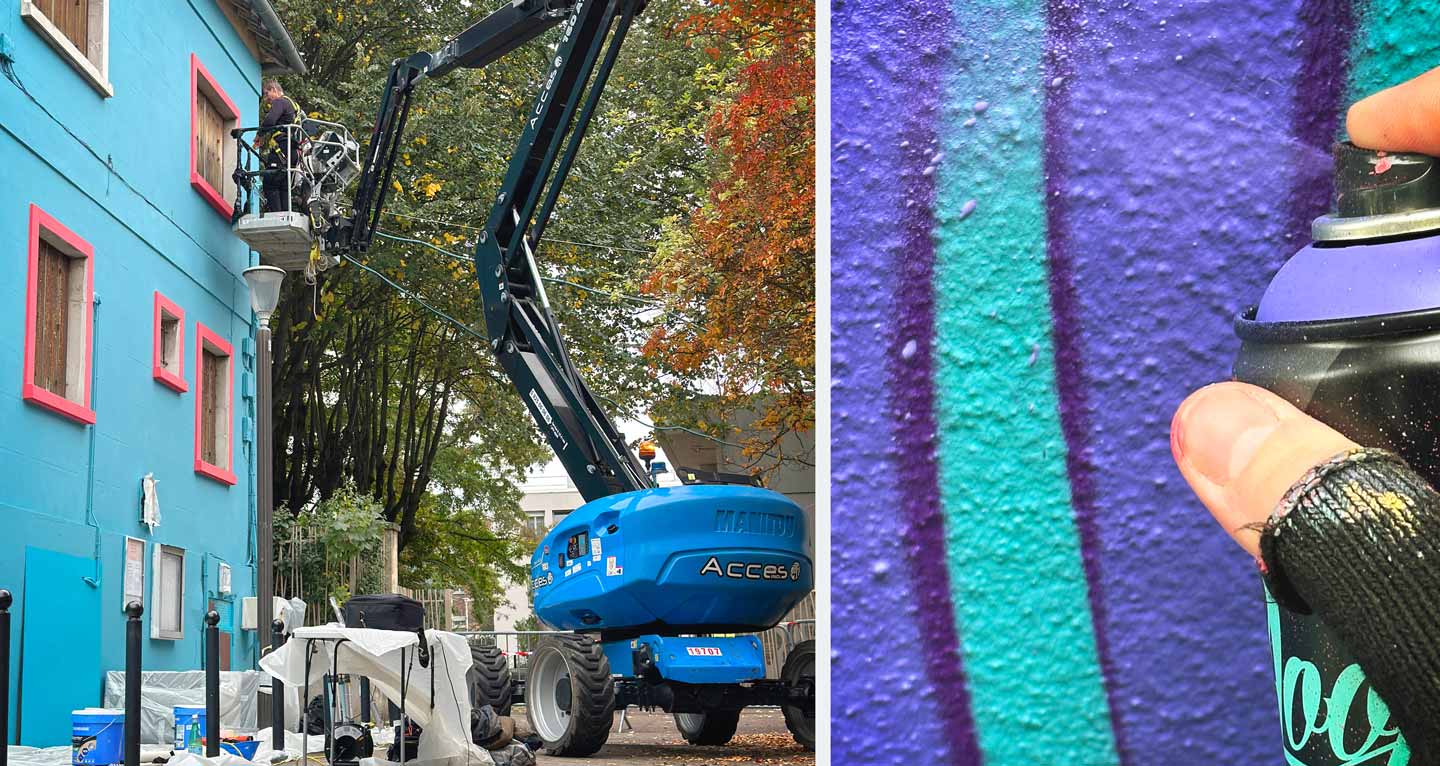
    work in progress Street art mural at Conservatory of Gentilly by Alex Kanos
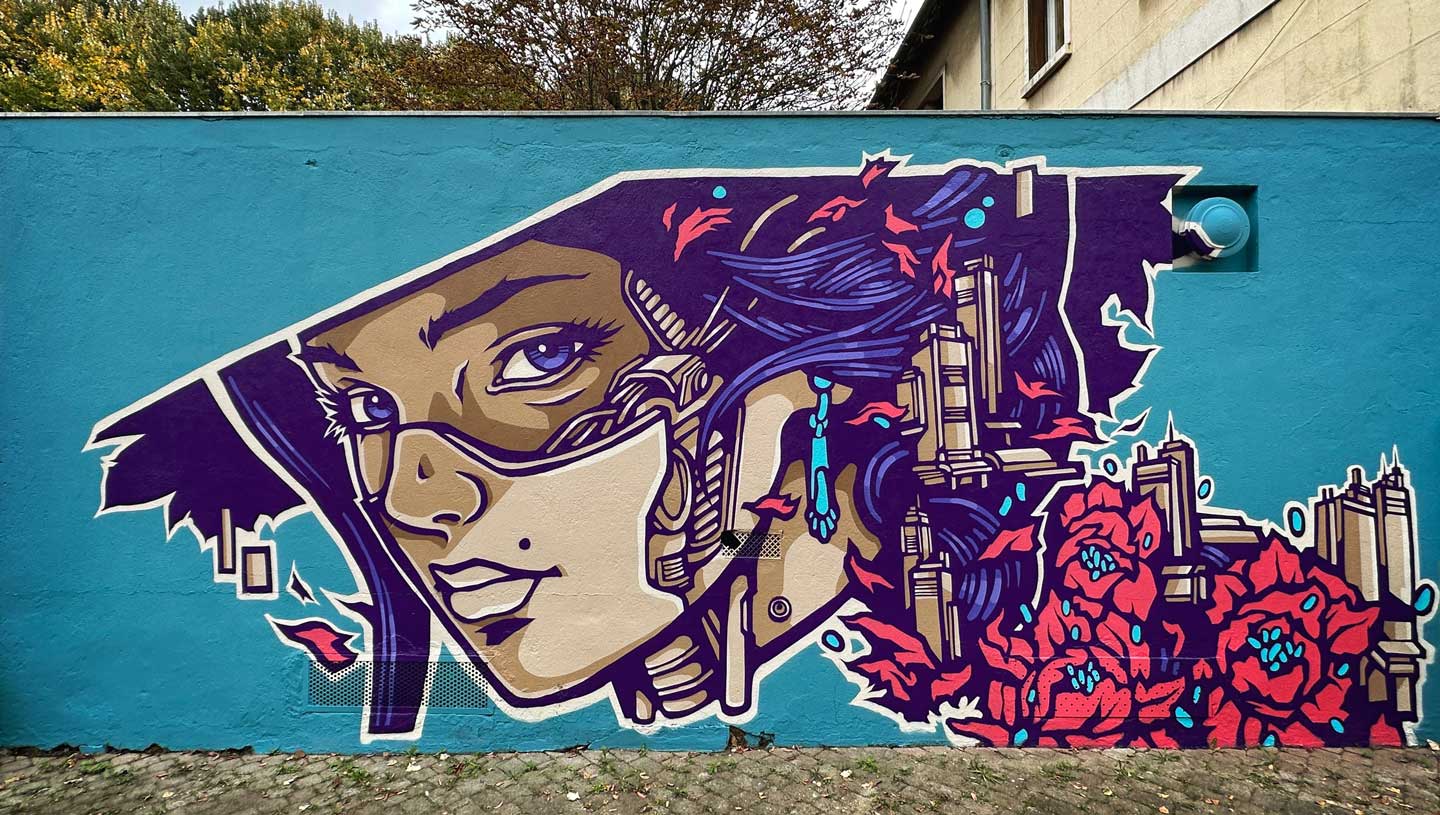
    Street art mural at Conservatory of Gentilly by Alex Kanos depicting cyberpunk female character
    Theatre masks and koto instrument in Urban Score mural Gentilly
    Dancing silhouette representing dance discipline in Gentilly conservatory mural by Alex Kanos
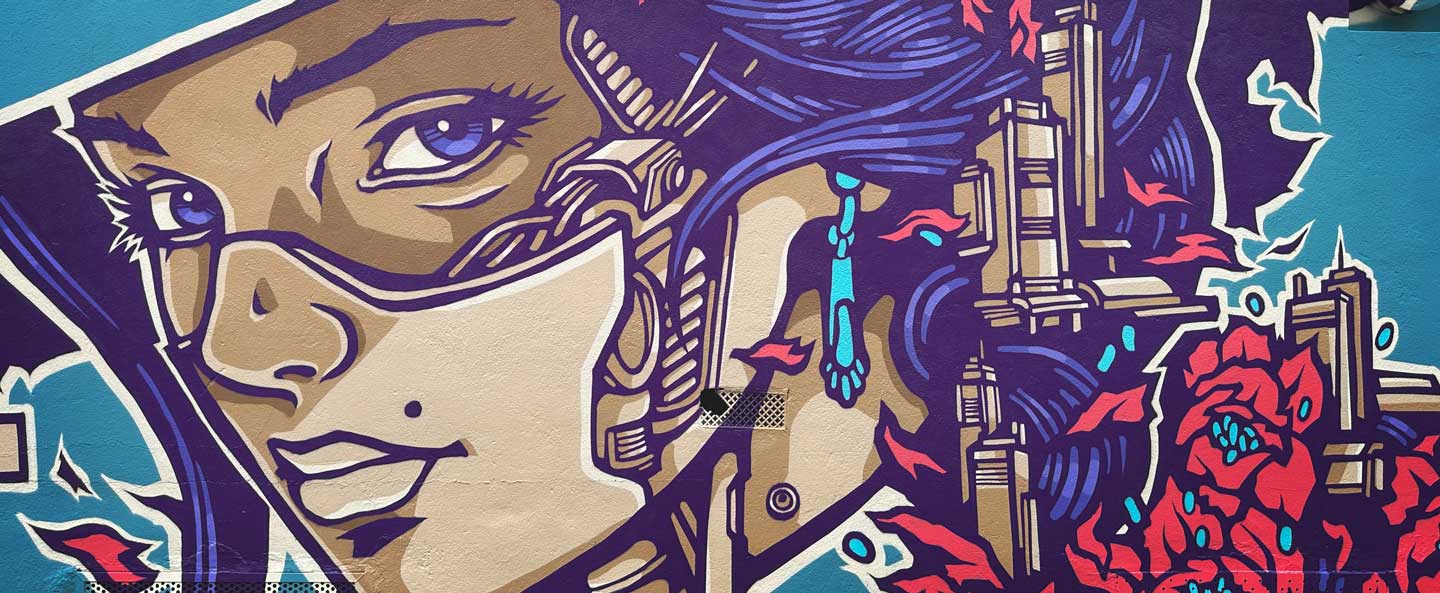
    Close up on Street art mural at Gentilly Conservatory by Alex Kanos depicting cyberpunk female character

    Urban Score /  Gentilly Conservatory Mural

    Urban Score is a large-scale mural project created at the Conservatory of Gentilly, in France, transforming the building into a visual composition inspired by music, theatre, and dance. The work was commissioned by the City of Gentilly and developed in collaboration with Grand Orly Seine Bièvre and Osaro Street Art. This mural is designed as a visual score, where each part of the building corresponds to a different artistic discipline practiced inside the conservatory.
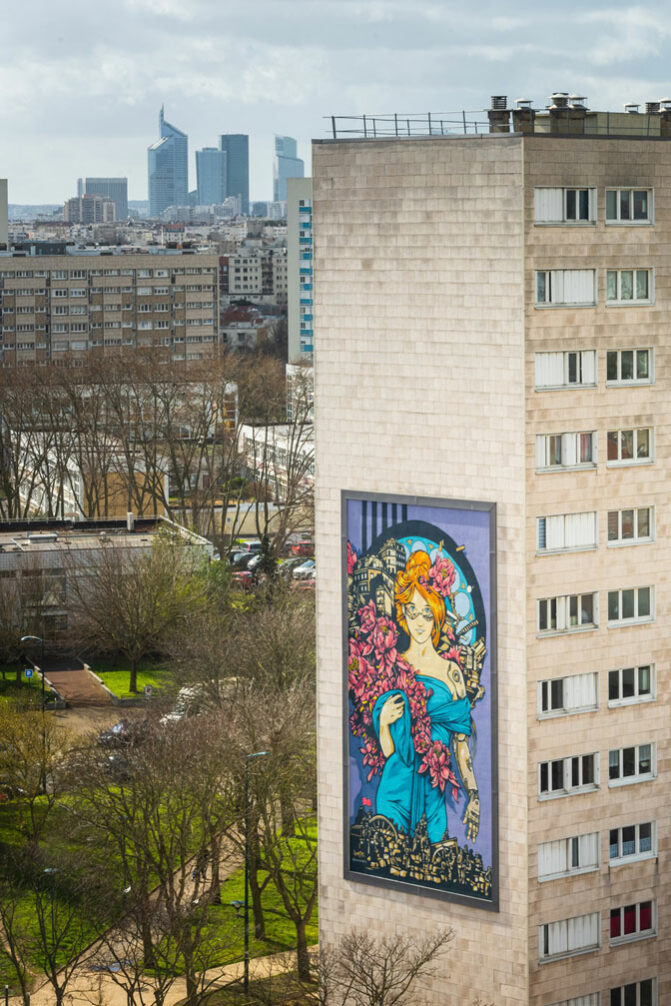
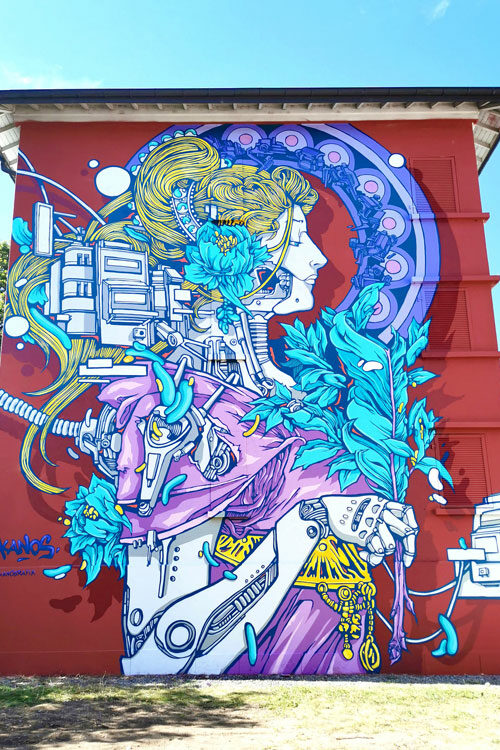
    The concept of Urban Score is based on the idea that a building dedicated to the arts can itself become a form of artistic expression. The conservatory is not only a place where music, theatre, and dance are taught. It is also a space where creativity is constantly evolving. The mural translates this dynamic into a visual language, turning the architecture into a readable composition, almost like a musical score.

    The Street Side / A Cyberpunk Female Figure

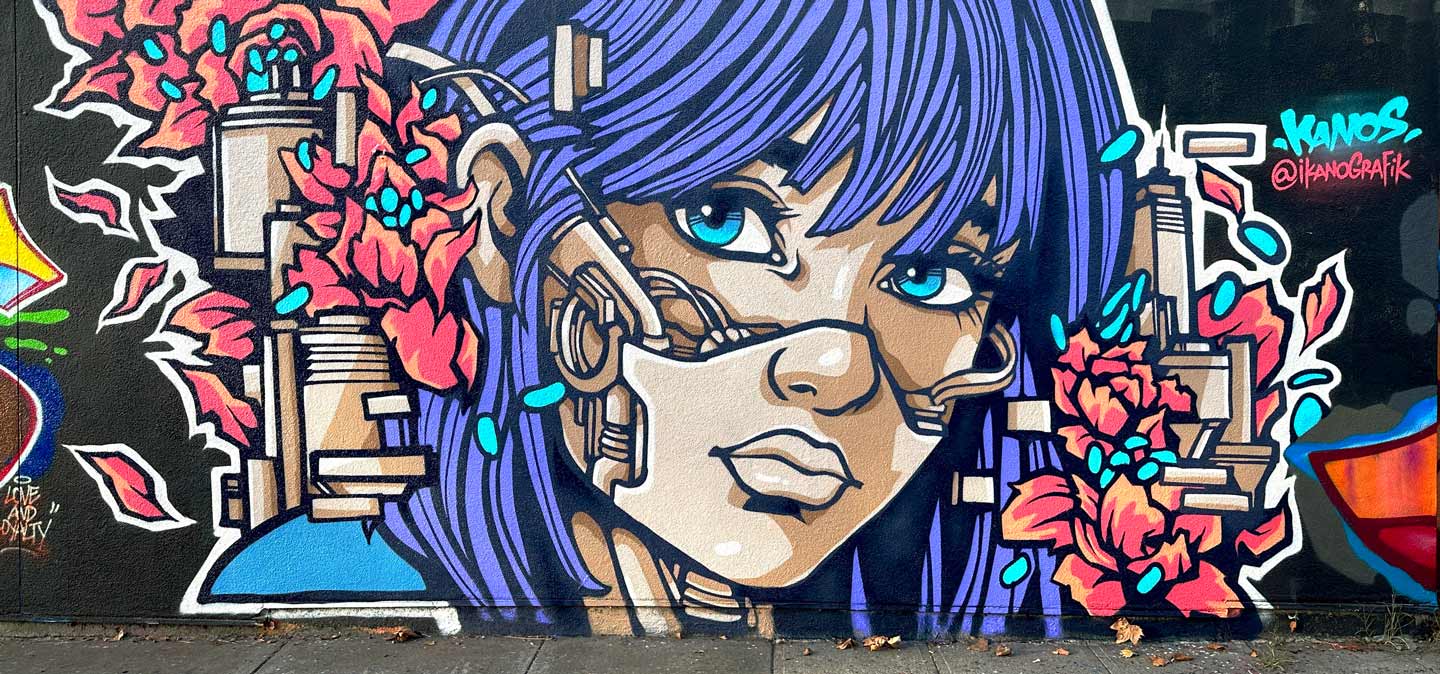
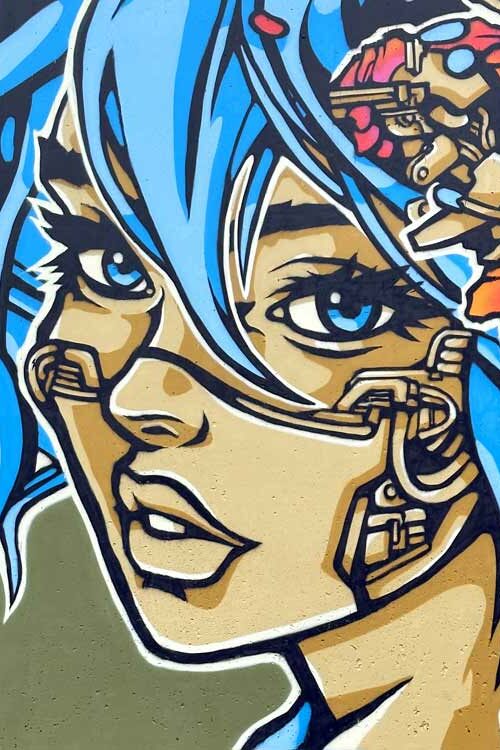
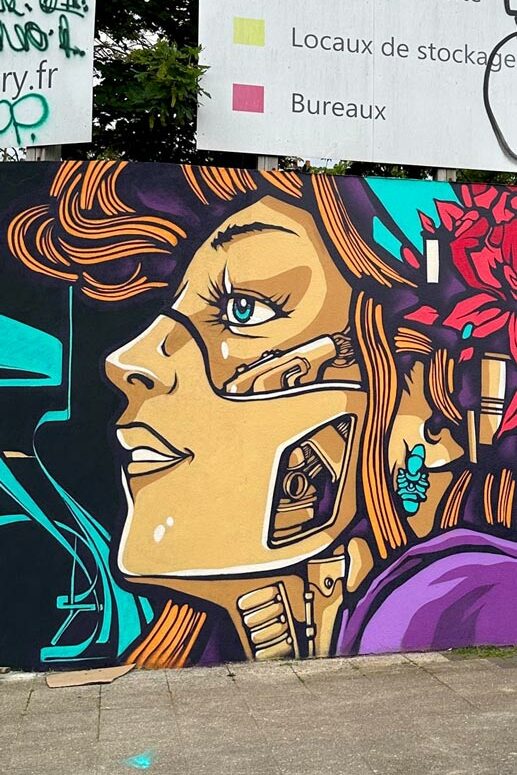
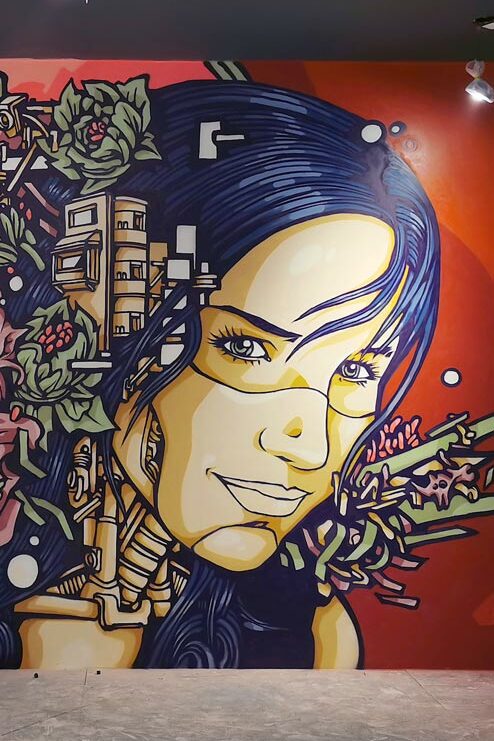
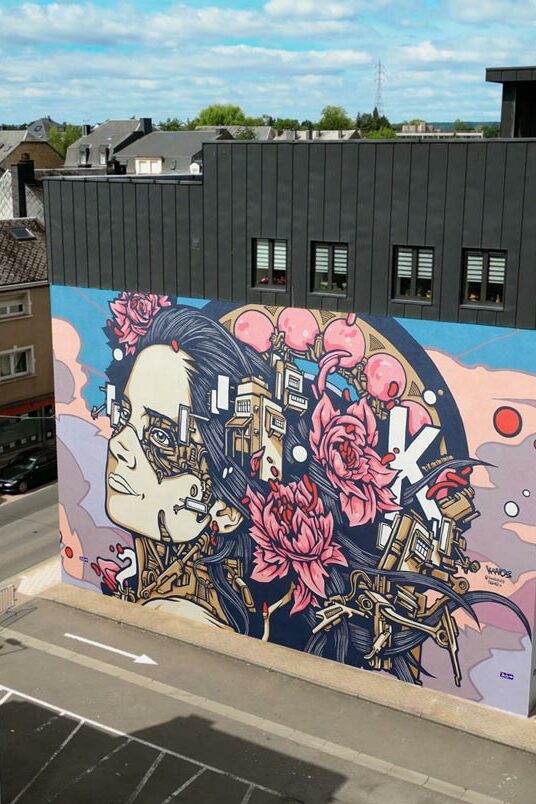
    On the street-facing side of the building, I painted a female character inspired by my recurring visual universe. She embodies themes that are central to my work: fusion between human and machinecyberpunk aesthetics, organic and mechanical contrasts, direct visual connection with the viewer. Her gaze engages with passersby, creating an immediate interaction between the artwork and the public space. This side acts as an entry point into the mural’s narrative.

    The Garden Side  / From Theatre to Music and Dance

    As the visual narrative continues towards the garden side of the building, the mural transitions into the disciplines taught inside the conservatory. Theatre / Masks representing comedy and tragedy illustrate the theatrical art form. These symbols reflect emotional duality and performance. Music / A koto, traditional Japanese instrument, represents the music department of the conservatory. Its presence introduces a connection between tradition and contemporary visual language. Dance / A dancing silhouette expresses movement and physical interpretation, completing the transition from visual symbol to kinetic expression.

    The mural also integrates typography as part of the composition. Words become structural elements that guide the viewer through the artwork and help identify the function of the building. Large-scale text such as: “CONSERVATORY” / “I dance” / “I sing” / “I play”. It creates a direct link between language and visual art. These elements reinforce the idea that the building itself is an open score, readable both visually and conceptually.

    Unlike purely decorative street art, Urban Score was designed as a functional mural. Its role is not only aesthetic but also communicative: it identifies the purpose of the building, connects exterior and interior activities and translates artistic disciplines into visual form. The mural becomes part of the identity of the Conservatory of Gentilly, integrating into its daily life and public presence. This project was made possible thanks to: City of Gentilly, Grand Orly Seine Bièvre, and Osaro Street Art. Special thanks to Lisa, Delphine, Elise, Robin, Katell, Florent, René, and Antonin for their support during the project. 

    Frequently Asked Questions

    Where is the Urban Score mural located?

    The mural is located at the Conservatory of Gentilly in France.

    What does Urban Score represent?

    It represents a visual interpretation of music, theatre, and dance, transforming the building into a conceptual artistic score.

    Who created the mural?

    The mural was created by French artist Alex Kanos.

    What techniques are used in the mural?

    The work combines large-scale mural painting, typography, and figurative street art elements.

    Who commissioned the project?

    The project was commissioned by the City of Gentilly in collaboration with Grand Orly Seine Bièvre and Osaro Street Art.


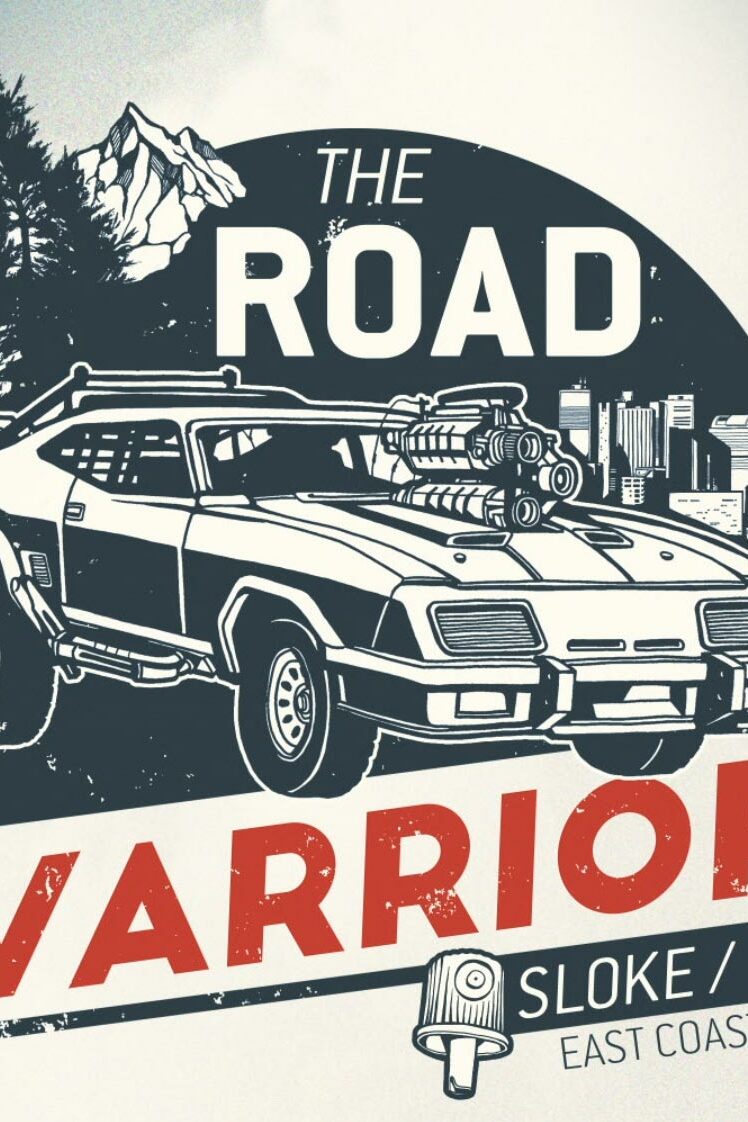
  • THE ROAD WARRIORS 2025 / Grand Epic Graffiti Road Trip Across the USA

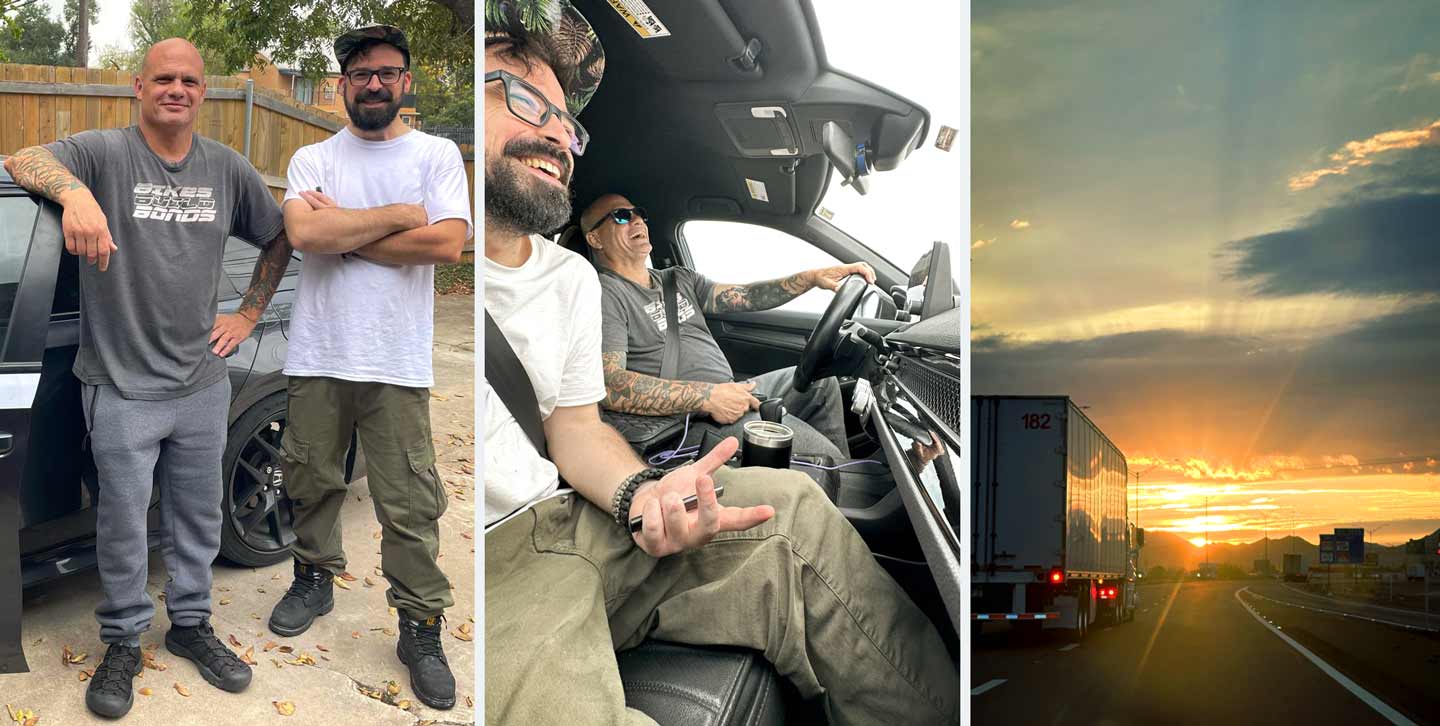
    Departure of The Road Warriors 2025 road trip from Austin Texas with Sloke and Alex Kanos
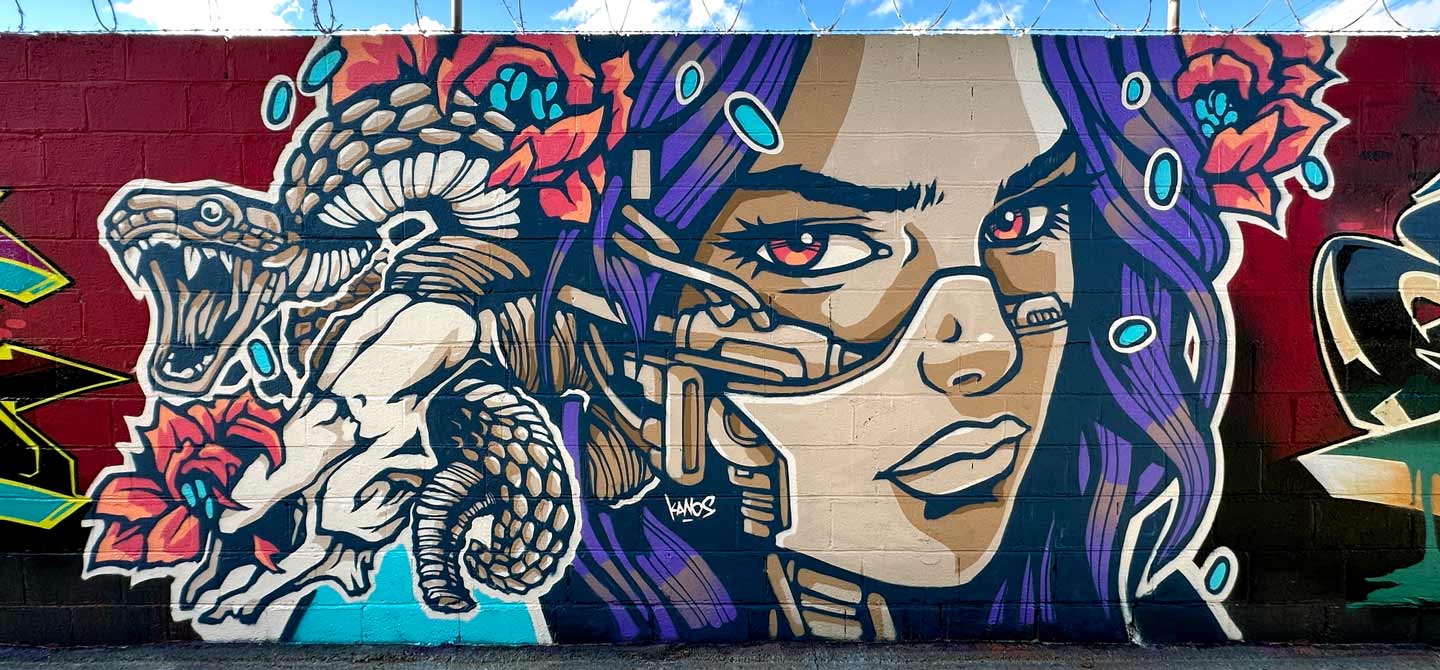
    Street art mural painted in El Paso, Texas during The Road Warriors 2025 by Alex Kanos
    Street art mural in Los Angeles created during The Road Warriors 2025 USA road trip
    Second mural painted in Los Angeles during The Road Warriors 2025 street art project
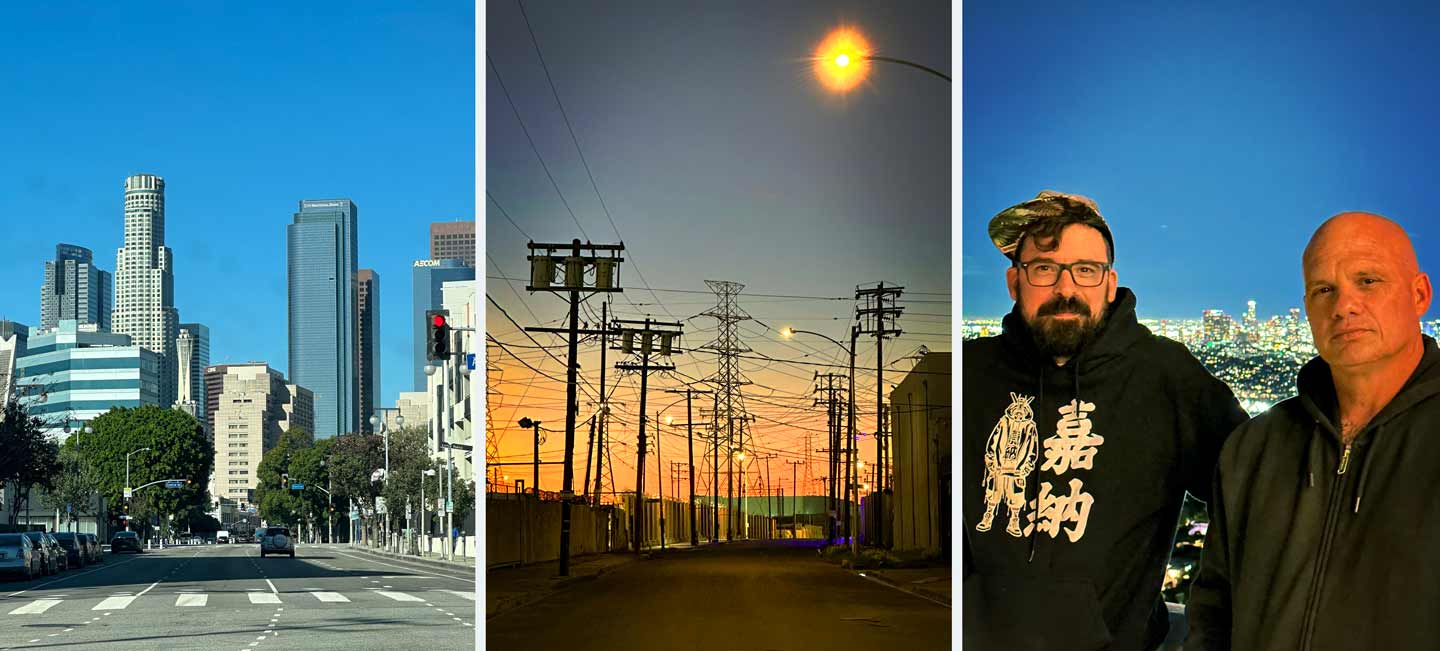
    Atmospheric view of Los Angeles during The Road Warriors 2025 street art project
    Urban art mural in San Francisco painted by Alex Kanos during The Road Warriors 2025
    Street art piece created in Berkeley California during The Road Warriors USA road trip
    Las Vegas night atmosphere captured during The Road Warriors 2025 street art road trip
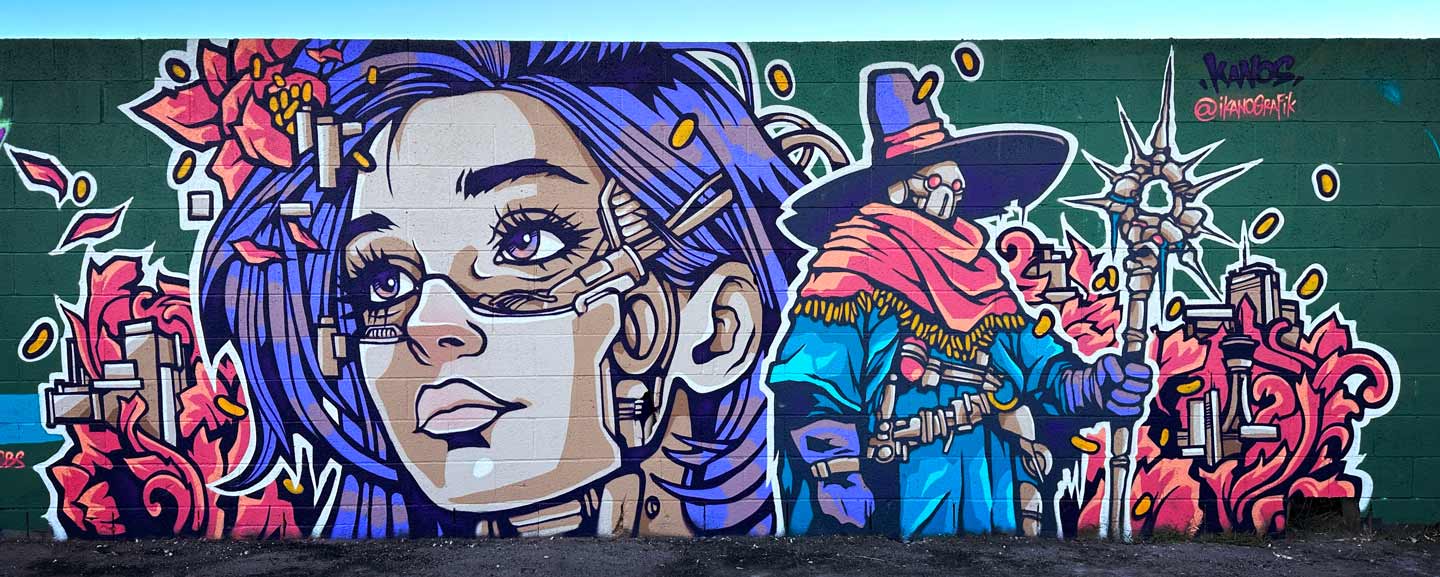
    Las Vegas street art mural by Alex Kanos during The Road Warriors 2025 project
    Street art mural in Austin Texas painted during The Road Warriors 2025 journey
    Second mural in Austin Texas created during The Road Warriors 2025 USA road trip
    Street art crew collaboration and artists reunion during The Road Warriors 2025 USA project

    The Road Warriors 2025 / 8000 km Street Art Road Trip Across the USA

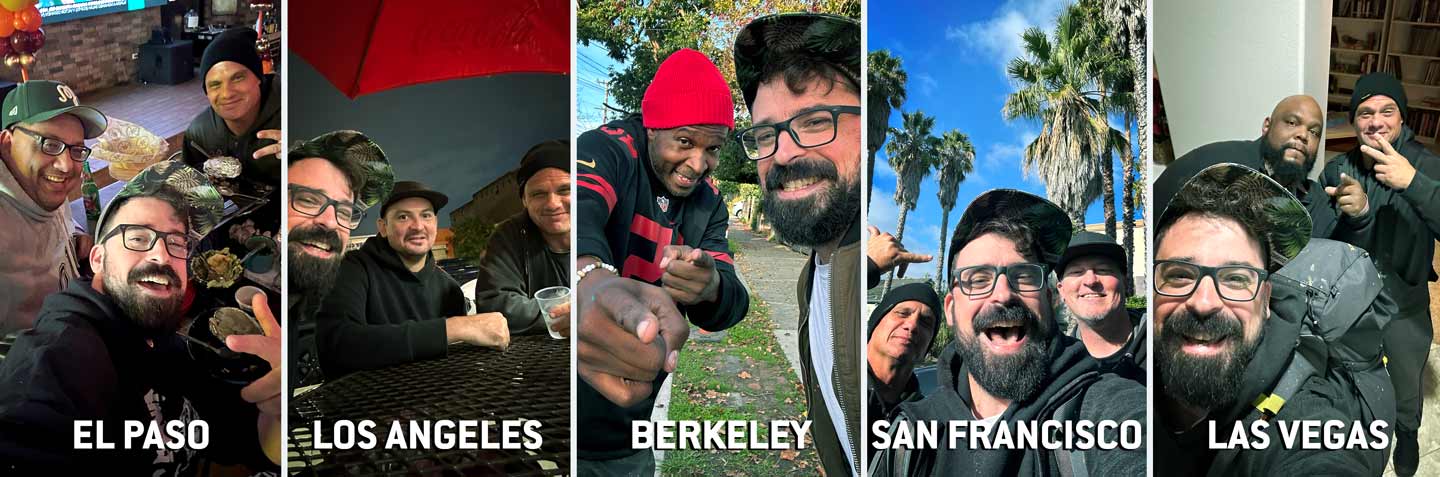
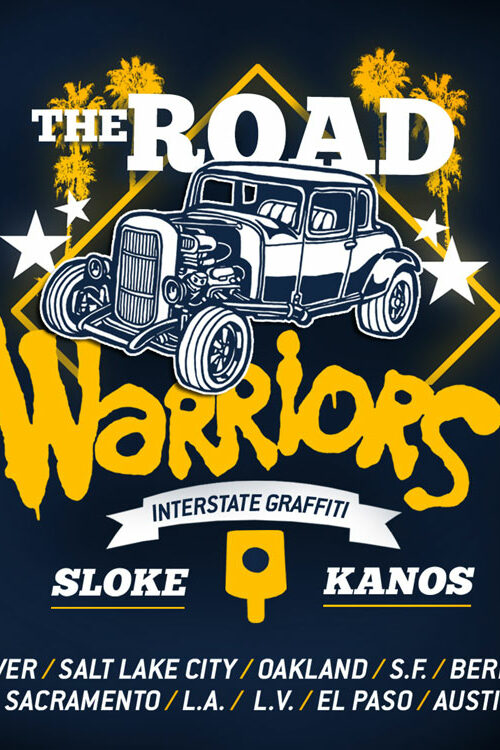
    The Road Warriors 2025 marks a new chapter in a long-term artistic project that began in 2018. Over the years, this travelling series has evolved into a recurring road trip across the United States, bringing together artists, friends, and local communities through street art and mural painting. This 2025 edition follows a journey of approximately 8000 kilometers, starting from Austin, Texas, and crossing multiple cities across the American West, including El Paso, Los Angeles, San Francisco, Berkeley, Las Vegas, Albuquerque, before returning to Austin.

    Once again, I travelled with Sloke, continuing a collaboration and friendship that has shaped several editions of The Road Warriors project. The idea behind The Road Warriors is simple: travel, meet people, and paint murals along the way. Unlike traditional commissioned projects, this journey is built on spontaneity, encounters, and long-standing connections within the international street art community. Each stop becomes an opportunity to reconnect with local artists, revisit familiar places, and create new visual interventions in the urban landscape.

    The 2025 edition of The Road Warriors covered roughly 8000 kilometers across the United States. During this journey, around 12 murals were created in different cities. Each piece reflects not only the location where it was painted but also the atmosphere of the moment: conversations, reunions, improvisation, and shared creative energy. Street art in this context is not only about the final image on the wall, but also about the process of movement, exchange, and collaboration.

    El Paso / A border city with a strong cultural identity, where the mural reflects the intensity of the desert landscape and the energy of the environment.

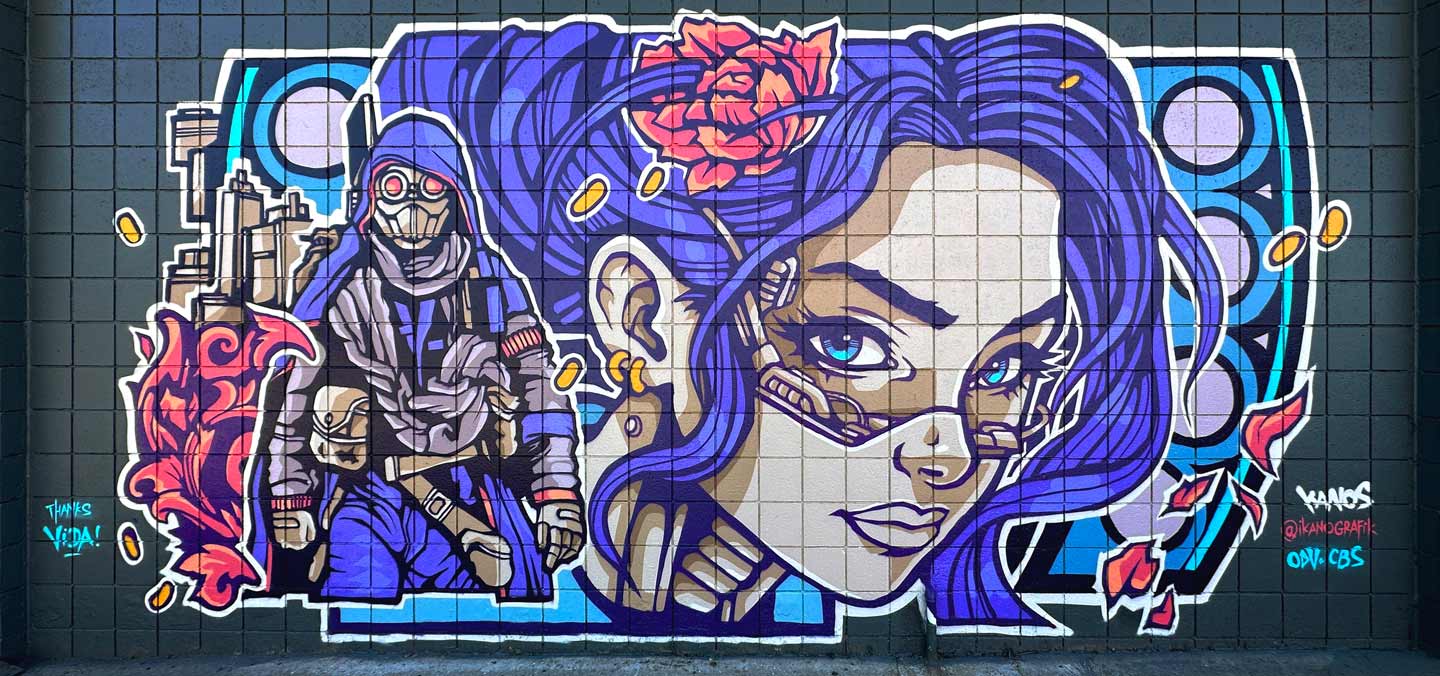
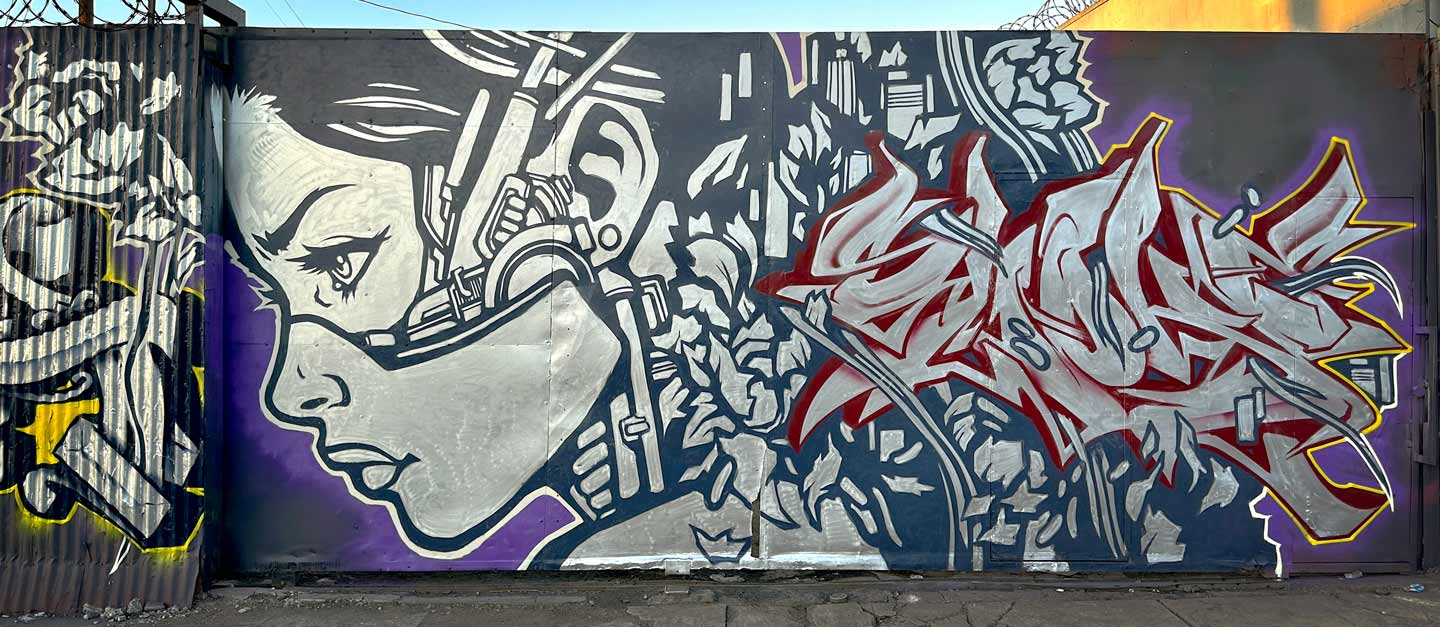
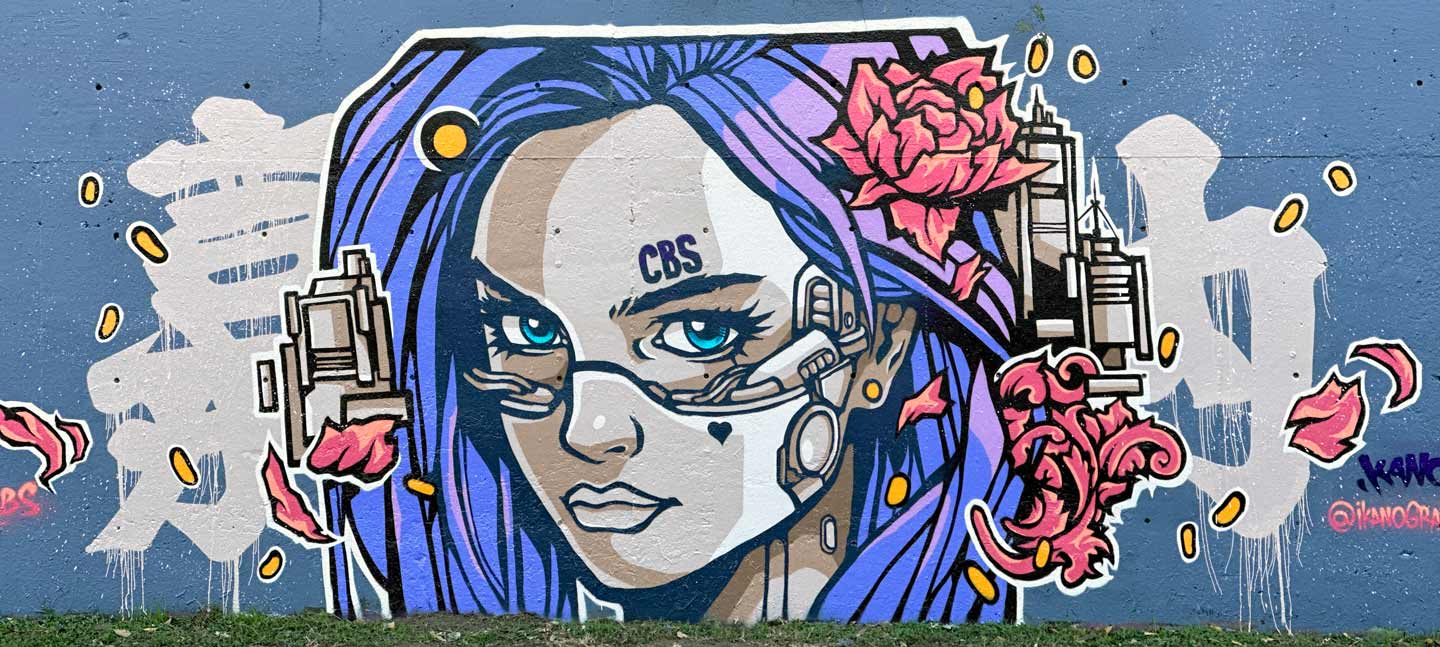
    Los Angeles / A major stop of the journey, where multiple works were created, including pieces with brothers from my crew CBS and influenced by the scale and density of the city.

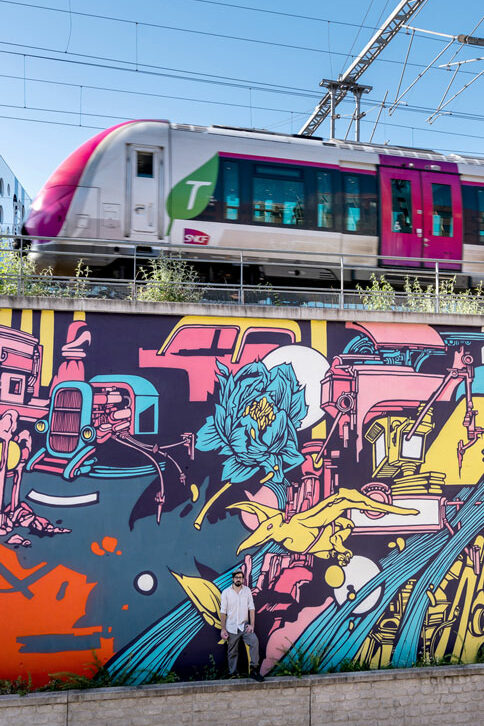
    San Francisco & BerkeleyReturning to Northern California allowed reconnection with artists and friends from Lords crew while painting along railroad and urban atmosphere.

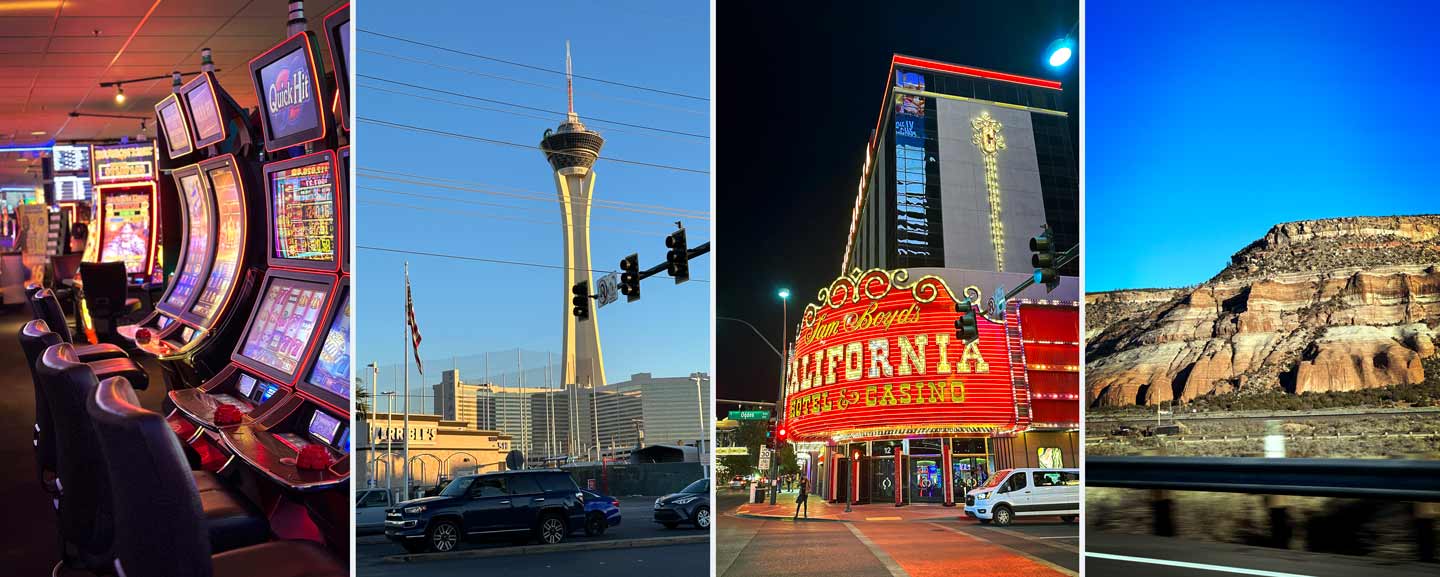
    Las Vegas / A city defined by contrast, lights, and artificial landscapes, influencing a more visually intense approach.

    Albuquerque / A symbolic passage through the Southwest, marked by open spaces and desert tones.

    Austin (Start and End Point) Austin remains the anchor point of the project, both the departure and return location, closing the loop of the journey.

    This edition was again developed in collaboration with Sloke, continuing a creative partnership that has been part of multiple Road Warriors trips. Working together on the road allows for constant exchange of ideas, techniques, and visual languages, while adapting to each city’s unique environment. Beyond painting, The Road Warriors is also about people. During this 2025 edition, I had the opportunity to reconnect with many artists and friends across different cities, including Skew, Tommy, Vida, Jaber, Vyal, Quake, Bukue, Griffin, Dley and Critik. These encounters are an essential part of the project, reinforcing the idea that street art is built on long-term human relationships as much as on visual production.

    This article presents a selection of the murals and visual moments that best represent this edition of The Road Warriors. Rather than documenting every piece individually, the focus is placed on key works and atmospheres that define the overall experience of the trip. Each mural exists both as an individual artwork and as part of a larger narrative spanning thousands of kilometers.

    Since its first edition in 2018, The Road Warriors has become a recurring artistic format rather than a single project. Each year (2018, 2019, 2023, 2024, and now 2025), the journey evolves, expands, and adapts to new cities, new encounters, and new artistic directions. What remains constant is the core idea: painting on the road as a way of connecting places, people, and experiences.

    Frequently Asked QUestions

    What is The Road Warriors project?

    The Road Warriors is an ongoing street art road trip project where artists travel across the United States painting murals in different cities.

    How long was The Road Warriors 2025 trip?

    The 2025 edition covered approximately 8000 kilometers across the USA.

    Which cities were part of the journey?

    The main stops included Austin, El Paso, Los Angeles, San Francisco, Berkeley, Las Vegas, and Albuquerque.

    Who participated in The Road Warriors 2025?

    The project was led by Alex Kanos in collaboration with Sloke, along with various artists and friends met along the way.

    How many murals were painted?

    Around 12 murals were created during this edition.


About my Walls

Street art murals and walls

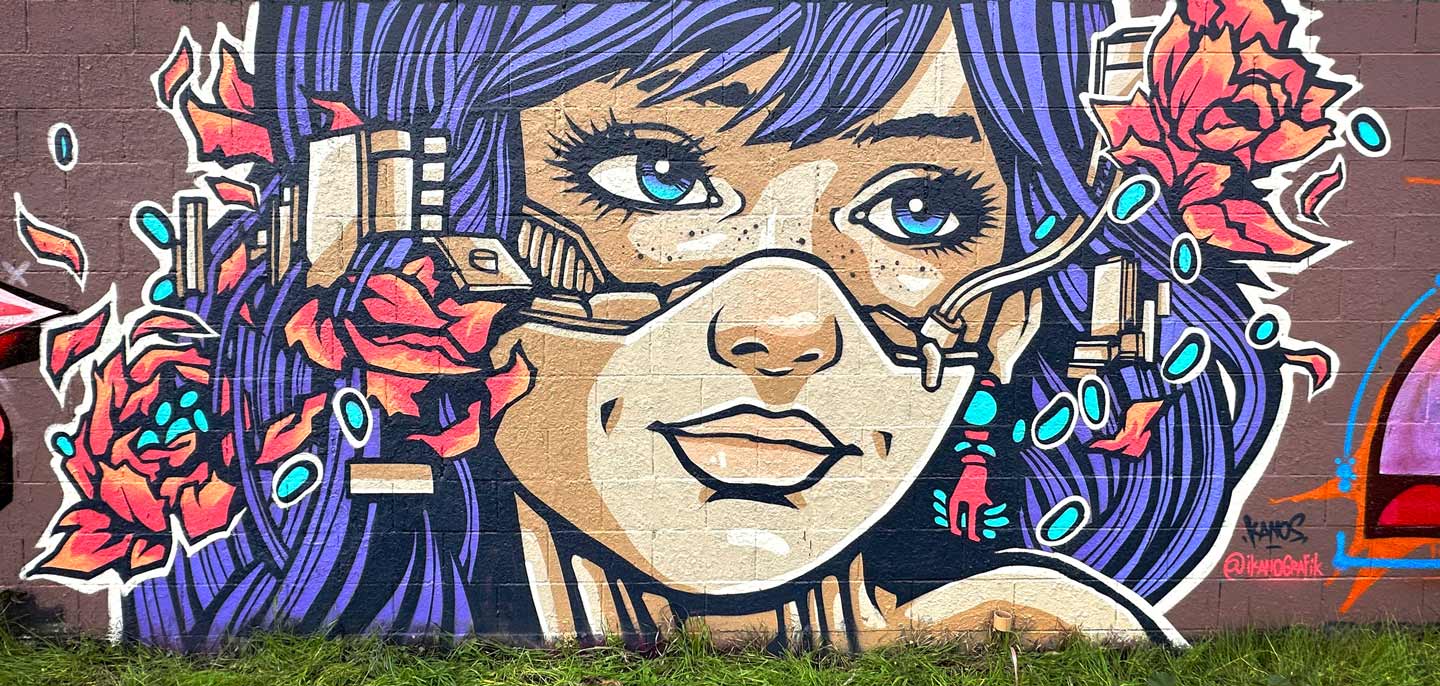
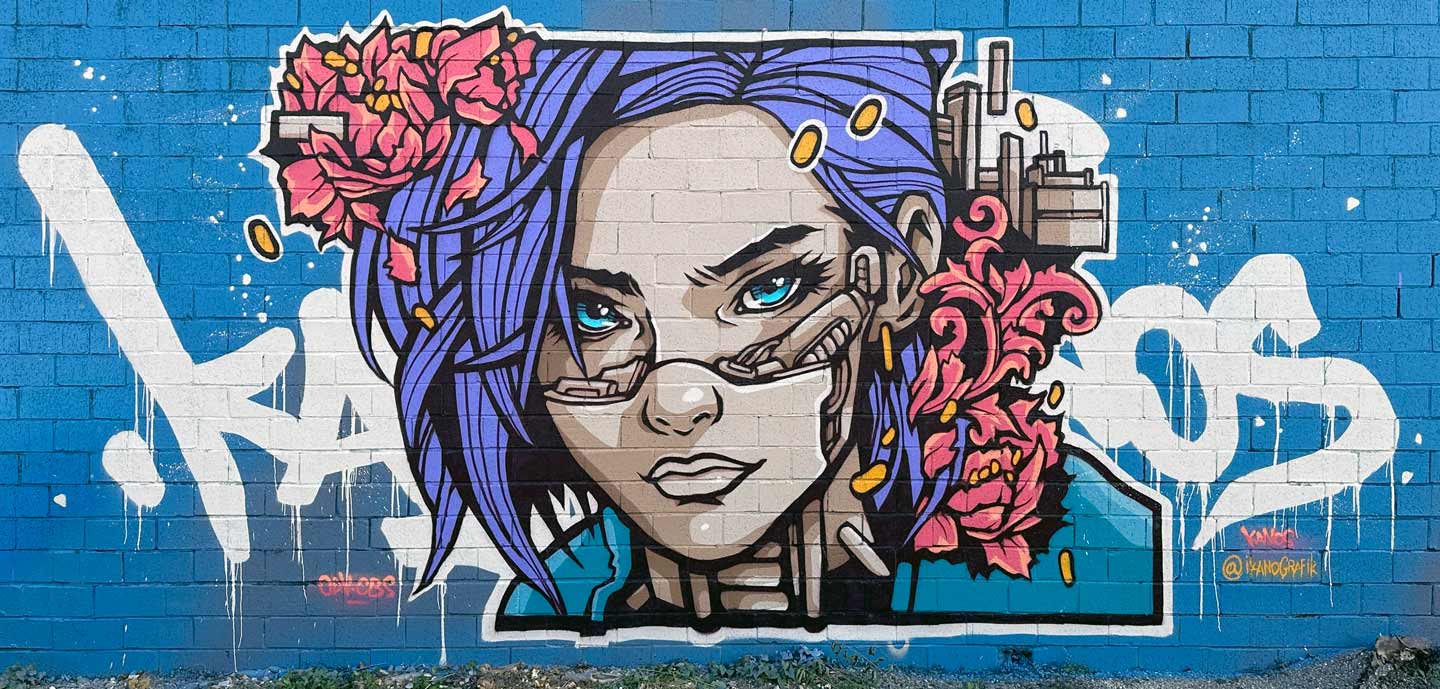
Street art murals and walls have become one of the most dynamic forms of contemporary public art. Unlike traditional graffiti, murals offer the possibility of creating large-scale visual narratives that transform architecture into cultural landmarks. Over the past three decades, my practice has progressively evolved from graffiti lettering toward contemporary figurative mural painting, developing a visual language that combines cyberpunk aesthetics, Art Nouveau composition and architectural storytelling.

Today, mural painting represents the core of my artistic activity. Whether commissioned by municipalities, cultural institutions or private companies, every project begins with the same objective: creating a site-specific artwork that responds to its environment while maintaining a strong artistic identity.

Large-Scale Murals

Working on monumental walls fundamentally changes the way an image is conceived.

Unlike an illustration created for paper or screen, a mural must interact with architecture, natural light, surrounding buildings and the movement of pedestrians. The wall itself becomes part of the composition.

Each project therefore begins with an analysis of the site. Dimensions, perspective, textures and the urban context all influence the final design.

Rather than applying the same visual formula to every commission, I develop compositions that establish a dialogue with the place itself. This approach allows every mural to become unique while remaining recognisable as part of my artistic universe.

Artistic Direction

My current murals combine two visual worlds that rarely meet.

The first comes from cyberpunk culture, inspired by artists such as Syd Mead and Katsuhiro Otomo, where cities evolve into dense ecosystems of technology, architecture and layered information.

The second draws upon Art Nouveau, particularly Alfons Mucha, whose ornamental compositions, flowing lines and elegant characters continue to influence my approach to composition.

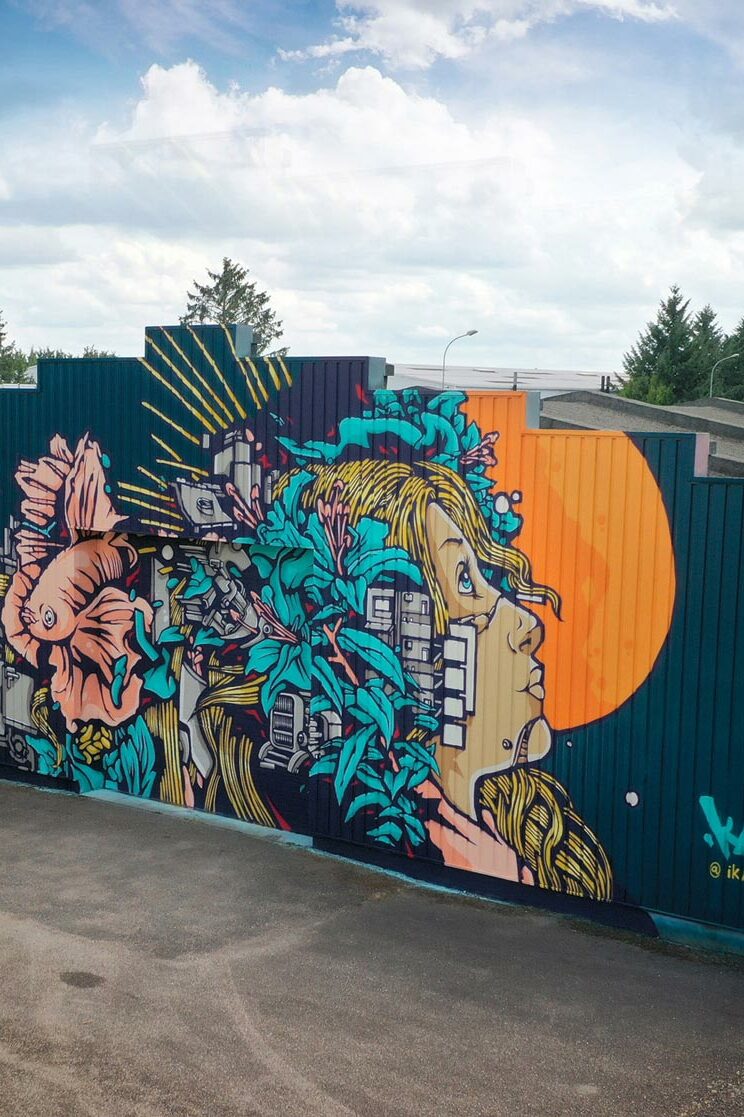
The fusion of these two universes creates images where organic forms coexist with mechanical structures, where vegetation grows through architecture and where contemporary figures inhabit imagined urban environments.

Rather than illustrating science fiction, these murals question the future of our cities and our relationship with technology, memory and nature.

Public and Private Commissions

Over the years I have created murals for municipalities, cultural institutions, festivals, companies and private clients.

Each commission begins with listening. Some projects celebrate local history. Others revitalise forgotten public spaces.

Some communicate the identity of a company or institution. Others simply seek to create an immersive artistic experience.

Because every wall has its own architectural identity, every composition is designed specifically for its location rather than adapted from an existing artwork.

This custom approach allows each mural to become part of the place where it is installed.

International Projects

Travelling has played an essential role in shaping my artistic practice.

Over the years I have painted throughout France while also participating in festivals and artistic collaborations across Europe, North America and Asia.

These experiences introduced me to different architectural styles, urban cultures and artistic communities.

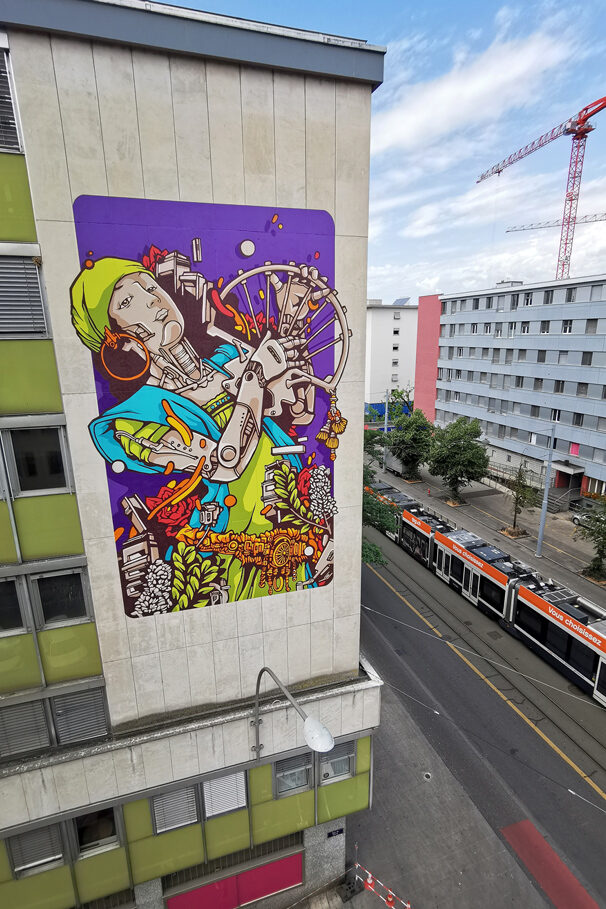
Projects such as Belgium, Geneva or Perpignan, collaborations with the CBS Crew in Los Angeles and invitations to international festivals have continuously expanded my visual vocabulary.

Rather than reproducing local imagery, these journeys have enriched my understanding of how public art interacts with different cities and audiences.

From Concept to Walls

Every mural and walls follows a structured creative process.

It begins with research and discussion, followed by sketches, digital simulations and compositional studies.

The concept is then integrated into photographs of the actual location whenever possible, allowing clients to visualise the finished artwork before production begins.

Once approved, execution takes place on site using professional mural techniques adapted to the wall and environmental conditions.

This process ensures that creativity and technical precision evolve together from the first conversation to the completed mural.

Why Commission a Mural

A mural is more than decoration. It can transform an ordinary building into a landmark.

It can strengthen the identity of a neighbourhood. It can improve the visual experience of employees, visitors or residents.

It can communicate values without relying on advertising. For cultural institutions and municipalities, murals often become part of the city’s visual heritage.

For businesses, they reinforce identity while creating memorable public spaces. For private collectors, they provide unique site-specific artworks impossible to reproduce elsewhere.

This relationship between architecture and painting is what continues to motivate my work today.

Frequently Asked QUestions

What types of murals and walls do you create?

Large-scale contemporary murals inspired by cyberpunk, Art Nouveau, architecture and urban culture.

Do you paint walls outside France?

Yes. I regularly work internationally depending on the project and logistics.

Who commissions your murals?

Municipalities, cultural institutions, companies, festivals and private clients.

How long does a mural project take?

It depends on the size, complexity and location, but every project begins with a detailed planning phase.

Can you create a custom design for a specific building?

Yes. Every mural is designed specifically for its architectural context rather than adapted from an existing artwork.