Frequently Asked Questions
What is the Salomé mural in Geneva?
Salomé is a mural by Alex Kanos created in Geneva’s Acacias district, inspired by Alfons Mucha and cyberpunk aesthetics.
What is the concept behind the artwork?
The mural explores the fusion of Art Nouveau inspiration with technological and mechanical elements.
Where was the mural located?
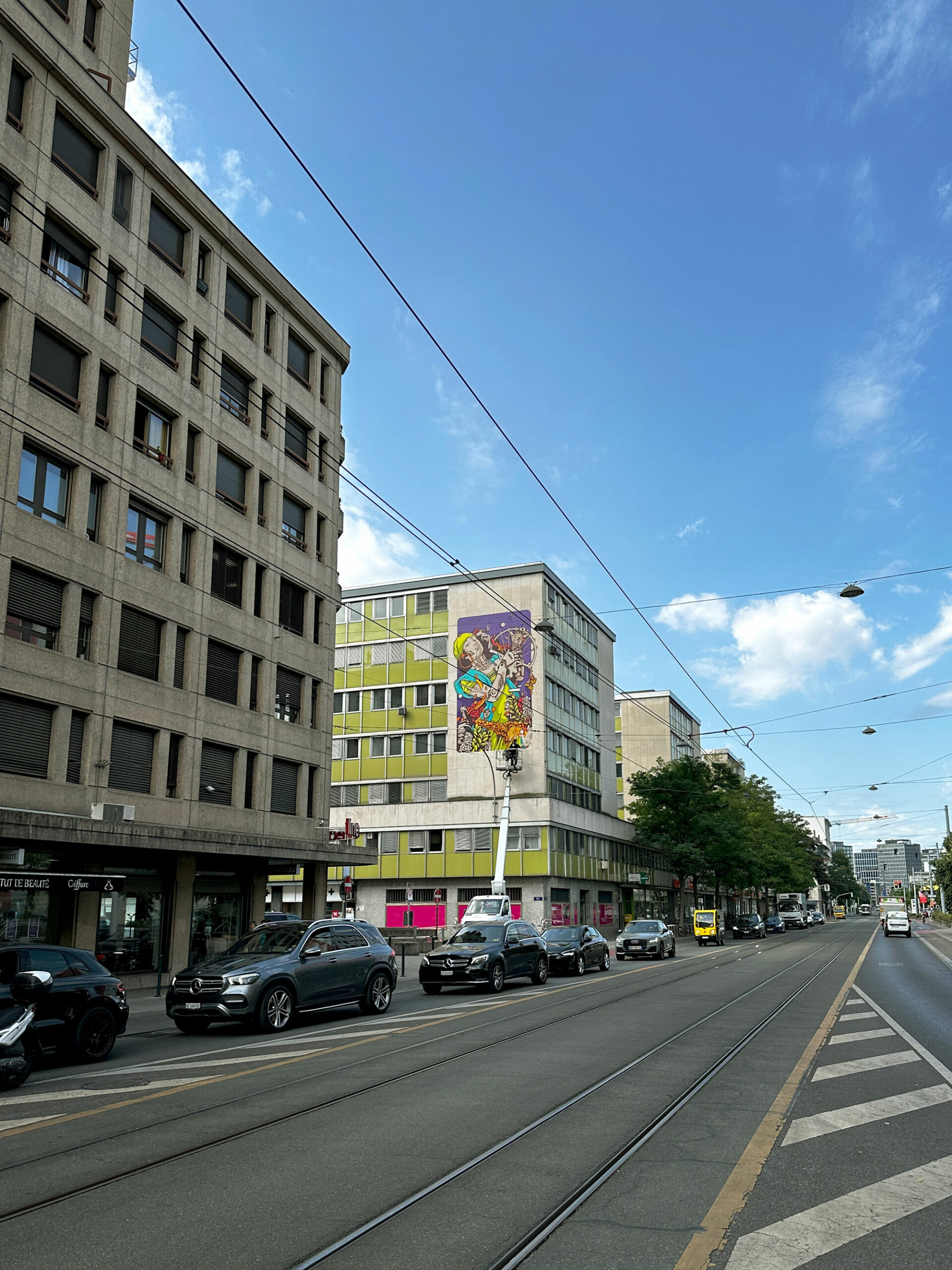
It was painted in Geneva’s Acacias district on a building that has since been demolished.
What does the mural represent?
It represents urban transformation, ephemeral street art and the relationship between humanity, technology and the city.
What artistic influences are present?
The work combines Alfons Mucha’s Art Nouveau style with contemporary cyberpunk visual language.
Salome Mural inspired by Mucha in Geneva’s Acacias District
Salome Mural inspired by Mucha and cyberpunk in Geneva’s Acacias District.
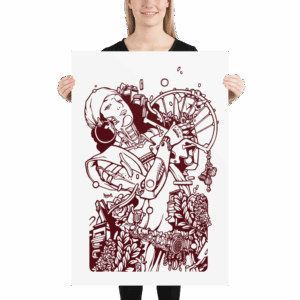
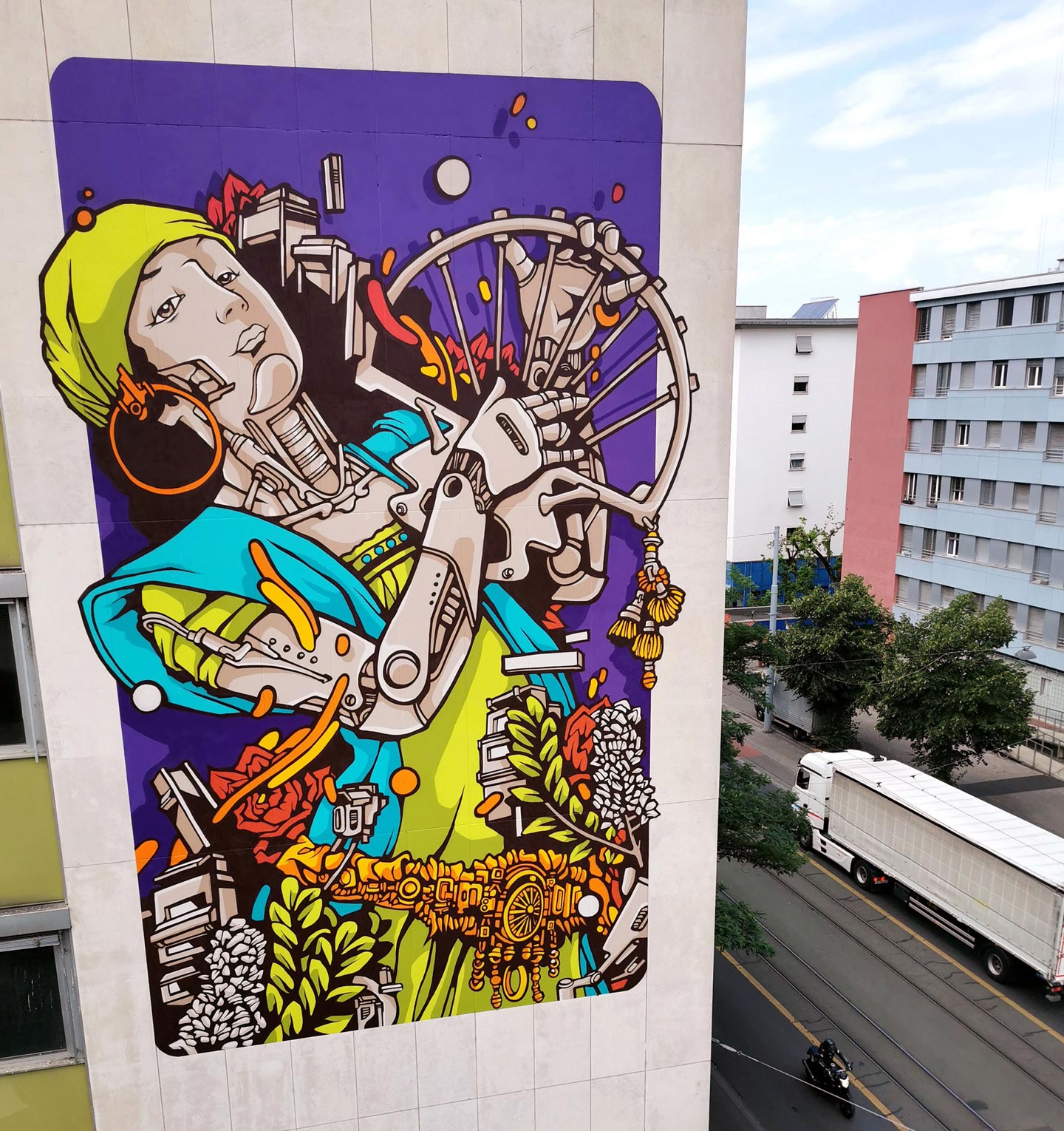
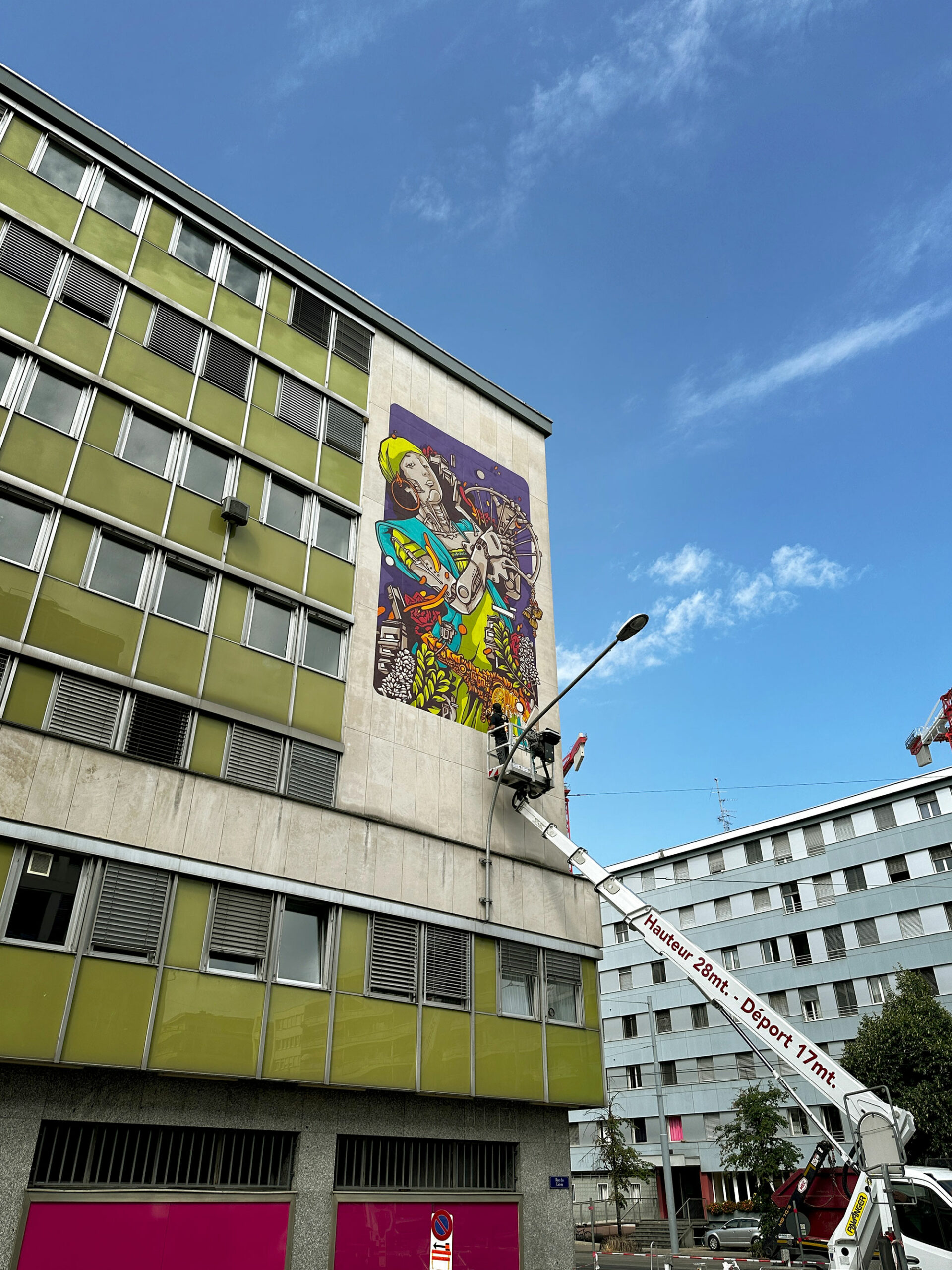
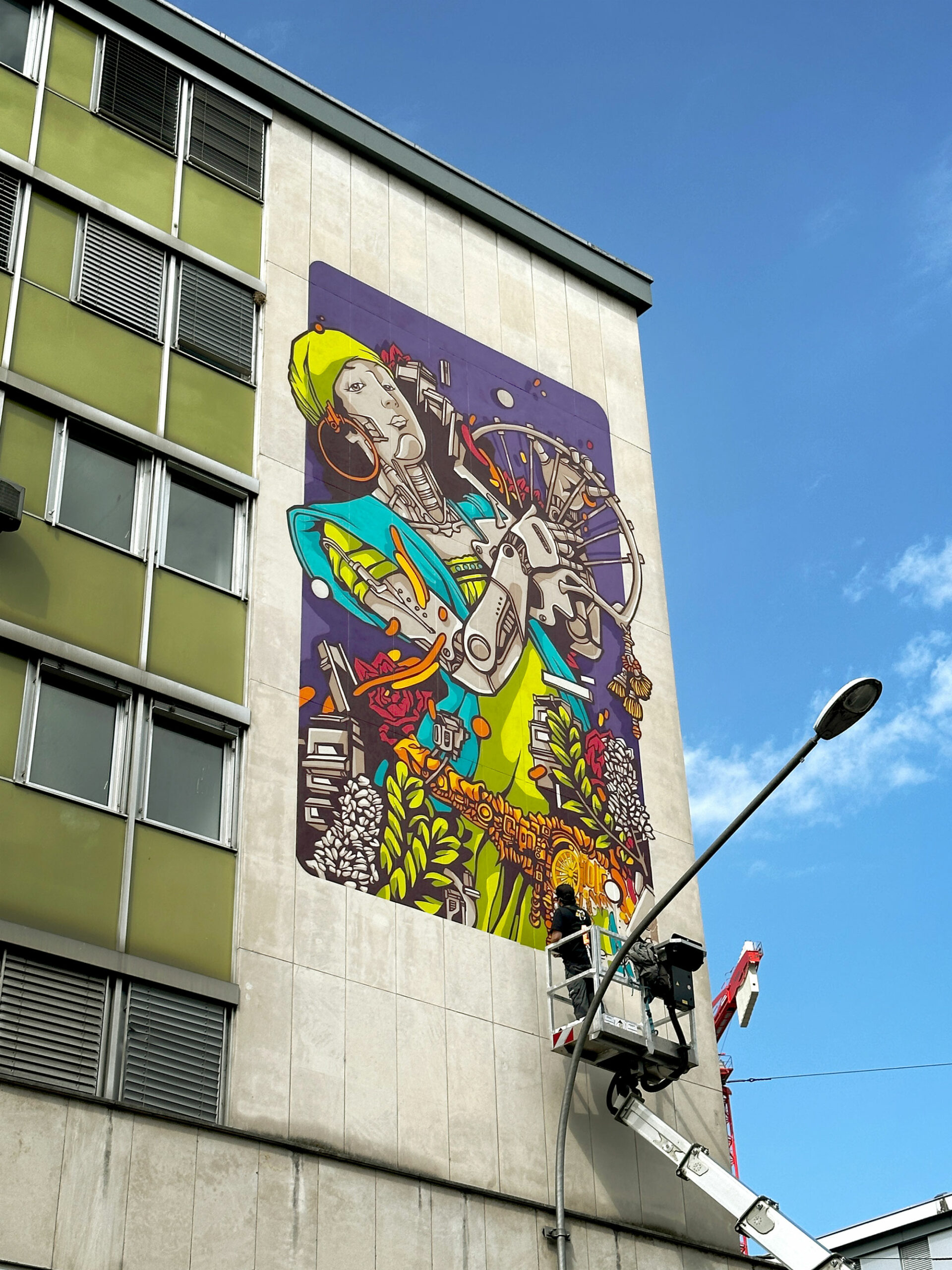
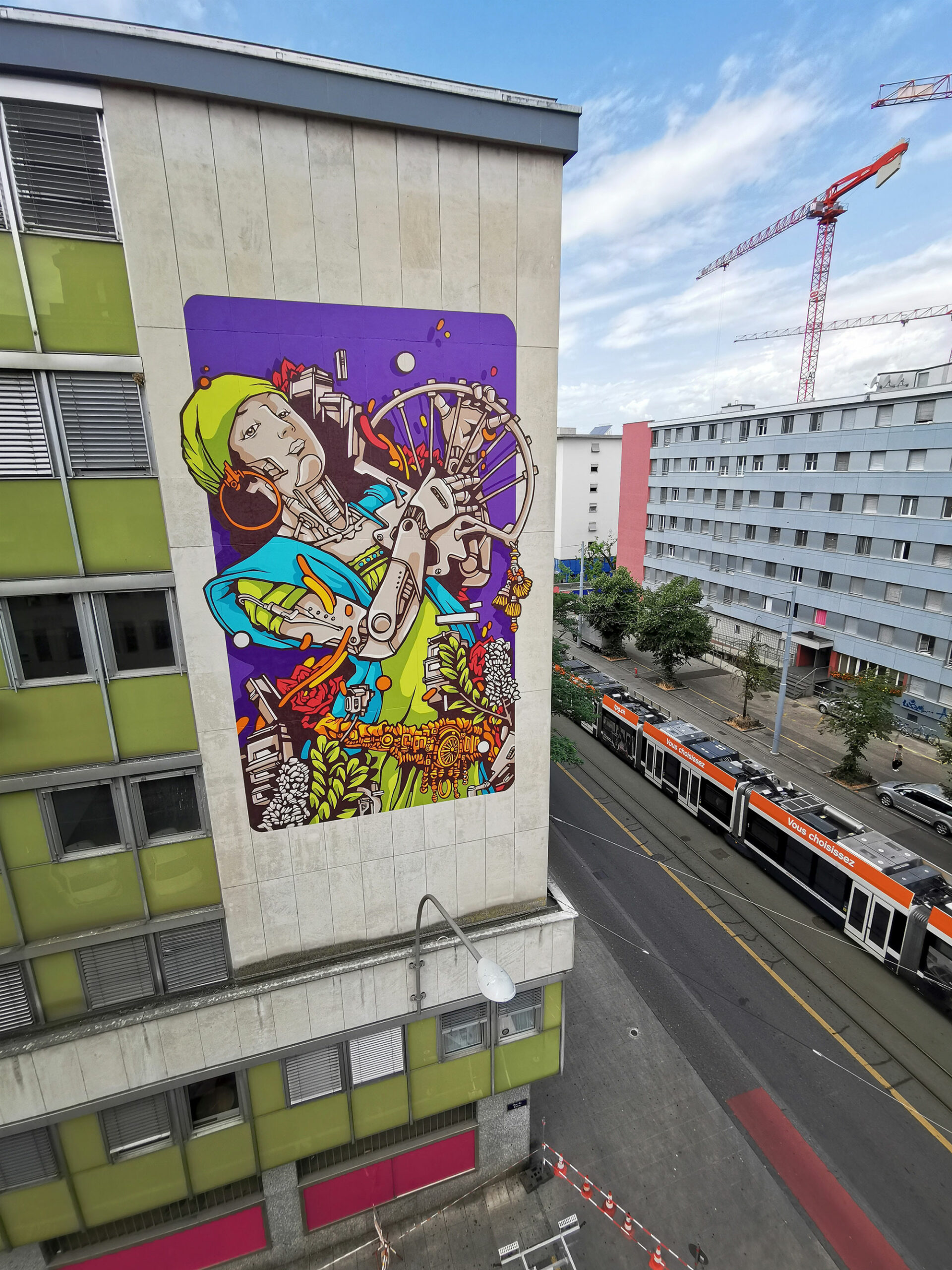
Once again, I created a mural in Geneva for WallsStreetGVA, in Acacias district titled Salomé, an homage to artist Alfons Mucha. Salomé is depicted playing an instrument, with mechanical elements incorporated into her body. Acacia leaves, intertwined with the jewels on her belt, reference the district itself.
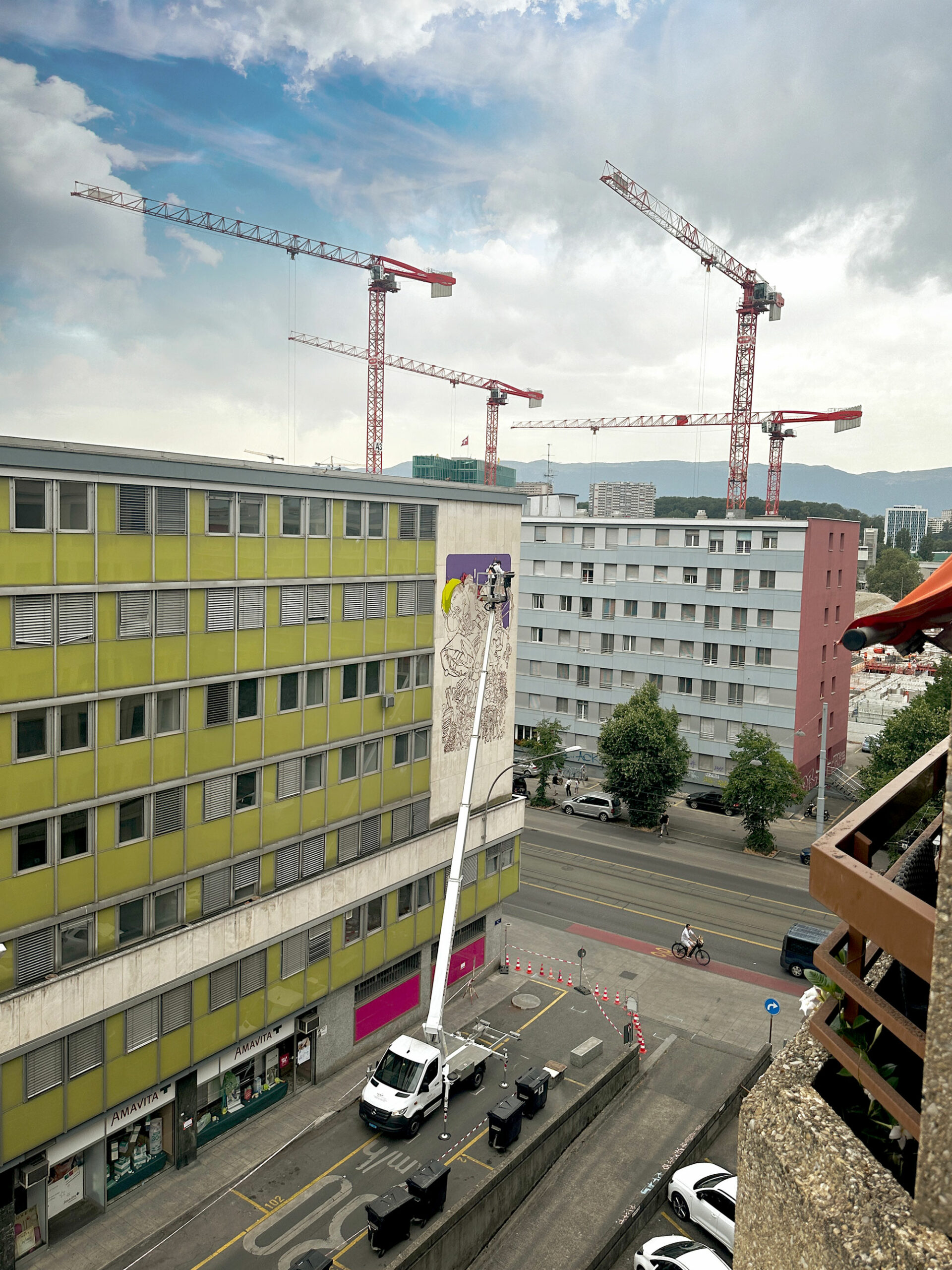
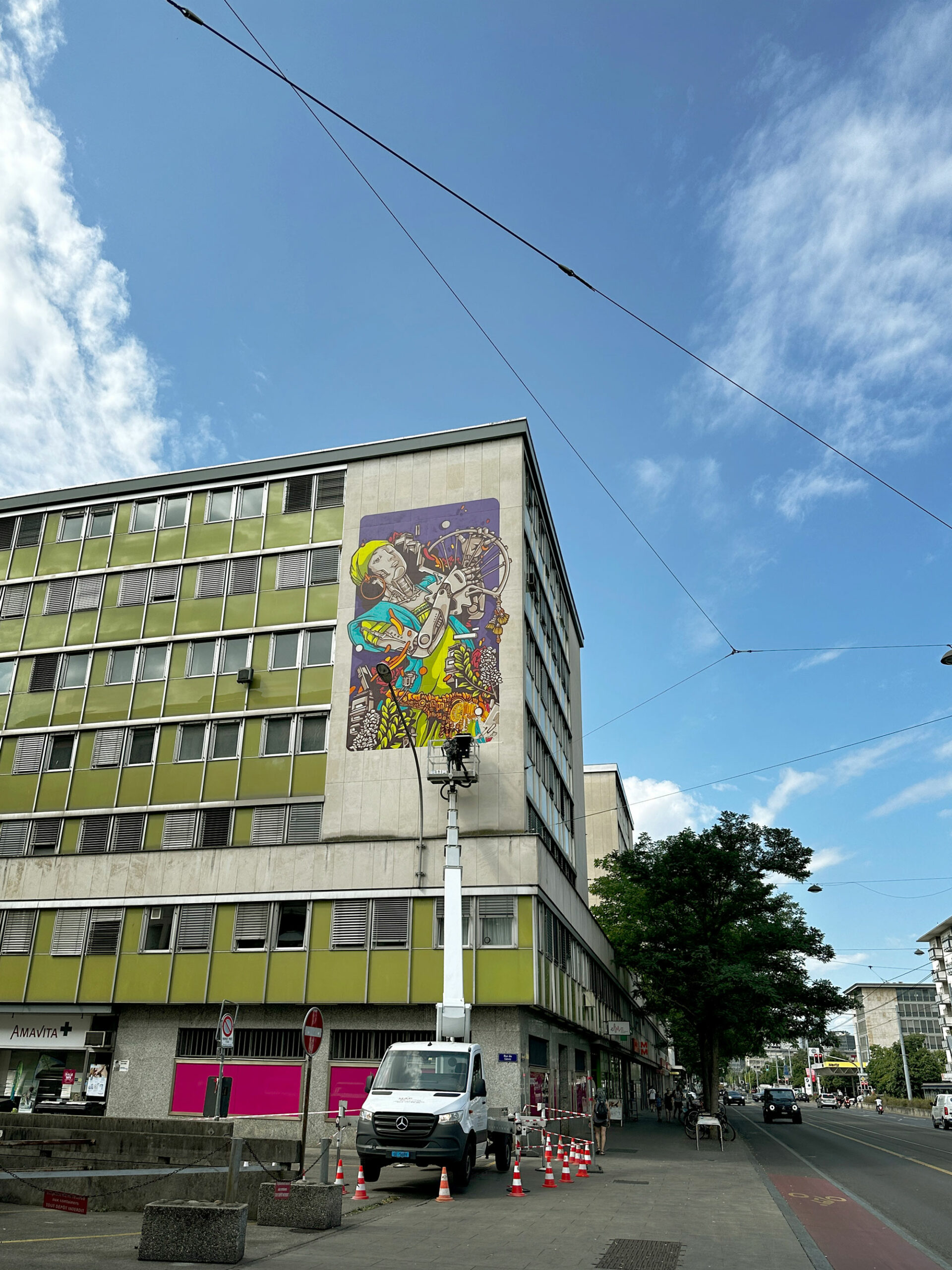
This artwork was painted on a building that has since been demolished, symbolizing the rapid transformation of this evolving neighborhood. Urban art, ephemeral by nature, serves as a witness to change while inviting reflection on the interaction between humanity, the city, and technology. More murals i did in Geneva here, Victoria and Clémence.
This mural continues an exploration of the relationship between Art Nouveau heritage and contemporary urban transformation. The figure of Salomé is inspired by Alfons Mucha’s visual language, characterized by ornamental composition, flowing lines and symbolic representation of feminine figures.
In this interpretation, Salomé is not only a historical reference but also a hybrid character situated between classical aesthetics and technological mutation. The integration of mechanical elements within her body introduces a cyberpunk dimension that contrasts with the organic elegance of Art Nouveau composition.
The presence of musical elements in the composition reinforces the idea of rhythm and structure. Music becomes a metaphor for visual harmony, where each component of the mural contributes to a larger system of balance between organic and mechanical forms.
A significant symbolic layer of the artwork lies in its connection to the Acacias district. The use of acacia leaves intertwined with the jewels on Salomé’s belt creates a direct link between the character and its environment. This integration of local references anchors the mural within its geographical and cultural context, transforming the figure into a visual reflection of the neighborhood itself.
The fact that the building on which the mural was painted has since been demolished adds an additional layer of meaning. The artwork becomes a trace of a disappearing urban landscape, emphasizing the fragile and temporary nature of street art. Unlike traditional artworks preserved in museums, murals exist within a constantly evolving environment.
This ephemerality is central to the conceptual dimension of the work. Urban space is not static; it is subject to continuous transformation through demolition, reconstruction and architectural change. In this context, street art acts as both documentation and interpretation of these transformations.
The fusion between Art Nouveau inspiration and cyberpunk aesthetics reflects a broader interest in temporal hybridity. Past and future are not treated as separate categories but as overlapping systems of visual language. Salomé exists at the intersection of these temporalities, where historical references and speculative futures coexist within a single composition.
The mechanical elements integrated into the character suggest a transformation of the human body through technological influence. This hybridization does not negate the original figure but extends it, creating a visual metaphor for contemporary identity shaped by technological environments.
At the same time, the ornamental qualities inspired by Alfons Mucha maintain a sense of continuity with artistic tradition. This tension between continuity and transformation defines the visual identity of the mural.
Ultimately, Salomé functions as a reflection on urban change, artistic heritage and technological evolution. The mural captures a moment in time within a rapidly transforming neighborhood, while simultaneously engaging with broader questions about the relationship between humans, cities and technology.