MINERVA BW Framed Print / Wisdom and Cyberpunk
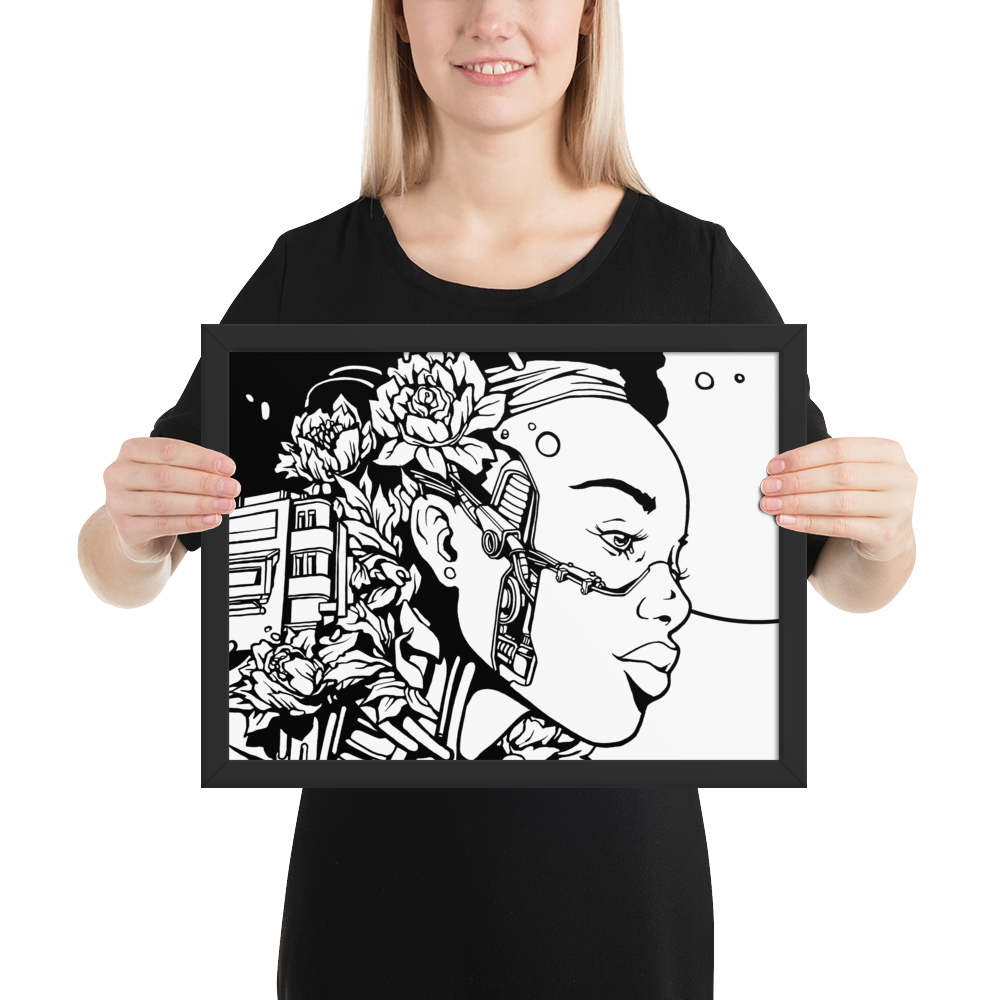
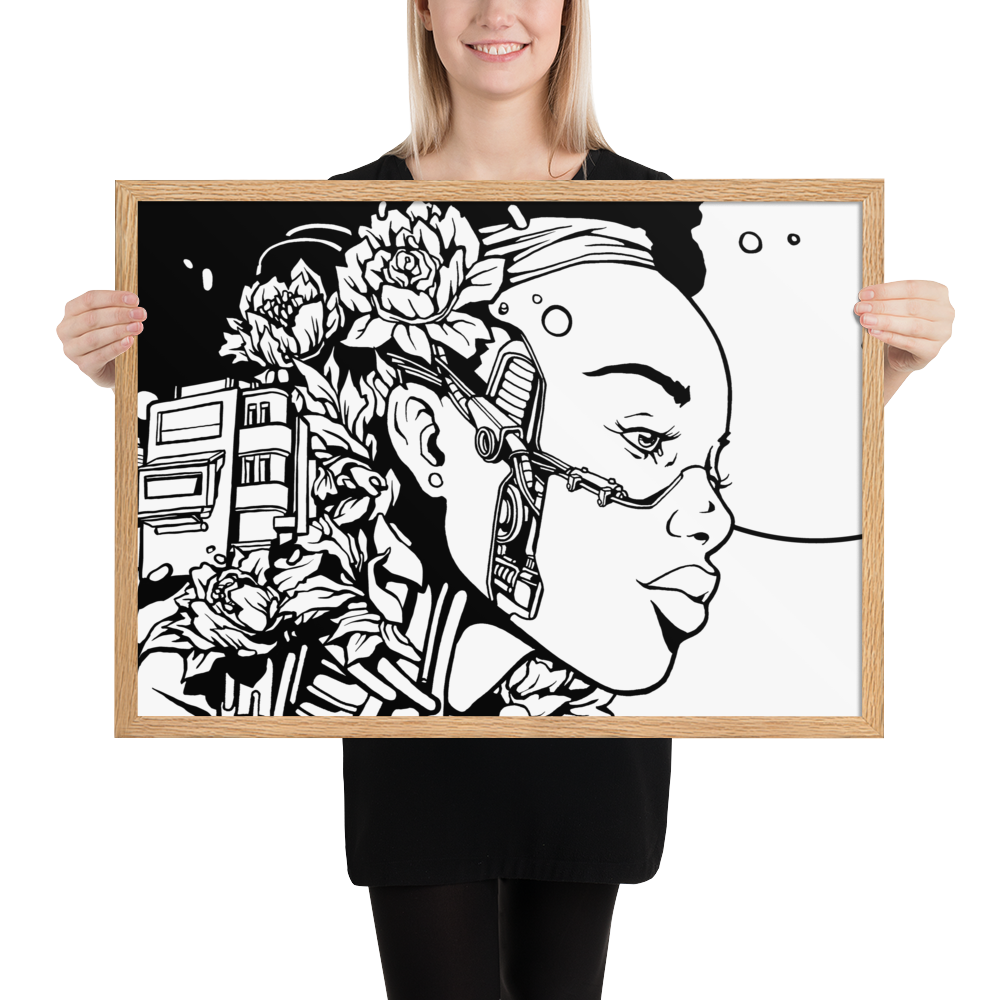
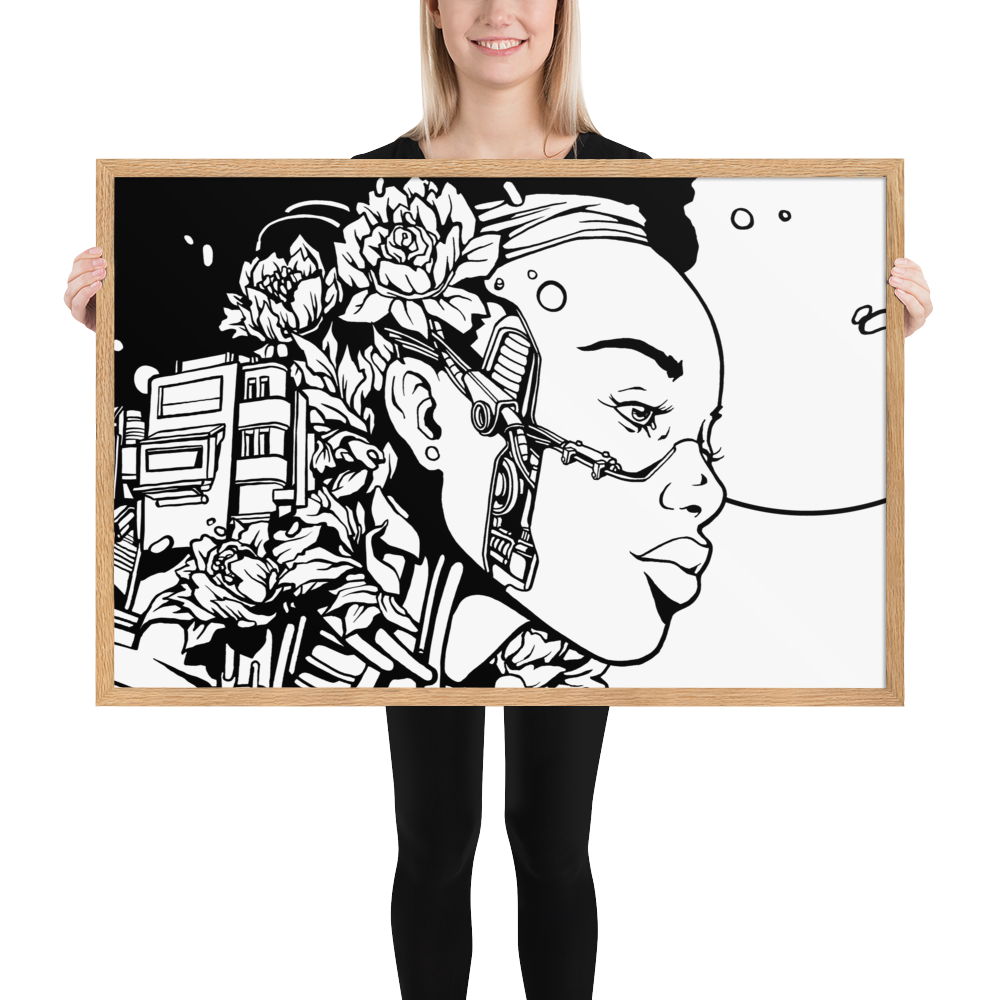
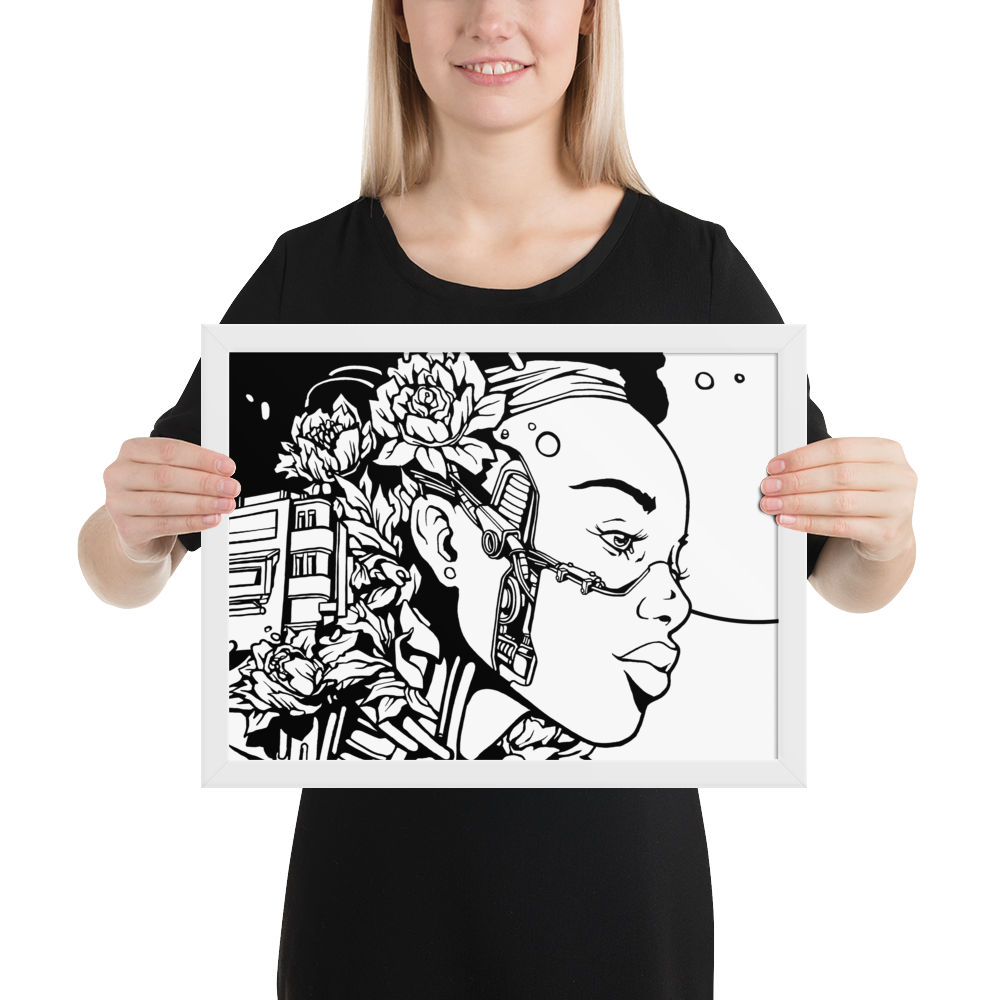
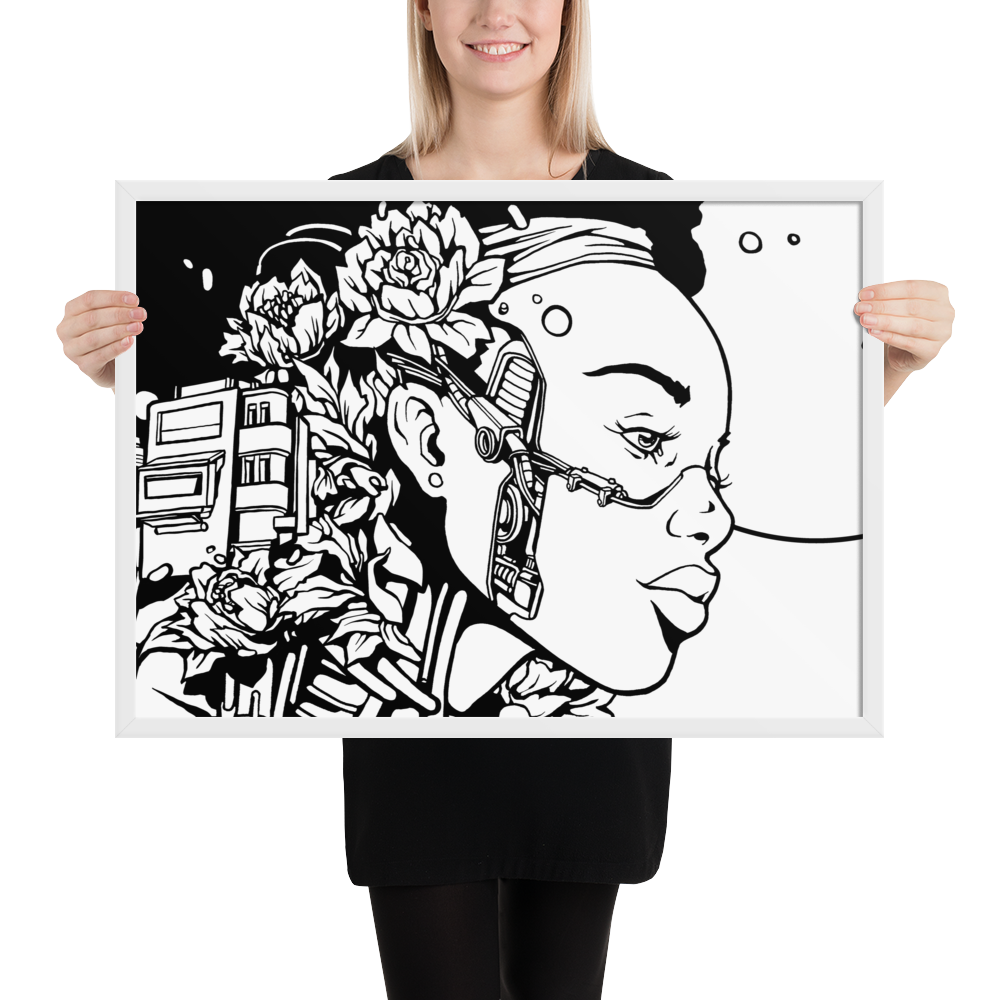
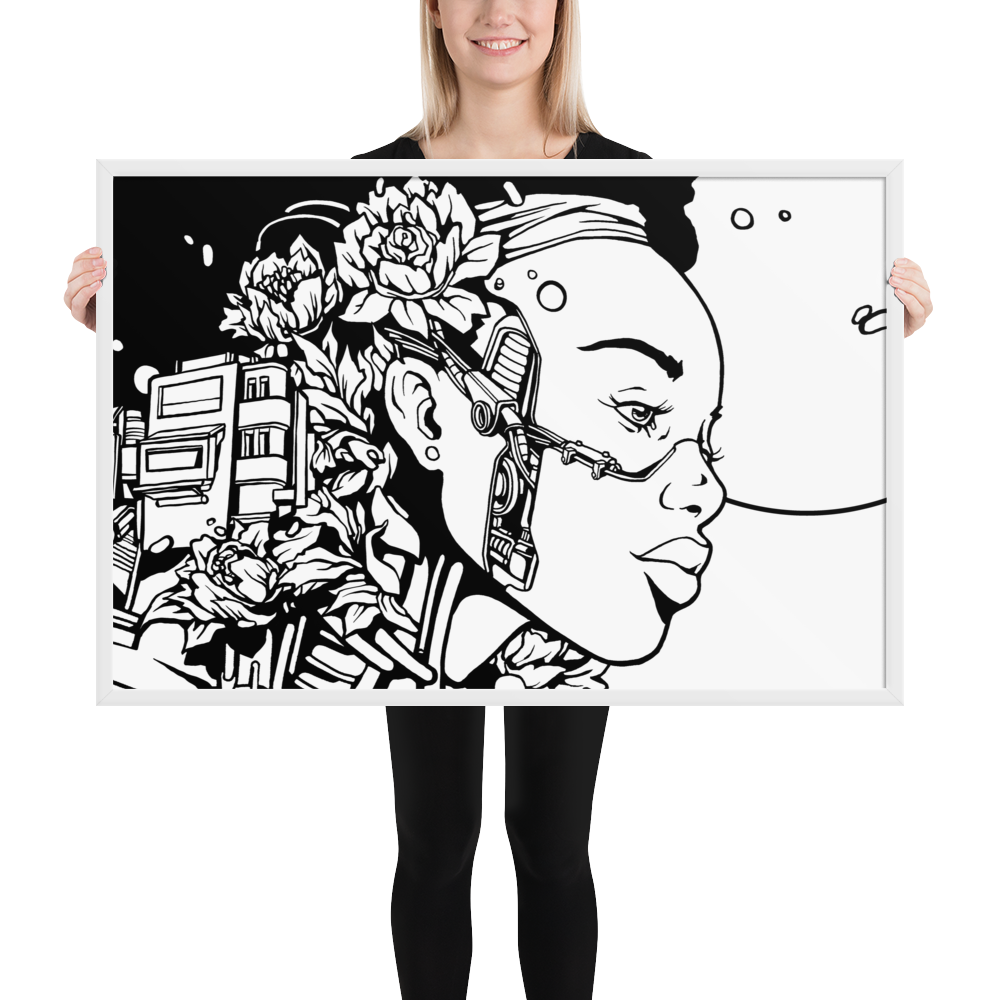
Minerva BW Framed Print is based on a mural created for the exhibition Trésors de Banlieues Organised by Académie des Banlieues and Art Tutti Fonds de dotation, an event bringing together art pieces from more than 70 local communities. The project situates itself within a broader reflection on suburban cultural identity, historical heritage, and contemporary artistic production.
The mural draws its foundation from Minerva, the Roman goddess of wisdom, craft, and strategic thought. In classical mythology, Minerva represents knowledge acquired through observation rather than impulse, a form of structured understanding of the world. This conceptual framework becomes the starting point for a visual reinterpretation that merges mythology with industrial memory and contemporary technological culture. Rather than illustrating mythology in a traditional sense, the mural transforms Minerva into a hybrid figure situated between symbolic heritage and modern transformation.
Human and Machine Duality
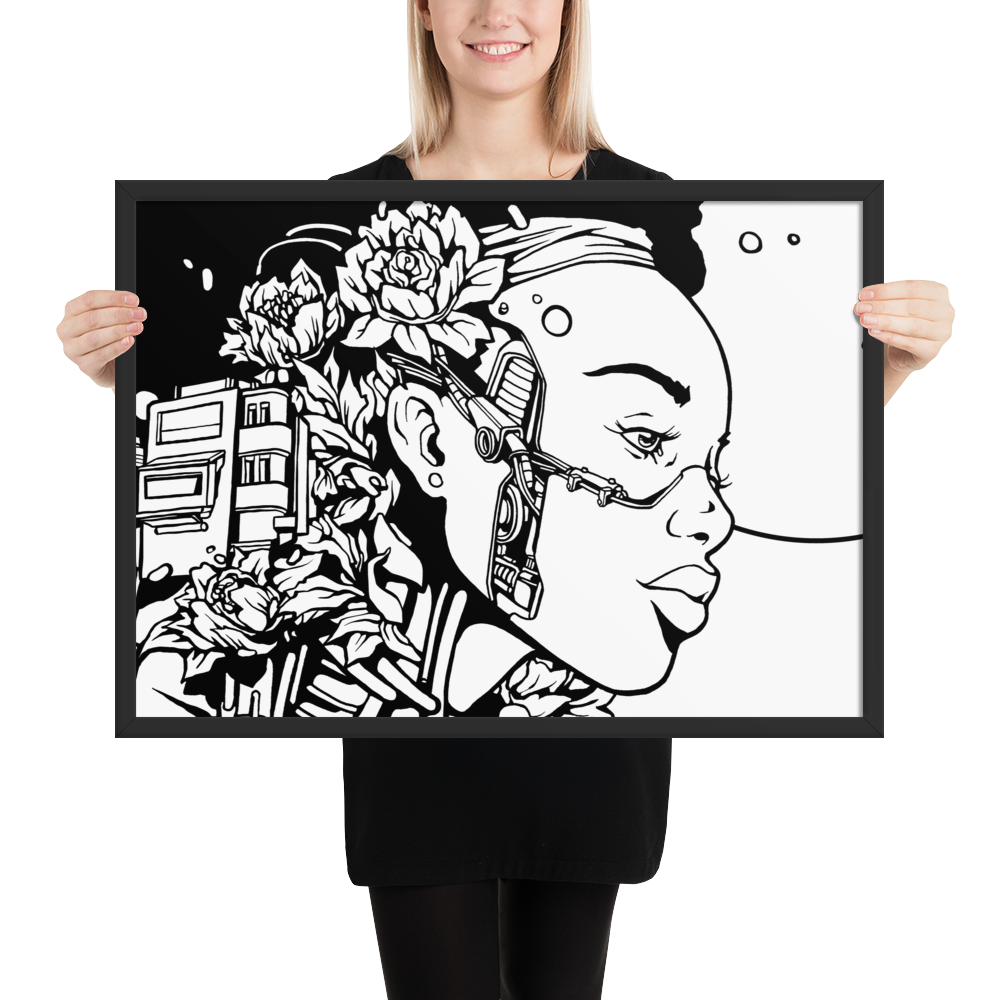
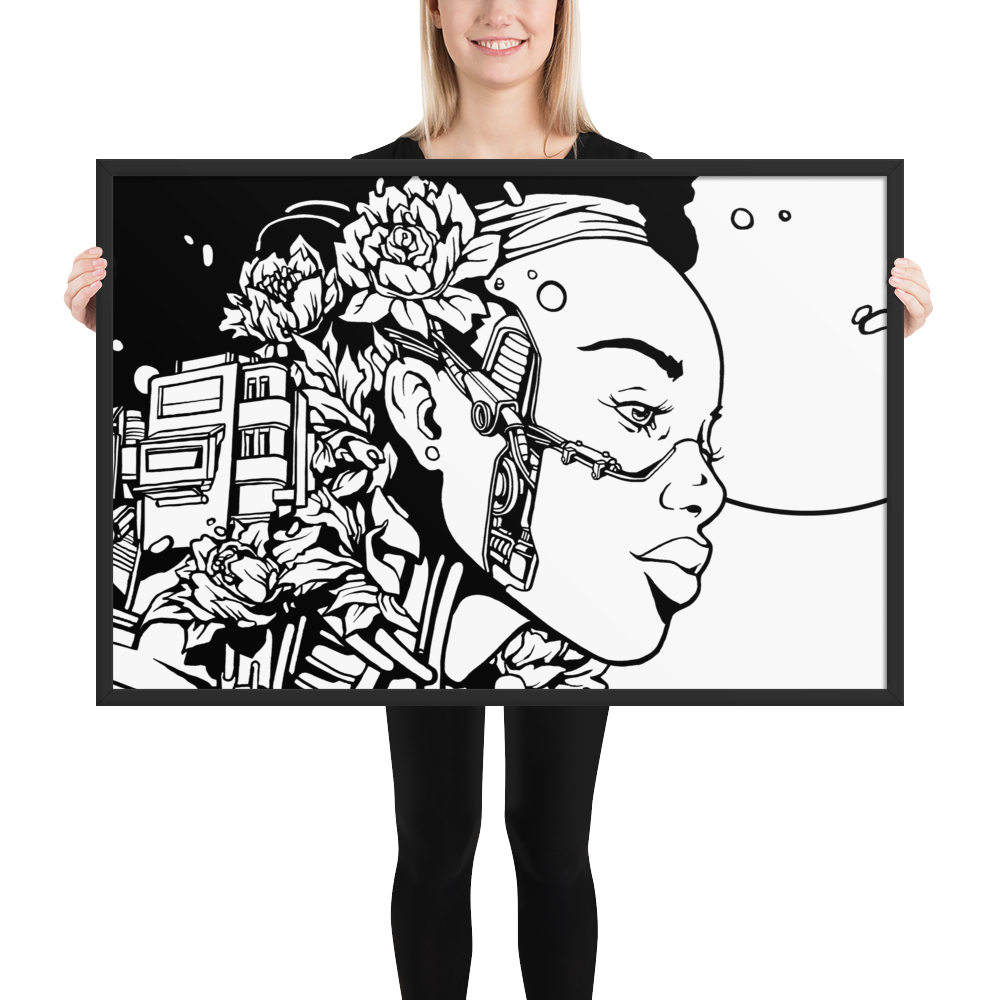
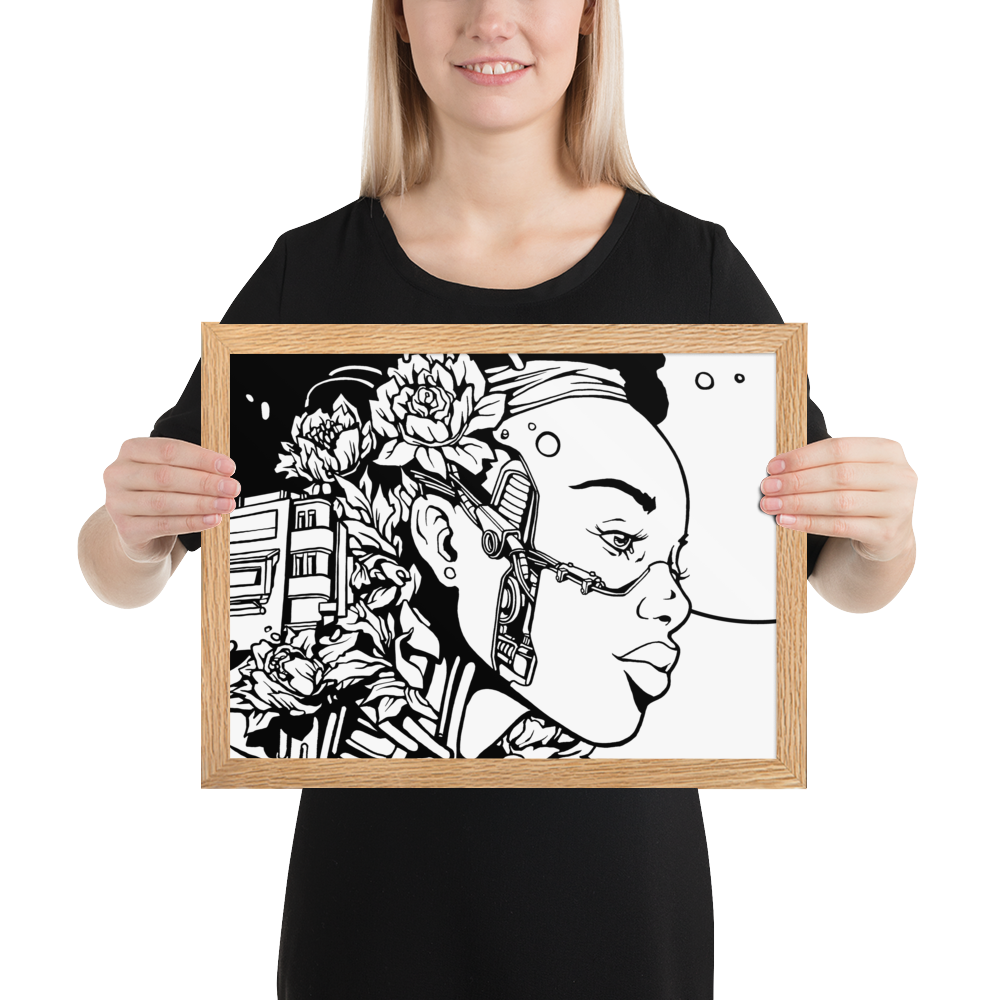
A recurring theme in the work is the relationship between human and machine, organic and mechanical systems. In Minerva, this duality is not presented as opposition but as integration. The central figure embodies this fusion, where technological and biological elements coexist within a single visual structure. This reflects the evolution of industrial society, where human labor and mechanical processes have become deeply interconnected. Rather than depicting technology as a rupture, the mural explores it as a continuation of human transformation. Identity is no longer fixed but shaped by systems of production, tools, and environments.
Industrial Memory and Contemporary Identity
The work also engages with industrial memory, referencing the transformation of labor systems and production environments. The figure recalls the historical presence of factory workers, while simultaneously projecting into a contemporary technological landscape. This layered approach creates a continuity between past and present. Industrial structures are not erased but integrated into a broader reflection on how societies evolve. The mural suggests that modern identity is formed through this ongoing negotiation between human gesture and mechanical structure.
The Peony as Symbol of Balance
A significant organic element in the composition is the peony flower, symbol of honor, dignity, and hope. The flower introduces a counterbalance to mechanical and industrial references. Rather than acting as decoration, it plays a structural role within the visual narrative. It softens the composition while maintaining its conceptual coherence. The coexistence of floral and mechanical elements reflects a broader artistic intention: to create equilibrium between systems that are often perceived as incompatible.
Trésors de Banlieues Context
Created within the framework of Trésors de Banlieues, the mural participates in a larger exhibition dedicated to suburban artistic production. The event highlights cultural diversity outside traditional institutional centers, presenting works from different historical and contemporary periods. Within this context, Minerva becomes part of a collective narrative that connects mythology, industrial history, and urban transformation. The mural does not stand alone but interacts with a wider cultural ecosystem, reinforcing the idea that art is deeply embedded in social and geographical environments.
From Mural to Print
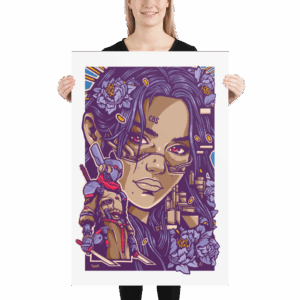
Minerva Print translates the original mural into a format that preserves its symbolic complexity while adapting it to a more intimate scale. Details that were part of a large-scale urban environment become more accessible in print form, allowing closer observation of the relationships between symbolic elements. The transition from wall to print extends the life of the mural beyond its original exhibition context, transforming it into a lasting visual object.
Conceptual Summary
Minerva functions as a reflection on knowledge as a dynamic process. It combines mythology, industrial memory, and contemporary technological concerns within a single visual structure. Rather than offering fixed meaning, the mural proposes a system of interpretation where each element contributes to an open symbolic field. The result is a work that connects ancient mythology with contemporary questions about identity, transformation, and perception.
About the Artist
Alex Kanos is a French contemporary mural artist whose work combines Art Nouveau influences, science fiction, and urban culture. Through large-scale murals and graphic design, he explores the relationship between organic life and technological evolution, creating hybrid compositions where history, mythology, and speculative futures intersect. His work frequently examines themes of identity, transformation, resilience, and cultural memory through elegant yet complex visual narratives. Each project seeks to establish a dialogue between past and future, demonstrating that artistic heritage continues to evolve when viewed through the lens of contemporary society.