
Graffiti Productions 2011
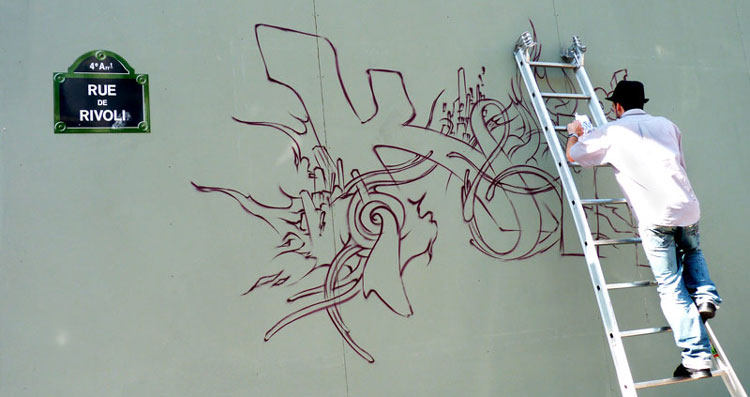
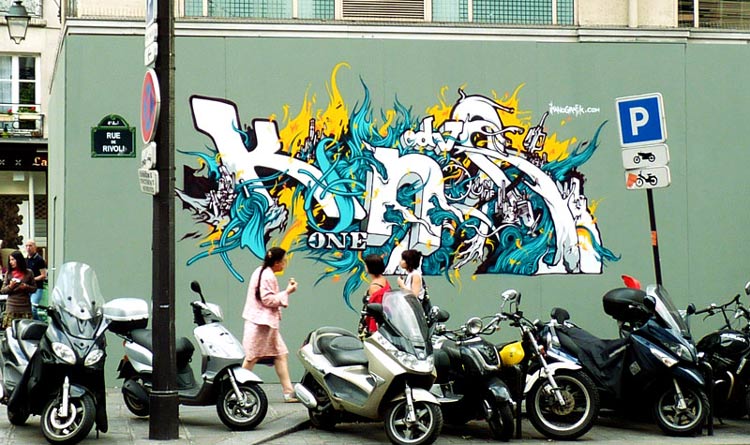
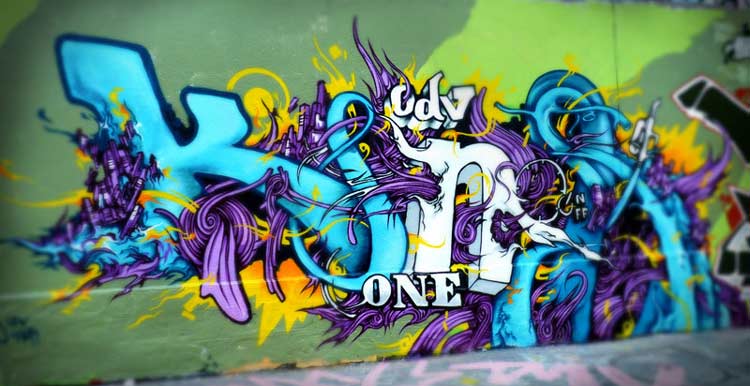
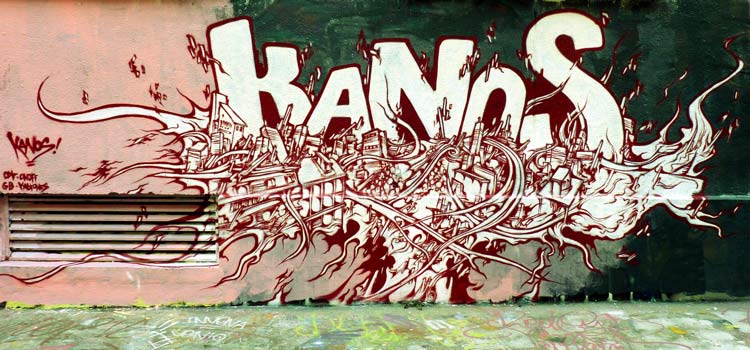
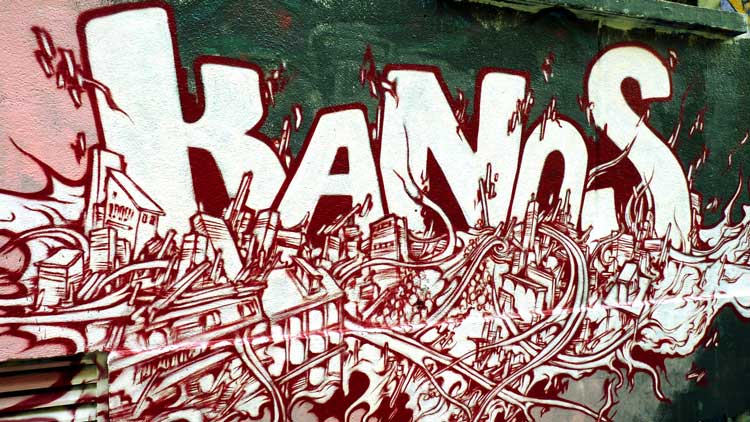
Graffiti Productions 2011 / Paris, Rue de Rivoli, merci Didier Berthelot de la Mairie du 4e de Paris
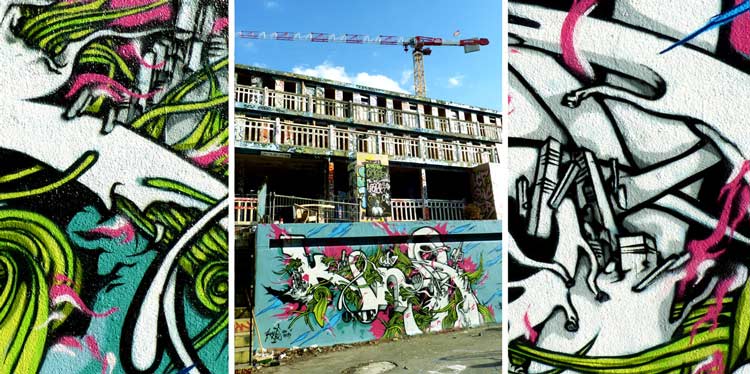
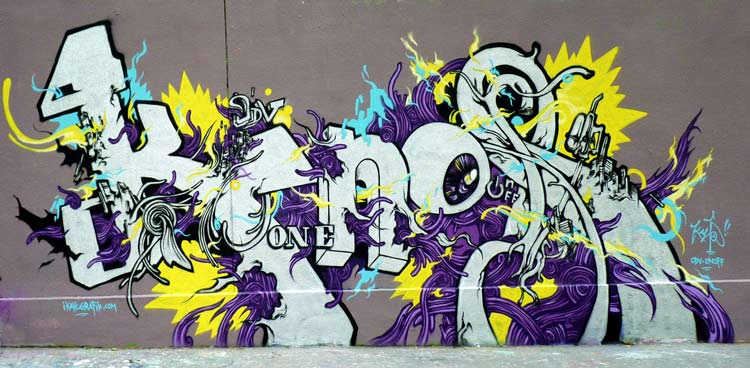
Piscine Molitor, avec Katre, Alexone, Ness, Azek, Seth, Jace (les gouzou!!), Aien, Dave photo
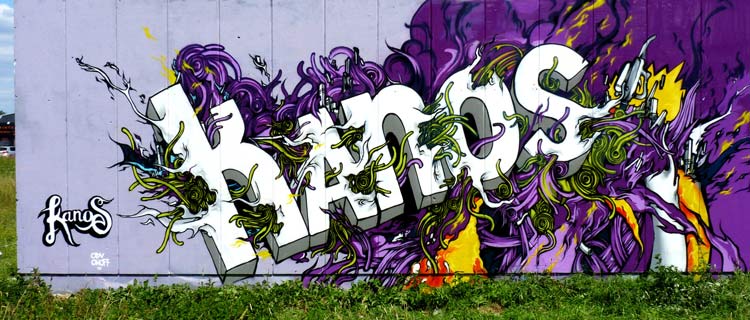
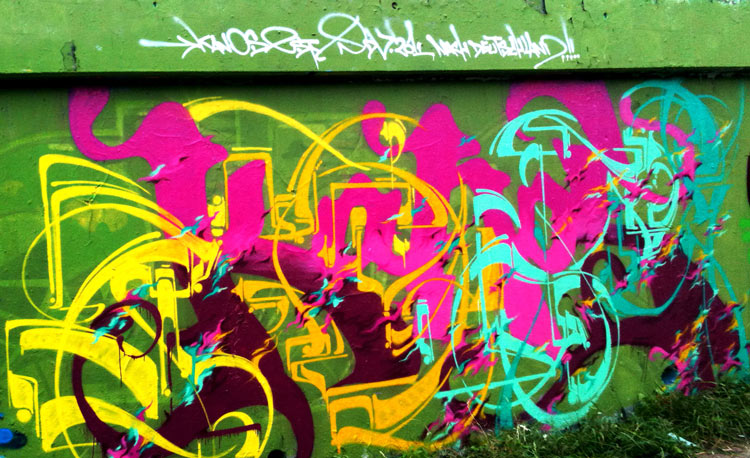
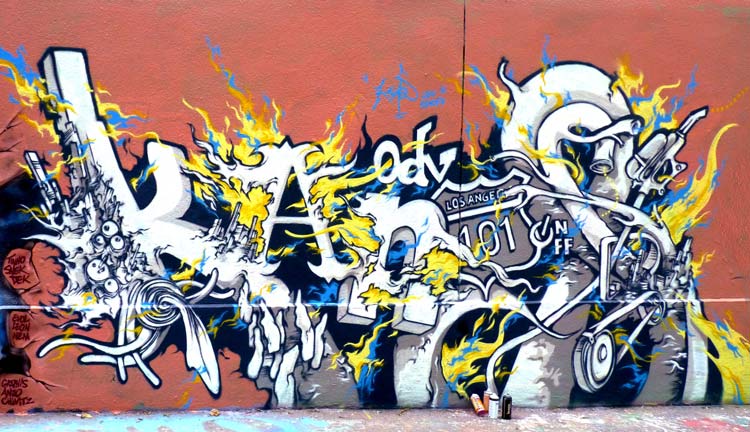
Avec Esty ODV, à Wiesbaden Allemagne, pendant le meeting of Style, merci Semor!!!
Dytch Cbs (L.A.), Fisek (Chili), Does (Brasil), Demon (Chicago), Pisko (Strasbourg), Binho(Sao Polo), Katre, Nes (Toulouse)
Graffiti Productions 2011
Graffiti Productions 2011 brings together a selection of murals completed during 2011. Like the archive articles dedicated to 2010, 2012 and 2013, this post is not intended to document every wall painted during the year but rather to present a representative overview of the research, locations and visual themes that defined this period of my graffiti practice. Looking back at these works also makes it possible to observe how recurring ideas progressively evolved from one project to another.
The first mural presented in this archive continues the research developed in the Kanos & the one dollar bill series. Painted on Rue de Rivoli in Paris as part of a project for the 4th arrondissement city hall, the work expands the visual language introduced in earlier studio research. Fragments inspired by the graphic vocabulary of the United States one-dollar bill are integrated into industrial typography, architectural structures and organic forms. Rather than using the banknote as an illustration, the project reinterprets its ornamental language to explore questions surrounding economic power, global influence and urban transformation.
The composition continues my exploration of fragmented typography. Letters become architectural frameworks supporting mechanical structures, organic growth and symbolic references. This hybrid visual language had already begun to define many of my murals and would continue to develop throughout the following years.
The archive then moves to another important location in my artistic journey: the former Molitor swimming pool in Paris. I had already been fortunate enough to paint inside Molitor in 2010, when the abandoned Art Deco complex had become one of the most legendary graffiti locations in Europe. At that time, every surface of the building had been progressively covered by generations of artists, transforming the abandoned swimming pool into an extraordinary open-air gallery.
The mural shown in this article belongs to this unique period, before the complete renovation of the site. Today, Molitor has been entirely restored and now operates as a luxury hotel and leisure complex. The graffiti that once covered the walls no longer exists. The paintings survived only through photographs and memories shared by the artists who experienced the place.
This transformation perfectly illustrates one of the central themes running throughout my work: the constant mutation of cities. Urban environments never remain fixed. Buildings change function, neighbourhoods evolve, industrial sites disappear and artistic interventions are gradually erased. Graffiti often exists only temporarily before being covered, demolished or absorbed into new urban developments.
Rather than seeing this disappearance as purely negative, I consider it part of the natural life cycle of cities. Graffiti becomes a temporary layer within a much longer urban history. Once the walls disappear, the images remain only as fragments of memory documenting places that no longer exist in the same form.
The archive continues with several murals painted on Rue des Pyrénées in Paris. During this period, the location had become one of the best-known graffiti spots in the city. Writers regularly gathered there to experiment with lettering, characters and new visual approaches. The constantly changing walls reflected the collaborative and ephemeral nature of graffiti culture, where paintings continually replaced one another.
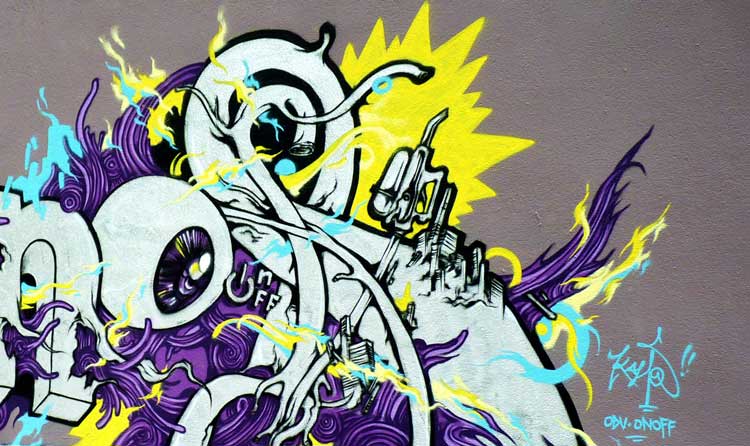
Many of the works presented here continue my ongoing research into typography, architecture and hybrid forms. Letters are no longer isolated graphic signs but become structures capable of integrating fragments of buildings, industrial elements and organic systems. This process reflects my growing interest in cities as living organisms continuously shaped by construction, decay and renewal.
Several compositions also continue the visual research initiated in previous series, where industrial frameworks coexist with more organic forms. Rather than separating natural and mechanical worlds, these paintings suggest a continuous interaction between them, as if cities themselves were evolving through successive layers of growth and transformation.
The final work included in this archive was created during the Meeting of Styles festival in Wiesbaden, Germany, together with Esty ODV. This collaborative mural closes the selection by opening the work beyond Paris and connecting it to an international graffiti network. Meeting of Styles has long provided opportunities for artists from different countries to exchange ideas and develop large-scale murals within a shared creative environment.
This final piece also illustrates the transition taking place during this period of my career. While many of the earlier works remained closely connected to Parisian graffiti culture, international festivals increasingly became opportunities to develop new collaborations and expand the scope of my artistic practice.
Looking back, Graffiti Productions 2011 documents more than a simple succession of murals. It captures a moment of transition where recurring themes—including fragmented typography, economic symbolism, urban mutation and industrial references—became increasingly coherent across different locations and projects. At the same time, it preserves the memory of places that have since disappeared or changed beyond recognition, reminding us that both cities and graffiti remain in permanent transformation.
Toggle title
What is Graffiti Productions 2011?
It is a 2011 archive presenting a selection of graffiti murals created in Paris and during international events.
What locations are featured in this archive?
The article includes works painted on Rue de Rivoli, the abandoned Molitor swimming pool, Rue des Pyrénées in Paris, and Meeting of Styles Wiesbaden.
Why is Molitor important in this series?
The murals were created when Molitor was still abandoned and covered with graffiti, before its renovation into a luxury hotel.
What themes connect these different murals?
The works explore fragmented typography, urban architecture, economic symbolism, industrial structures and the continuous transformation of cities.
Who collaborated on the final mural?
The final painting shown in the article was created during Meeting of Styles Wiesbaden together with Esty ODV.