
Kanos & The One Dollar Bill
Kanos & the Dollar Bill marks the beginning of a research series exploring the visual language and symbolism of the United States one-dollar bill through graffiti, typography and mural painting. This project introduces a new direction in my work by combining economic iconography with urban structures, organic forms and cyberpunk-inspired aesthetics. Rather than reproducing the dollar bill itself, the objective is to reinterpret its graphic vocabulary and use it as a framework to discuss power, economy and the changing landscape of contemporary cities.
The one-dollar bill occupies a unique place in global culture. Beyond its monetary value, it has become one of the most recognizable objects in the world. Because a significant part of the international financial system has historically been linked to the US dollar, the imagery associated with the banknote carries meanings that extend well beyond American borders. Its engravings, ornamental patterns, symbols and visual language have become part of a global iconography associated with economic influence and international exchange.
This project does not attempt to illustrate economic theory. Instead, it uses fragments of the visual language found on the dollar bill as symbolic material. Decorative engravings, ornamental structures and graphic motifs are extracted from their original context and integrated into a completely different visual system built around graffiti lettering.
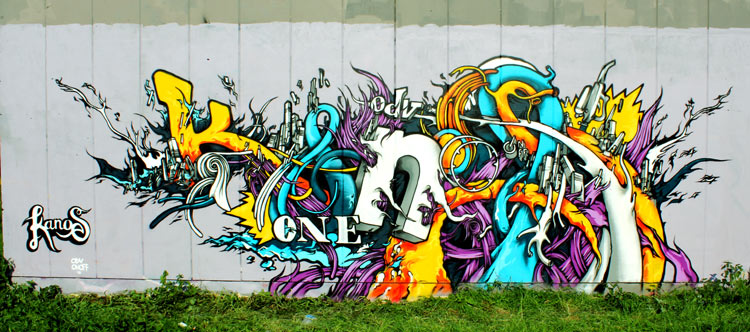
At the centre of the composition is my name, Kanos. The typography continues the direction developed in previous research, where letters function as architectural constructions rather than simple signs. Their forms are fragmented, stretched and interconnected, allowing additional visual elements to emerge from within the structure itself.
The lettering is intentionally distressed and partially broken apart. Rather than presenting clean typographic forms, the letters appear weathered, fragmented and transformed. This approach reflects my ongoing interest in the instability of cities, industrial environments and visual systems exposed to time.
Around these structures appear fragments inspired by urban environments. Buildings, architectural details and sections of city landscapes become integrated into the typography itself. The city is therefore not represented as a background but becomes physically embedded within the construction of the letters.
Organic forms develop alongside these architectural fragments. They spread across the composition as if living matter were gradually occupying the mechanical framework. This coexistence between organic growth and constructed urban systems has become one of the defining characteristics of my visual language. Rather than opposing nature and technology, the project explores the continuous interaction between both.
Another important influence introduced in this series comes from Japanese cyberpunk aesthetics. Manga such as Akira and Ghost in the Shell profoundly influenced my perception of futuristic cities, technological mutation and dense urban environments. Their representations of expanding megacities, mechanical infrastructures and hybrid identities resonate strongly with my own interest in architectural complexity.
These references are not reproduced literally. Instead, they influence the atmosphere and structural logic of the composition. Mechanical details, interconnected systems and dense urban layering contribute to a visual environment that recalls cyberpunk imagery while remaining rooted in graffiti and typography.
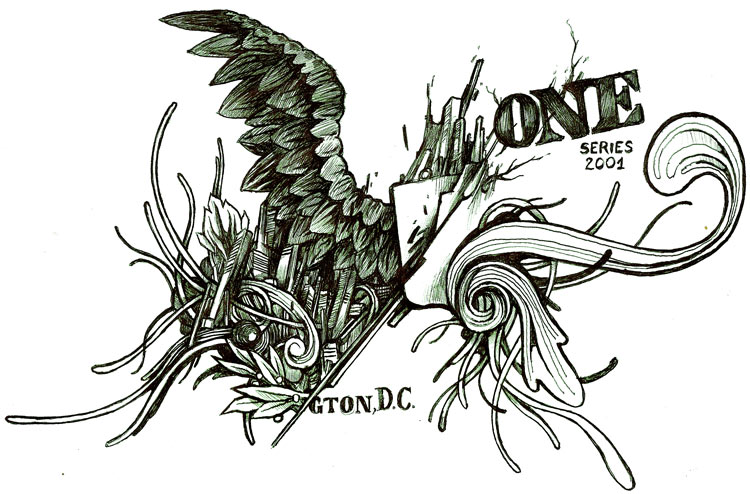
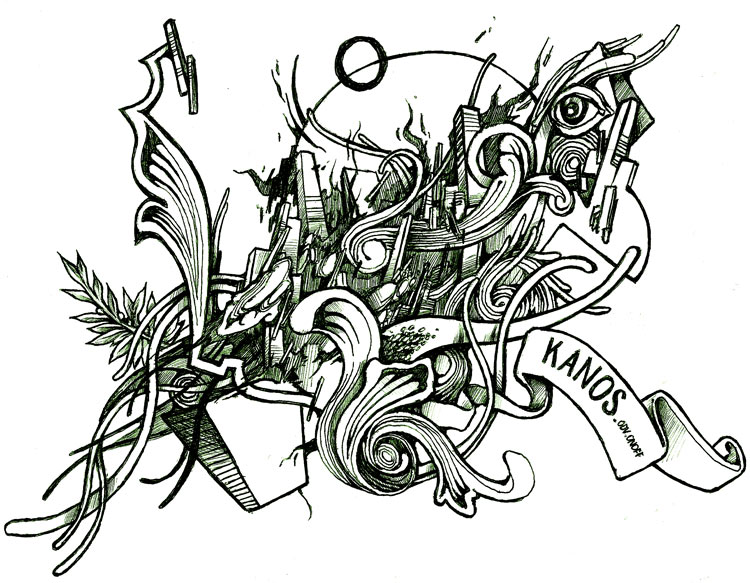
The article documents the entire creative process behind this new direction. It begins with a series of black-and-white research sketches produced in the studio. These drawings allowed me to experiment freely with the integration of dollar bill motifs, typographic structures, architectural fragments and organic elements before translating them into a mural.
These preparatory sketches are an essential part of the project. They reveal how different visual systems gradually merge into a coherent composition. Rather than producing a finished image immediately, the research develops through successive iterations where ideas are tested, modified and refined.
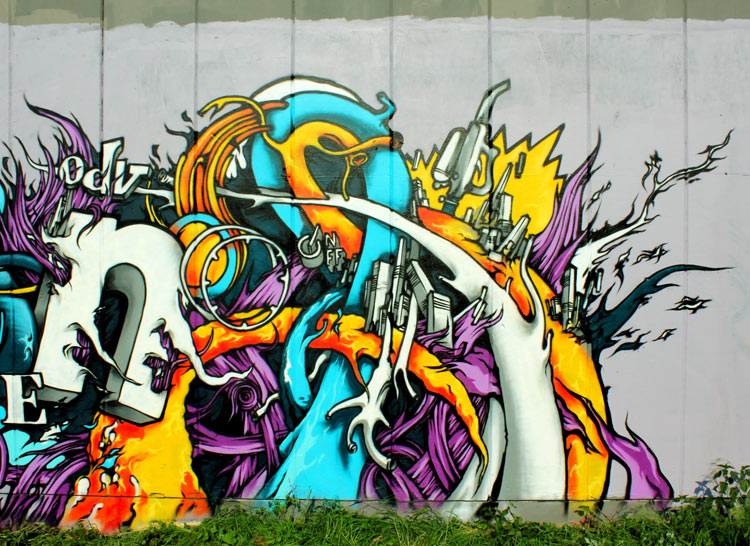
Following the studio phase, the project moves to the wall. Using spray paint, the concepts explored on paper are adapted to a larger scale within a graffiti context. The mural incorporates the same themes developed during the sketching process while responding to the physical characteristics of the wall itself.
This transition from drawing to mural is fundamental. It demonstrates how conceptual research can evolve into public artwork while preserving the complexity of the original ideas. The wall becomes an extension of the studio rather than a separate stage of production.
Looking back, this project represents the starting point of an important body of work that would continue to evolve over the following years. The visual language introduced here—combining economic symbolism, fragmented typography, cyberpunk influences, architectural structures and organic forms—became the foundation for numerous later paintings, murals and illustrations.
Several subsequent projects expand directly upon the ideas first explored in kanos & the one dollar bill. The series developed through new murals, international graffiti festivals and studio works, eventually incorporating additional symbolic figures and increasingly complex reflections on economy, power, urban transformation and contemporary society. This first chapter therefore serves as the conceptual foundation for an artistic research that continued to grow well beyond its initial experiments.
Frequently Asked Questions
What is Kanos & the one dollar bill about?
It is the beginning of a graffiti research series exploring the symbolism of the US one-dollar bill through typography and mural painting.
Why use the imagery of the dollar bill?
The project uses its visual language as a symbol of global economic influence rather than as a literal representation of money.
What artistic influences appear in the project?
The work combines graffiti, fragmented typography, urban architecture and cyberpunk influences inspired by Akira and Ghost in the Shell.
How does the article present the creative process?
It starts with black-and-white research sketches before showing the development of the final mural painted with spray paint.
How does this project connect to later works?
It introduces themes and visual systems that continue in later projects exploring industrial environments, economic symbolism and urban transformation.