
Special Jury Mention for VOTE/REVOLTE
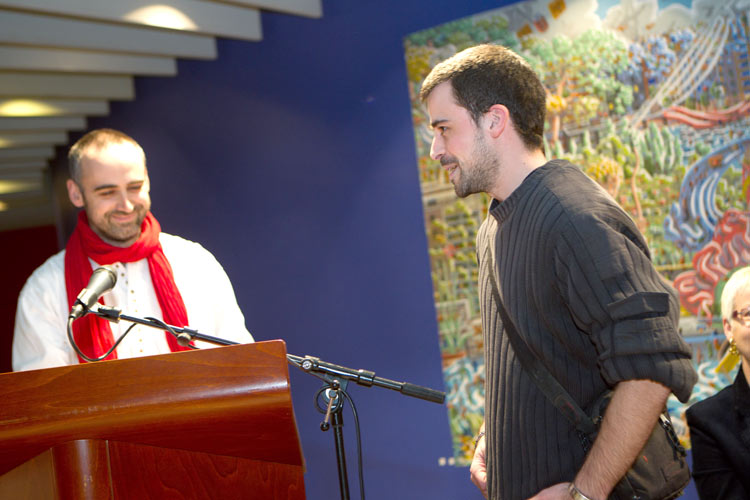
Special Jury Mention for Vote/Revolte refers to an award received in the context of a poster competition organized by the Académie des Banlieues. The project was selected and distinguished by the jury, which included Catherine Peyge, Julie Dubeaux, Léo Kouper (known for his historical film posters, including work related to Charlie Chaplin), Siné, Hervé Di Rosa, Guillaume Lanneau, Mathieu Montes and Noël Coret.
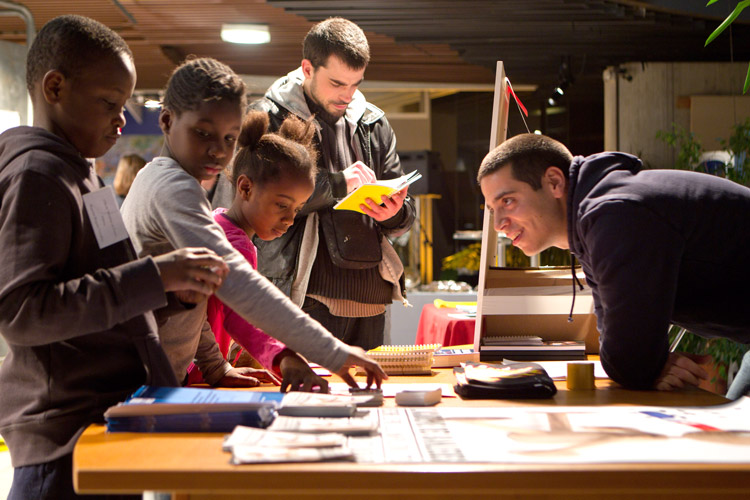
The Académie des Banlieues is an organization engaged in cultural reflection and artistic initiatives linked to suburban territories and social representation. This recognition is part of a broader engagement with their activities, as I later had the opportunity to collaborate again with the institution during the 2024 exhibition Trésors de banlieues in Gennevilliers.
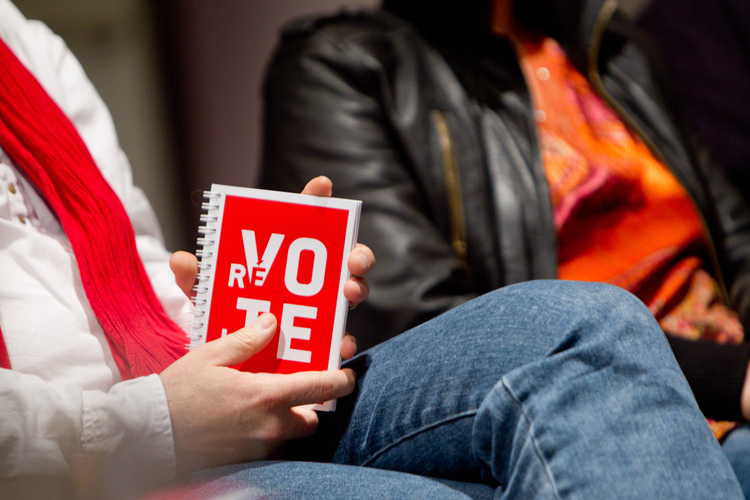
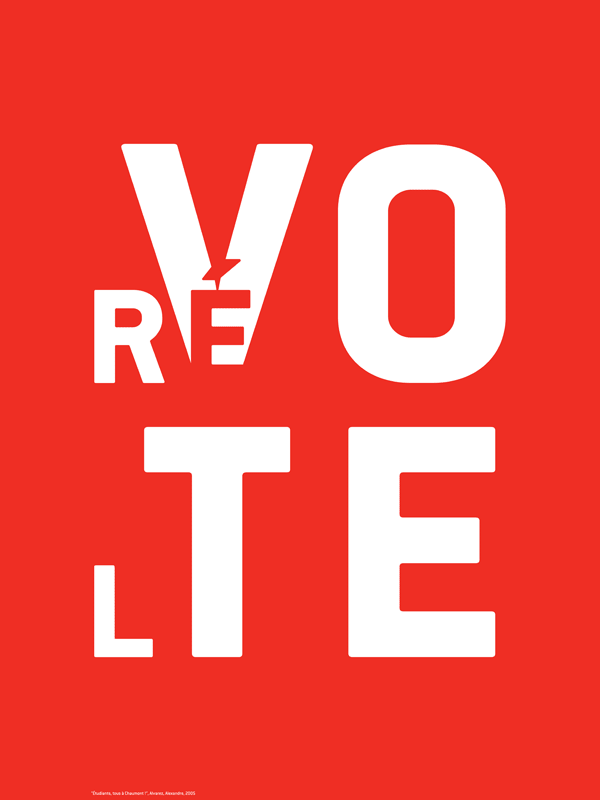
The awarded poster is based on a minimalist typographic system. Unlike more complex illustrated compositions, this work focuses exclusively on typography and conceptual clarity. The visual structure is reduced to essential elements in order to maximize the impact of the message.
The background is entirely red, creating a strong visual field that immediately establishes tension and urgency. Red functions here both as a graphic choice and as a symbolic reference, often associated with political intensity, urgency and collective expression.
The central typographic element is the word “vote,” displayed in large capital letters. This word dominates the composition and acts as the structural foundation of the poster. Its size and placement make it the primary visual and conceptual anchor of the work.
Within this structure, a typographic transformation is introduced. By adding only two letters, “RE” and “L,” the word “vote” is extended to form “révolte.” This minimal intervention creates a semantic shift that connects two political and social concepts: voting and revolt.
The phrase “between vote and riot” summarizes the conceptual tension explored in the poster. It suggests a spectrum of collective expression ranging from institutional democratic participation to more radical forms of protest. The design does not position one against the other but instead highlights their proximity within political expression.
The timing of the project also contributes to its interpretation. The poster was created during a period marked by significant political movements, including uprisings and protests in North Africa and Egypt. These events influenced global discussions on political participation, civic expression and social change.
Rather than illustrating these events directly, the poster responds through abstraction. Typography becomes the primary medium for expressing political tension. The simplicity of the design allows the message to remain open while still clearly grounded in contemporary context.
The origin of the project dates back to earlier posters studies conducted during my time at art school. The concept had previously been developed and selected for the International Poster Competition in Chaumont, where it was recognized in an earlier form. Years later, the idea re-emerged with renewed relevance in relation to global events and political discourse.
This temporal dimension is important. The poster exists across different moments in time, each adding new layers of meaning. What was initially an academic exercise later becomes a reflection of real-world events, demonstrating how graphic design can acquire new significance depending on context.
The jury’s recognition highlights the strength of the conceptual approach. Rather than relying on complex imagery, the work operates through linguistic transformation and visual economy. The reduction of elements allows the idea to remain central and immediately legible.
The mention spéciale du jury also marks a moment of validation within a broader artistic trajectory that includes both graphic design and graffiti-based practice. Although this poster differs visually from mural work, it shares a similar interest in structure, language and symbolic systems.
The collaboration with the Académie des Banlieues continues beyond this award. In 2024, I participated again in their activities through the exhibition Trésors de banlieues in Gennevilliers, reinforcing an ongoing relationship with the institution and its cultural initiatives.
The photographic documentation of the poster was produced by Sébastien Rabany, whose work helped capture the clarity and simplicity of the composition.
Ultimately, mention speciale du jury ikanografik represents a graphic exploration of political language reduced to its most essential form. Through minimal intervention, the poster connects voting, revolt and collective expression within a single typographic system.
Photos: Sebastien Rabany
Frequently Asked Questions
What is Speciale Jury Mention for Vote/Revolte?
It is an award received for a typographic poster selected in a competition organized by the Académie des Banlieues.
Who was on the jury?
The jury included Catherine Peyge, Julie Dubeaux, Léo Kouper, Siné, Hervé Di Rosa, Guillaume Lanneau, Mathieu Montes and Noël Coret.
What is the concept of the poster?
It transforms the word “vote” into “révolte” using minimal typographic intervention on a red background.
What does “between vote and riot” mean?
It expresses the tension between institutional democratic expression and collective protest.
Has this project been shown elsewhere?
Yes, an earlier version was selected for the International Poster Competition in Chaumont