
“Dystopie Industrielle” – Urban Mutation and Abandoned Spaces
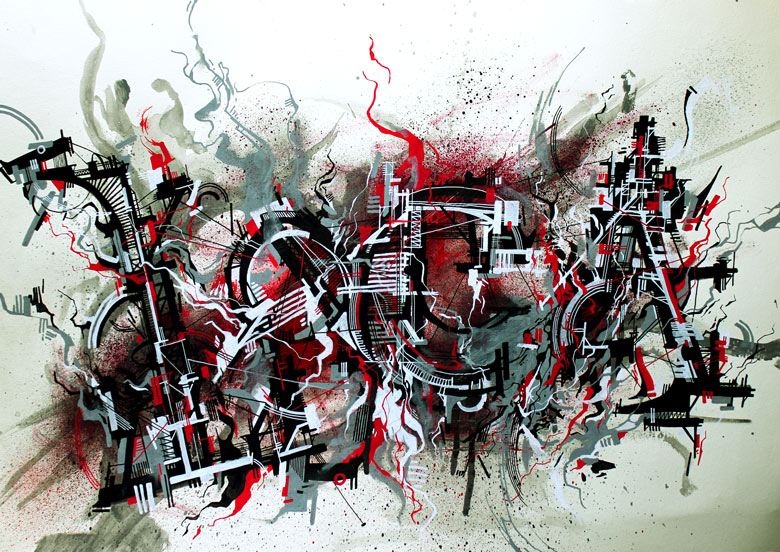
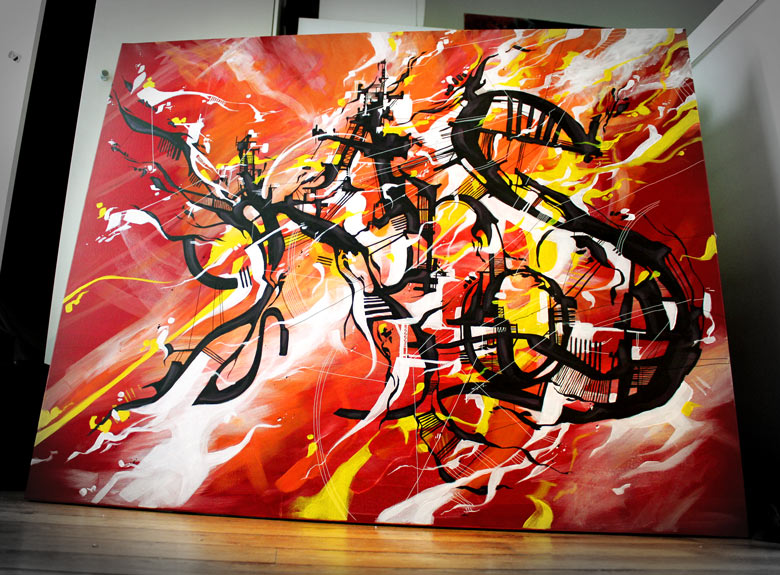
“Dystopie Industrielle” is a series of paintings by Alex Kanos that explores the transformation of contemporary urban and industrial environments. The work focuses on the idea that modern cities are not static structures, but living systems in constant mutation, shaped by cycles of construction, abandonment, and visual decay.
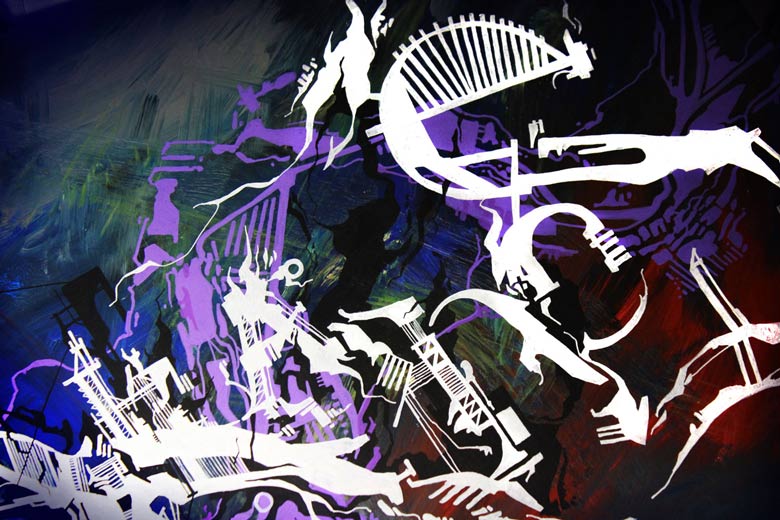
At the core of this series is the notion of industrial mutation. Factories, infrastructures, mechanical systems, and urban architectures are represented in a state of transition, as if they are slowly dissolving, collapsing, or reorganizing into new unstable configurations. These environments are no longer functioning in their original purpose, but they remain present as residual structures embedded within the urban landscape, carrying traces of former industrial activity.
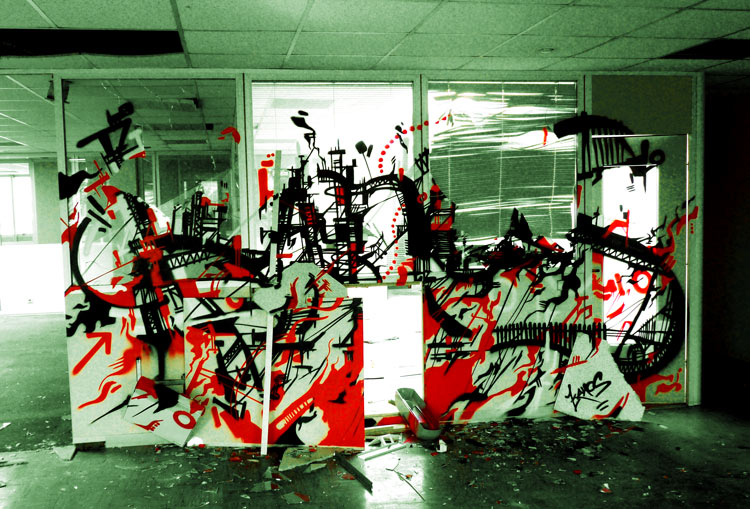
A central theme of the series is the emergence of so-called “dead zones” within the city. These are abandoned or semi-abandoned spaces where industrial activity has ceased, leaving behind empty structures, fractured surfaces, and layered visual remnants of production systems. Rather than being treated as purely negative spaces, these zones are understood as transitional territories where new visual expressions, such as graffiti or artistic intervention, can emerge and redefine their meaning.
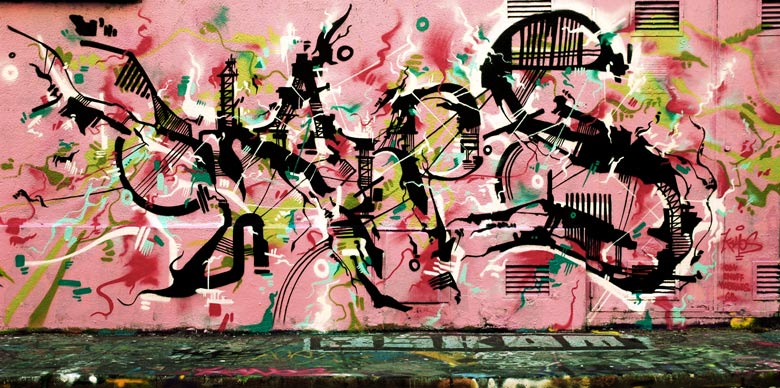
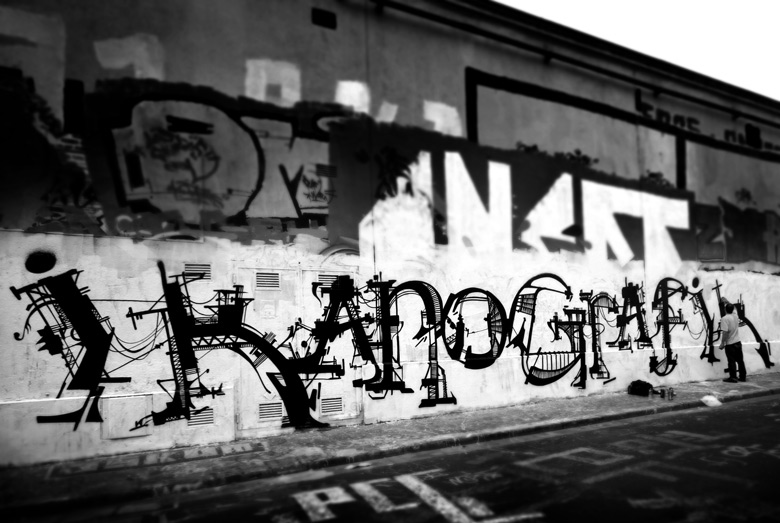
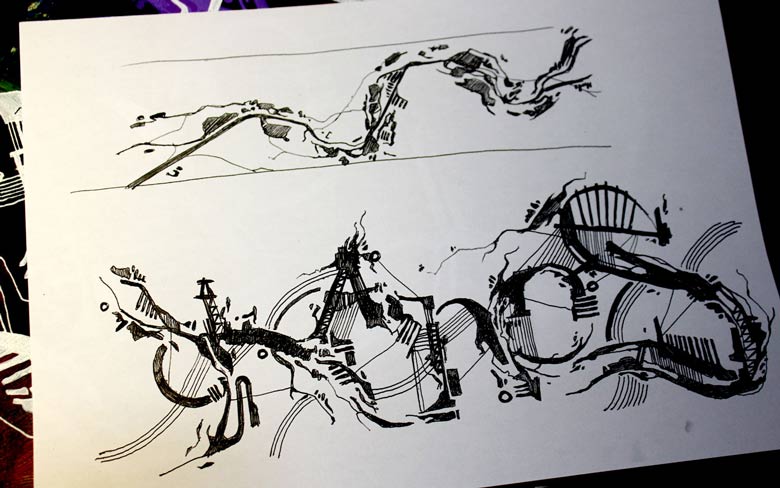
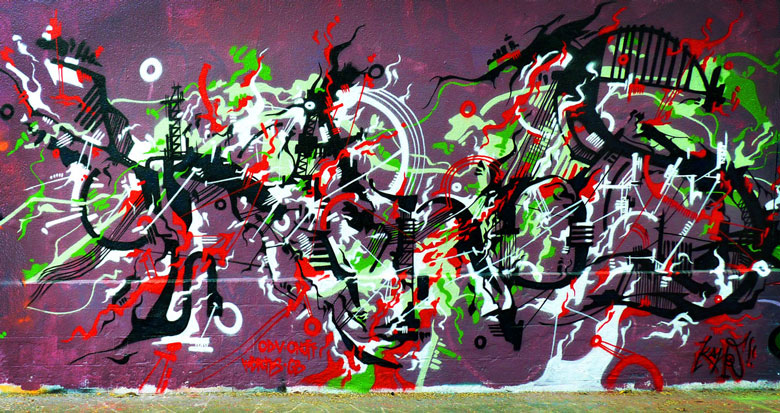
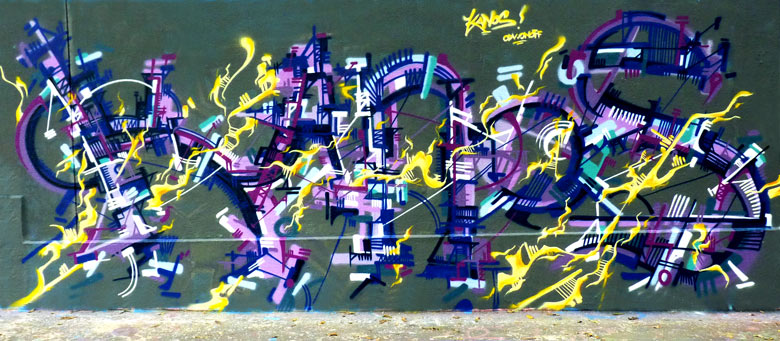
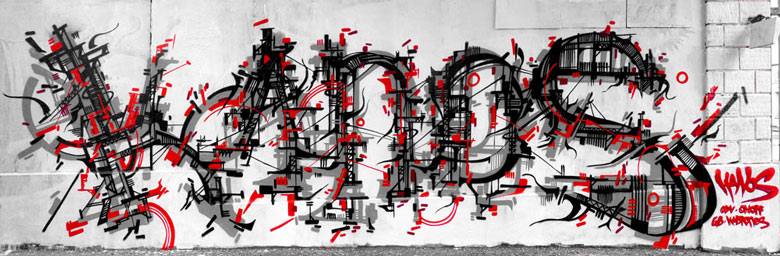
Within these industrial environments, the series introduces a graphic language inspired by metallic and structural typography. Letterforms are constructed as if they were built from industrial materials such as steel, iron, welded components, or mechanical fragments. These typographic elements do not function as readable text in a conventional sense, but rather as visual structures integrated into the composition. They echo industrial signage, machinery labeling, construction markings, and architectural codes found in real industrial zones.
This transformation of typography into structure creates a hybrid space between language and architecture. Letters become physical objects, while industrial forms begin to resemble coded messages. The boundary between communication and environment becomes unstable, reinforcing the idea that industrial systems generate their own visual language, independent of human readability.
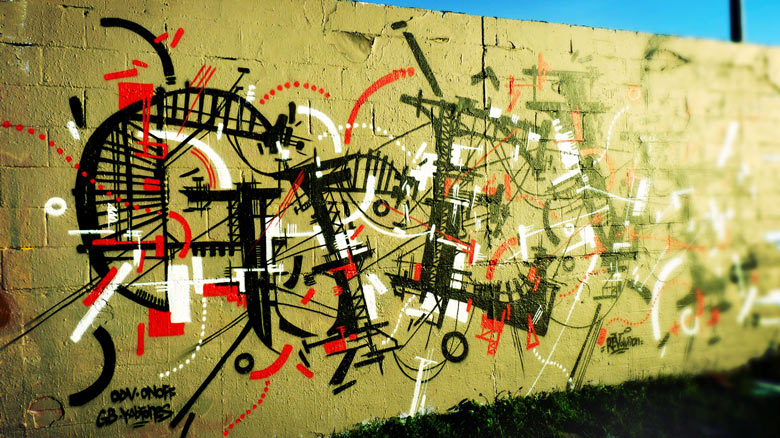
Another key aspect of “Dystopie Industrielle” is the relationship between abandoned factories and graffiti culture. Once industrial sites fall into disuse, they often become surfaces for intervention, appropriation, and visual rewriting. Graffiti becomes a secondary layer of language that overlays the industrial remnants, transforming abandoned architecture into an open visual field where expression replaces function.
In this context, graffiti is not treated as simple decoration or vandalism, but as a continuation of the life cycle of industrial spaces. It marks the transition from functional infrastructure to expressive territory. The painted surfaces become palimpsests where industrial history, urban decline, and contemporary visual practices coexist within the same layered space.
The series reflects a broader reflection on urban dystopia, not as a fictional or futuristic scenario, but as an existing condition. Dystopia is already embedded in real environments where industrial decline, spatial fragmentation, and architectural abandonment are visible elements of everyday urban life. These conditions form the visual and conceptual foundation of the series.
The painting process itself reinforces this approach. Acrylic paint allows for multiple layers, erosion effects, and structural contrasts. Controlled geometric forms are combined with degraded textures, suggesting both construction and collapse within the same visual field. This duality becomes essential to the reading of the work, where stability and instability coexist continuously.
Through this series, Alex Kanos constructs a fragmented but coherent visual system where industrial mutation, abandoned urban zones, typographic structures, and graffiti culture intersect. The result is a dense visual language that reflects the instability of contemporary urban environments while preserving a sense of structural coherence.
“Dystopie Industrielle” is therefore not only a representation of industrial decay, but also an exploration of transformation, where new visual systems emerge from the remnants of industrial civilization and redefine the meaning of urban space.
Frequently Asked Questions
What is Dystopie Industrielle?
It is a series of paintings by Alex Kanos exploring industrial mutation, urban decay and abandoned industrial environments.
What themes are explored in this series?
The main themes are industrial transformation, abandoned factories, urban fragmentation and visual decay.
What is the concept behind the typography in the series?
The typography is inspired by industrial materials and structures, transforming letters into architectural and mechanical forms.
How is graffiti integrated into the work?
Graffiti appears as a secondary layer of visual intervention on abandoned industrial spaces, transforming them into expressive surfaces.
Is this series based on real urban environments?
Yes, it reflects real post-industrial spaces and abandoned urban zones rather than fictional dystopian settings.