
“Dystopie Industrielle” Graffiti About Urban Decay
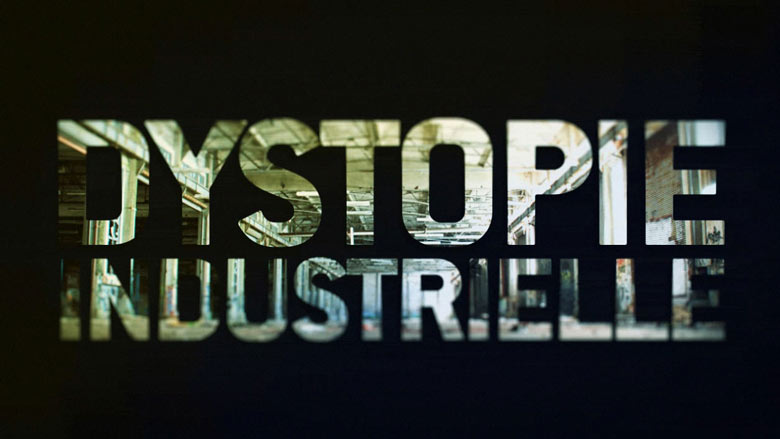
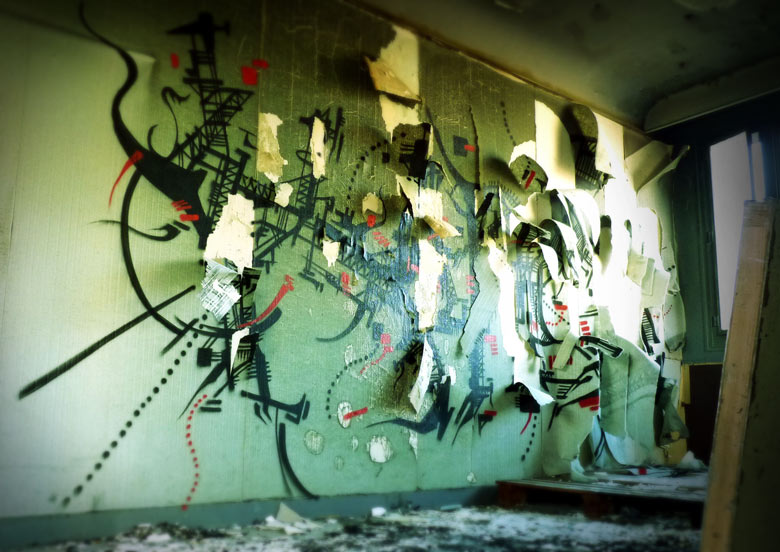
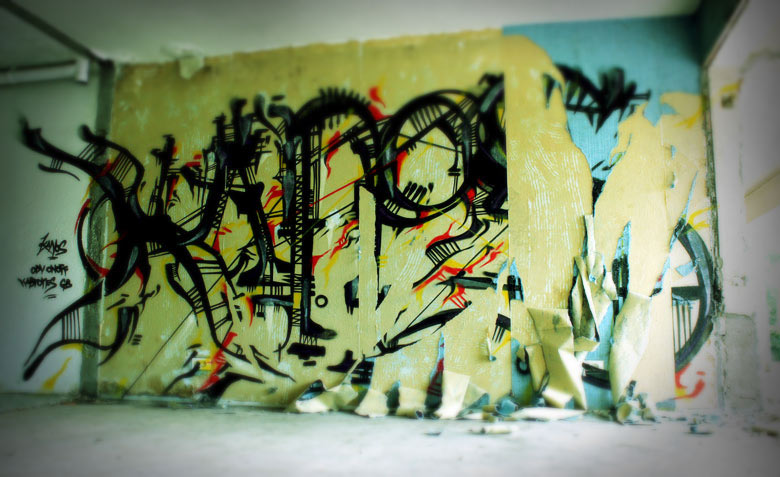
“Dystopie industrielle” is a video and painting project exploring the transformation of industrial environments and the inevitable effects of time on both architecture and artistic production. The work combines live footage of paintings created inside abandoned factories with stop-motion sequences in which the artworks gradually disappear, fragment, peel away, or dissolve into the surfaces that support them.
The title refers to the concept of dystopia as the opposite of utopia. Rather than presenting an idealized vision of society, the project focuses on decline, transformation, disappearance, and uncertainty. However, the objective is not simply to document decay. The project examines how cities evolve through cycles of construction, abandonment, reuse, destruction, and regeneration.
For many graffiti artists, abandoned industrial sites have long represented spaces of freedom. Empty factories, warehouses, and production facilities provide large surfaces, relative isolation, and an atmosphere shaped by decades of industrial activity. These environments often become temporary creative territories where artists can experiment without the constraints of conventional exhibition spaces.
Yet behind their visual appeal lies another reality. Every abandoned factory is also the trace of an economic and social transformation. Closed workshops, silent machinery, and empty industrial buildings often reflect the decline of industries that once shaped entire communities. The ruins admired by photographers, explorers, and graffiti writers are also evidence of broader economic changes.
This dual reading forms the conceptual foundation of “Dystopie industrielle”. The project acknowledges the fascination that abandoned industrial spaces can inspire while simultaneously questioning the conditions that produced these landscapes in the first place.
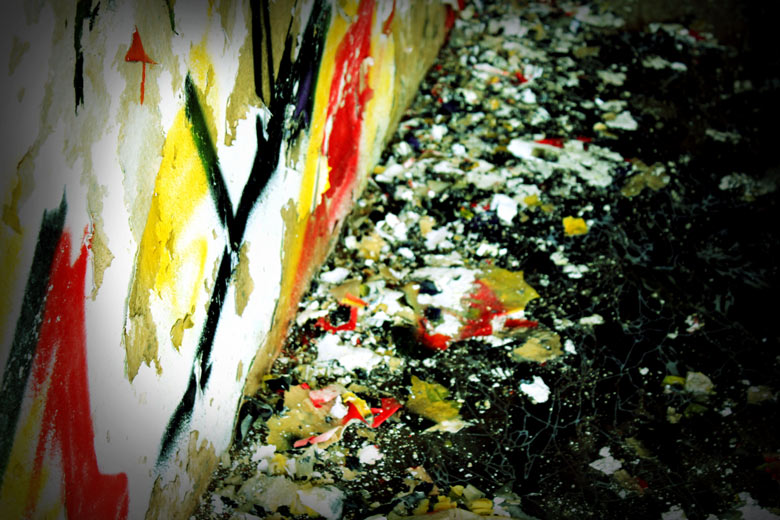
The video alternates between footage of paintings executed directly within industrial ruins and sequences where the artworks progressively disappear. In some scenes, the image seems to detach itself from the wall like fragments of old wallpaper slowly falling to the ground. In others, the paint appears to crack, erode, and flake away as if consumed by the surface beneath it.
These transformations were created through stop-motion animation techniques. Rather than presenting graffiti as a permanent statement, the process emphasizes its fragility. The artwork becomes temporary, vulnerable to weather, material degradation, and the passage of time.
This disappearance is not treated as a failure. On the contrary, it becomes an integral part of the artwork itself. The destruction of the image is incorporated into the narrative, transforming absence into a visual subject.
Graffiti has always existed within a paradoxical relationship to permanence. Although many artists invest significant time and effort into creating murals, most works are destined to disappear. Walls are repainted, demolished, renovated, covered by other artists, or simply degraded by environmental conditions. The lifespan of a graffiti piece is often unpredictable.
The “Dystopie industrielle” project extends this reality by accelerating the process of disappearance. Through animation, viewers witness changes that would normally take months or years. Time becomes visible. The wall records transformation, and the artwork becomes a marker within a larger cycle of urban mutation.
The factories featured in the video undergo a similar process. Industrial buildings that once symbolized production and economic activity gradually become obsolete. Machinery disappears, roofs collapse, windows break, vegetation enters through openings, and new uses emerge. Some sites become cultural spaces, others become construction sites, while many simply vanish altogether.
The graffiti painted within these environments shares the same fate. Both the building and the artwork exist in a transitional state. Neither is permanent. Both are subject to forces larger than themselves.
This relationship between architecture and painting is central to the project. The wall is not merely a support. It actively participates in the transformation of the image. Cracks, textures, humidity, rust, and erosion become collaborators in the visual process. As the surface changes, the artwork changes with it.
The project also reflects a broader interest in the way cities continuously reinvent themselves. Urban environments are often perceived as stable, yet they are constantly evolving. Entire districts disappear, industries relocate, buildings are demolished, and new constructions emerge. The city is never fixed; it is a living system shaped by economic, social, and material forces.
Within this context, graffiti can be understood as a temporary layer added to a constantly changing landscape. It occupies a brief moment in the life of a wall before eventually becoming part of the site’s history. The artwork does not resist time; it participates in it.
The visual language of “Dystopie Industrielle” therefore moves beyond documentation. The project becomes a meditation on impermanence, transformation, and the cycles through which both cities and artworks pass. What begins as a painting eventually becomes a fragment, a trace, and finally a memory.
By combining live painting, industrial ruins, and stop-motion disappearance, the project proposes a reflection on the lifespan of images and the environments that contain them. The factories disappear, the graffiti disappears, and the city absorbs both. New surfaces emerge, new interventions appear, and the cycle begins again.
Music: Tao Haceka / Editing: iKanoGrafik / Paint: Kanos,
Thanks to Team, Rev, Goujat and all the others for exploring with me abandonned places
Frequently Asked Questions
What “Dystopie Industrielle” project is about?
It is a video and painting project exploring abandoned factories, disappearing graffiti, urban transformation, and the effects of time on industrial environments.
Why do the paintings disappear in the video?
The disappearance symbolizes the temporary nature of graffiti and the gradual transformation of both artworks and urban spaces.
How was the video created?
The project combines live footage of paintings made in abandoned factories with stop-motion animation sequences.
Why are abandoned factories important in the project?
They represent both creative spaces for graffiti artists and the visible traces of industrial and economic change.
What is the main theme of the work?
The project examines impermanence, urban mutation, industrial decline, and the continuous transformation of cities over time.