
Premiere Revolution Industrielle / Graffiti and Typographic Research
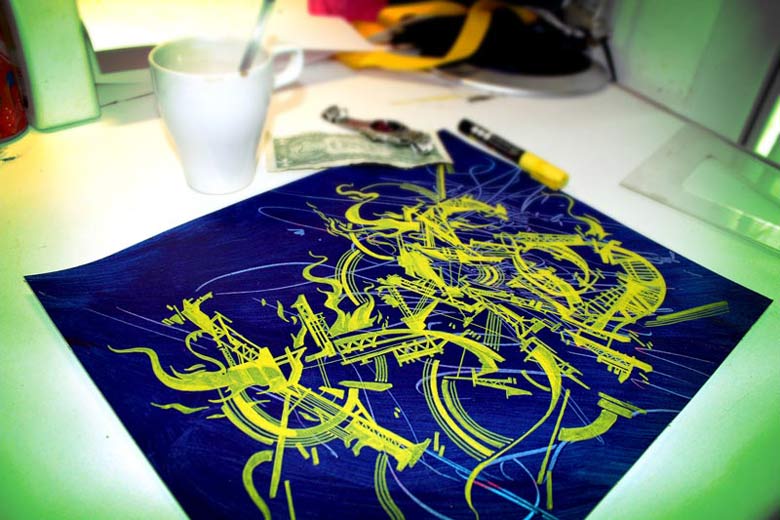
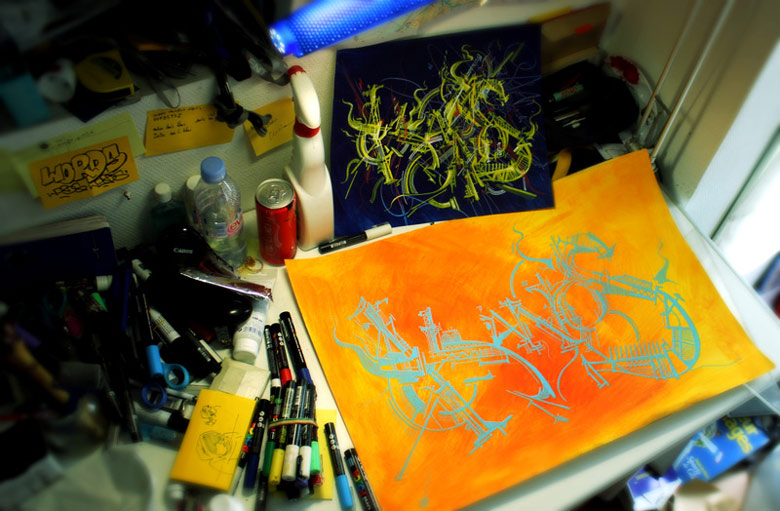
“Premiere revolution industrielle” presents the first stage of a research series focused on industrial structures, typographic construction, and the relationship between graffiti and post-industrial landscapes. The work originates from studio-based experimentation, where letterforms are treated as architectural systems derived from industrial logic rather than conventional typography.
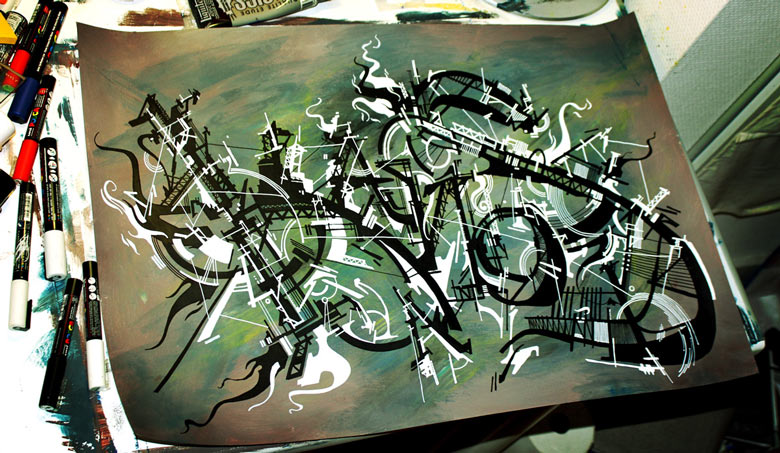
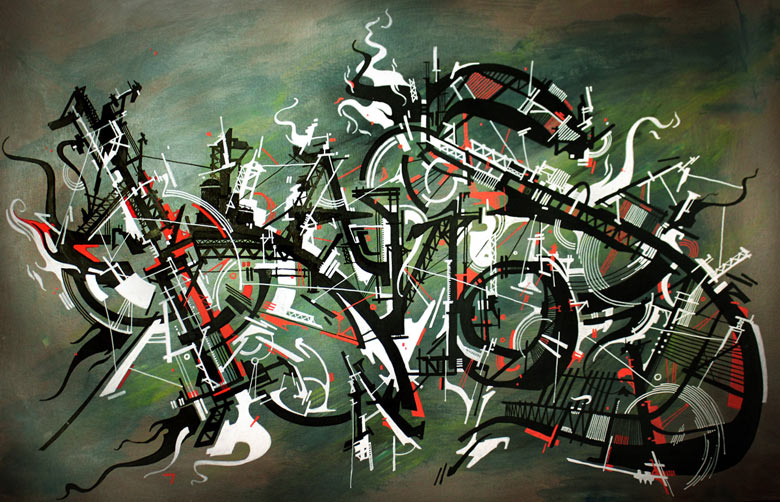
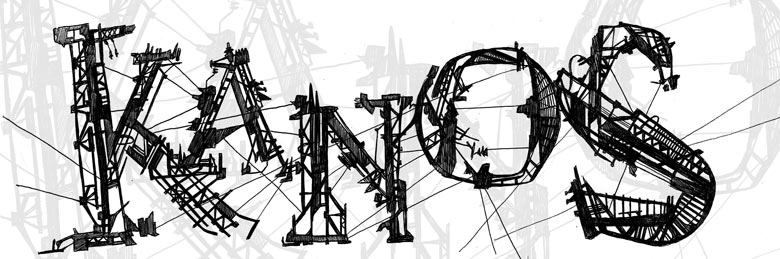
The starting point of this research is a reinterpretation of industrial aesthetics applied to the construction of the name “Kanos.” Instead of using traditional lettering systems, the typography is built using structural elements inspired by factories, mechanical frameworks, and industrial assembly principles. The letter becomes a construction rather than a symbol.
A key influence in this research is the typographic work of Daniel Adolph, particularly his concept Garamond Powerlines. This approach to typography, which emphasizes structural tension and industrial reinterpretation of classical forms, serves as a conceptual reference for exploring how type can behave like engineered architecture. The idea is not to reproduce this work, but to use it as a starting point for a personal system based on industrial deformation of letterforms.
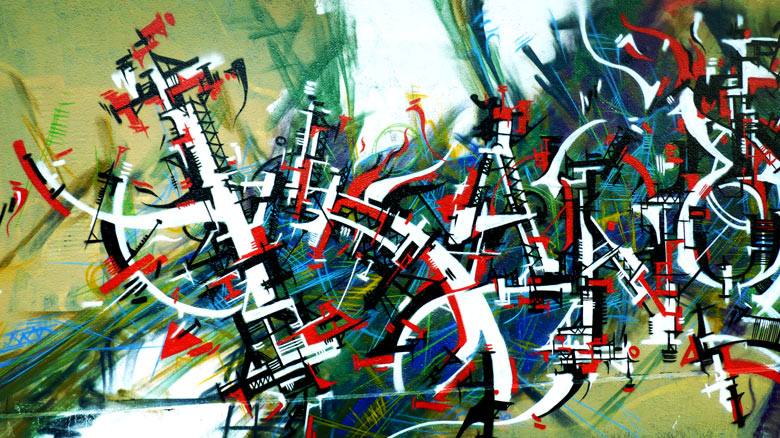
The studio research led to a series of paintings in which industrial structures are integrated into typography. These works treat letters as hybrid objects composed of beams, fragments, and mechanical configurations. The name “Kanos” becomes a constructed system where each letter is designed as part of a larger industrial assembly.
This approach directly connects to abandoned industrial environments. Factories, warehouses, and production sites that have lost their original function become central visual and conceptual references. These spaces are often used by graffiti artists as painting locations, but they also form part of a broader cultural phenomenon known as urban exploration or urbex.
Urbex, or urban exploration, refers to the practice of exploring abandoned or hidden structures within cities. These spaces often reveal layers of industrial history, decay, and transformation. Within this context, abandoned factories are not only physical locations but also visual archives of economic change and urban evolution.
The research “Premiere revolution industrielle” explores the relationship between these spaces and graffiti practice. Abandoned factories provide both surfaces and symbolic meaning for graffiti writers. They are places where production has stopped but where visual expression continues. This duality between industrial abandonment and artistic intervention forms a central tension in the work.
A recurring theme in this series is the effect of time on industrial structures. Factories that once represented productivity and economic stability gradually deteriorate. Machines disappear, walls collapse, surfaces erode, and vegetation begins to reclaim space. This process transforms industrial architecture into fragmented ruins.
The same logic is applied to graffiti itself. Graffiti is not permanent. It is subject to the same forces of time, weather, renovation, and destruction. Walls are repainted, demolished, or covered by new layers of paint. In this sense, graffiti shares the fate of industrial architecture: both are temporary traces within the urban environment.
The concept of disappearance becomes central to the research. The city is understood as a system that absorbs everything over time. It digests industrial infrastructures, artistic interventions, and visual traces. Nothing remains fixed. Everything is transformed, erased, or recontextualized.
The studio paintings developed during this phase explore this idea through typographic constructions that feel unstable, fragmented, and in transition. Letters appear as if they are built from industrial debris or mechanical remnants. The compositions suggest both construction and collapse at the same time.
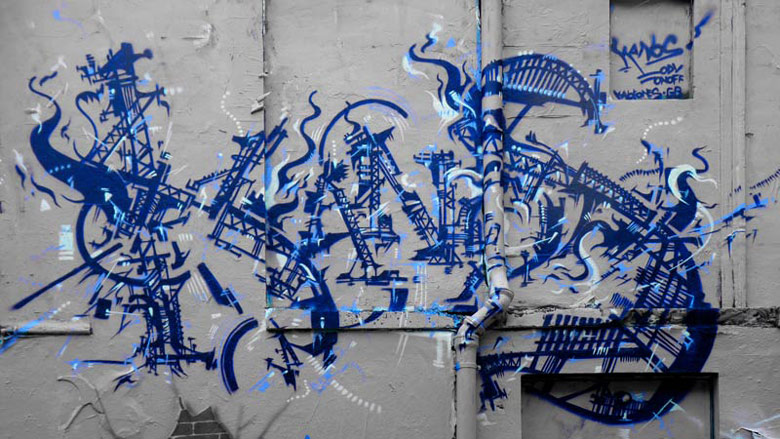
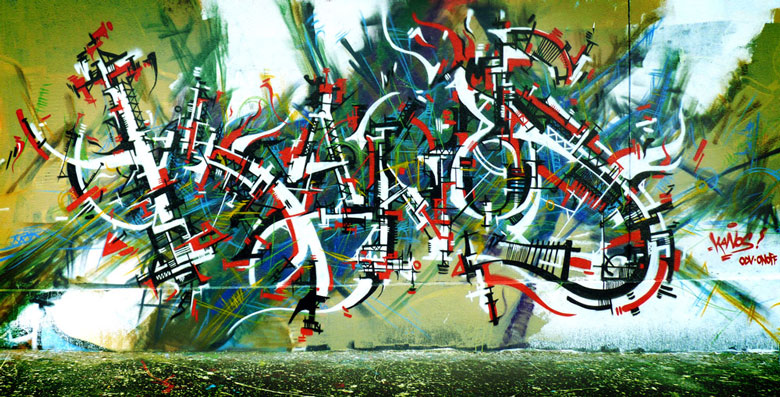
After the studio phase, these ideas were tested directly on walls using spray paint. This transition from studio to urban space is essential. It moves the research from controlled conditions to real surfaces exposed to time, weather, and public visibility. The graffiti application reinforces the link between theoretical research and street-level practice.
In this phase, the industrial typographic system is adapted to mural formats. The name “Kanos” is constructed on walls using the same principles developed in the studio but adjusted to the physical constraints of urban space. The result is a direct confrontation between industrial abstraction and real urban environments.
These works mark the beginning of a broader research trajectory focused on industrial environments, urban decay, and dystopian interpretations of the city. The experimentation developed here becomes the foundation for later explorations, including more explicit reflections on urban transformation and disappearance, particularly in the subsequent Industrial Dystopia series.
The first “Industrial Revolution” series therefore functions as a conceptual starting point. It establishes the main visual and theoretical frameworks: industrial typography, abandoned architecture, urbex exploration, and the temporal instability of urban traces. These elements will continue to evolve in later works, expanding toward more complex reflections on urban mutation and visual disappearance.
Frequently Asked Questions
What is “Premiere Revolution Industrielle” about?
It is a research-based project exploring industrial typography, abandoned factories, and graffiti as temporary urban traces.
What influenced the typographic approach?
The work is influenced by industrial structures and typographic research, including Daniel Adolph’s Garamond Powerlines.
How is the name Kanos used in this project?
It is constructed as an industrial typographic system where each letter is built like a mechanical structure.
What is the link with abandoned factories?
Abandoned factories serve as both visual inspiration and real graffiti locations connected to urban exploration (urbex).
How does this project connect to time and decay?
It explores how both industrial structures and graffiti are gradually erased, transformed, or absorbed by the city over time.