
Frequently Asked Questions
What is the “Déraille” street art event in Nîmes?
It is a street art event held in a train scrapyard where artists create works on old locomotives and industrial structures.
Who created the visual identity for the event?
The graphic design was created by Alex Kanos in collaboration with Osaro agency.
Where did the event take place?
The event took place at Durand Récupération, an industrial scrapyard in Nîmes.
What inspired the visual identity?
It was inspired by industrial photography, especially a locomotive image by Fabe Collage.
What is the main concept of the event?
The event explores transformation of industrial heritage through contemporary street art.
Graphic Design for “Déraille” Street Art Event in Nîmes
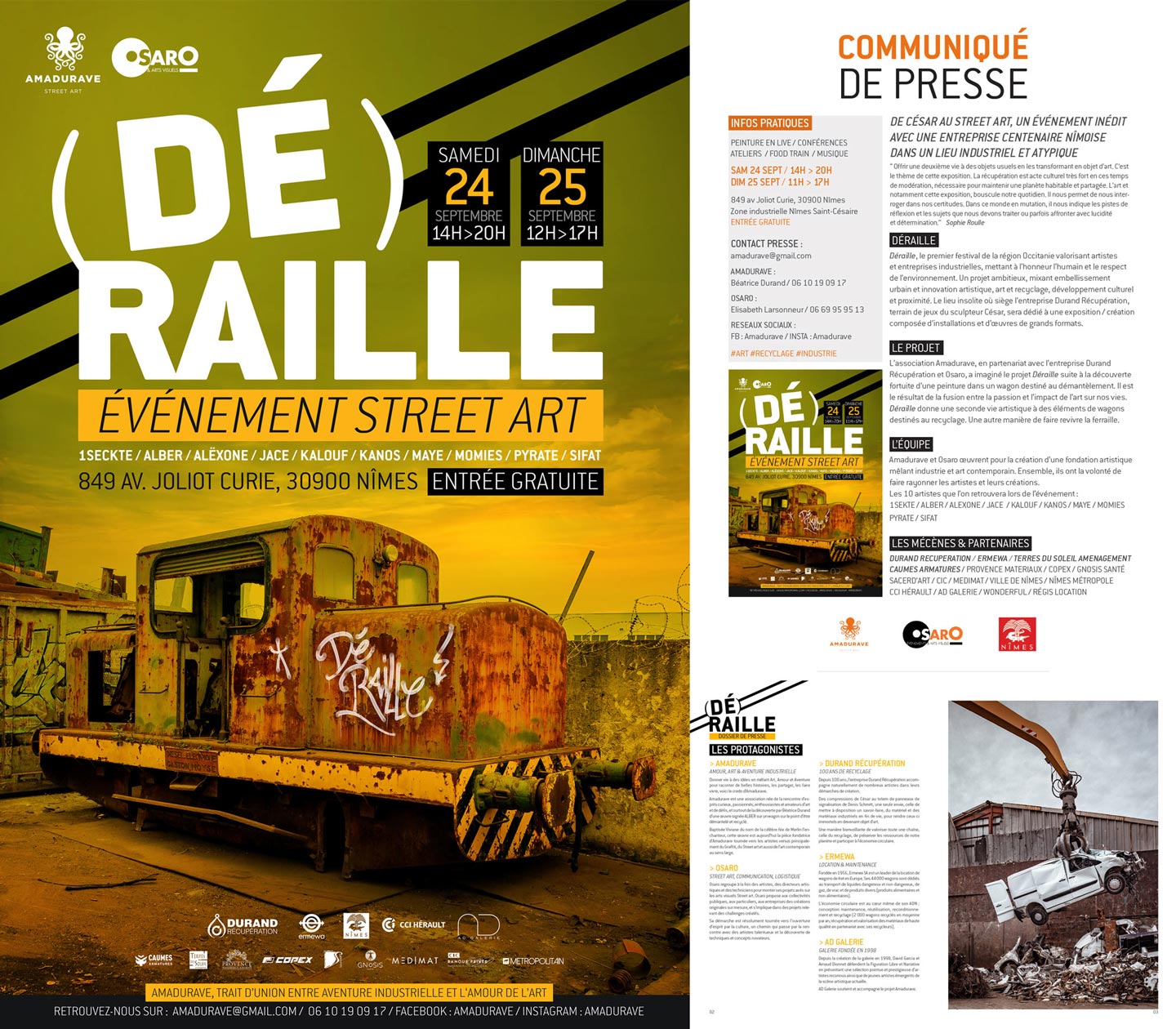
I had the opportunity to work again with Osaro agency to do graphic design and visual identity for the “Déraille” street art event in Nîmes. The event took place at Durand Récupération, an open-air train scrapyard where artists were invited to paint on the remnants of old trains.
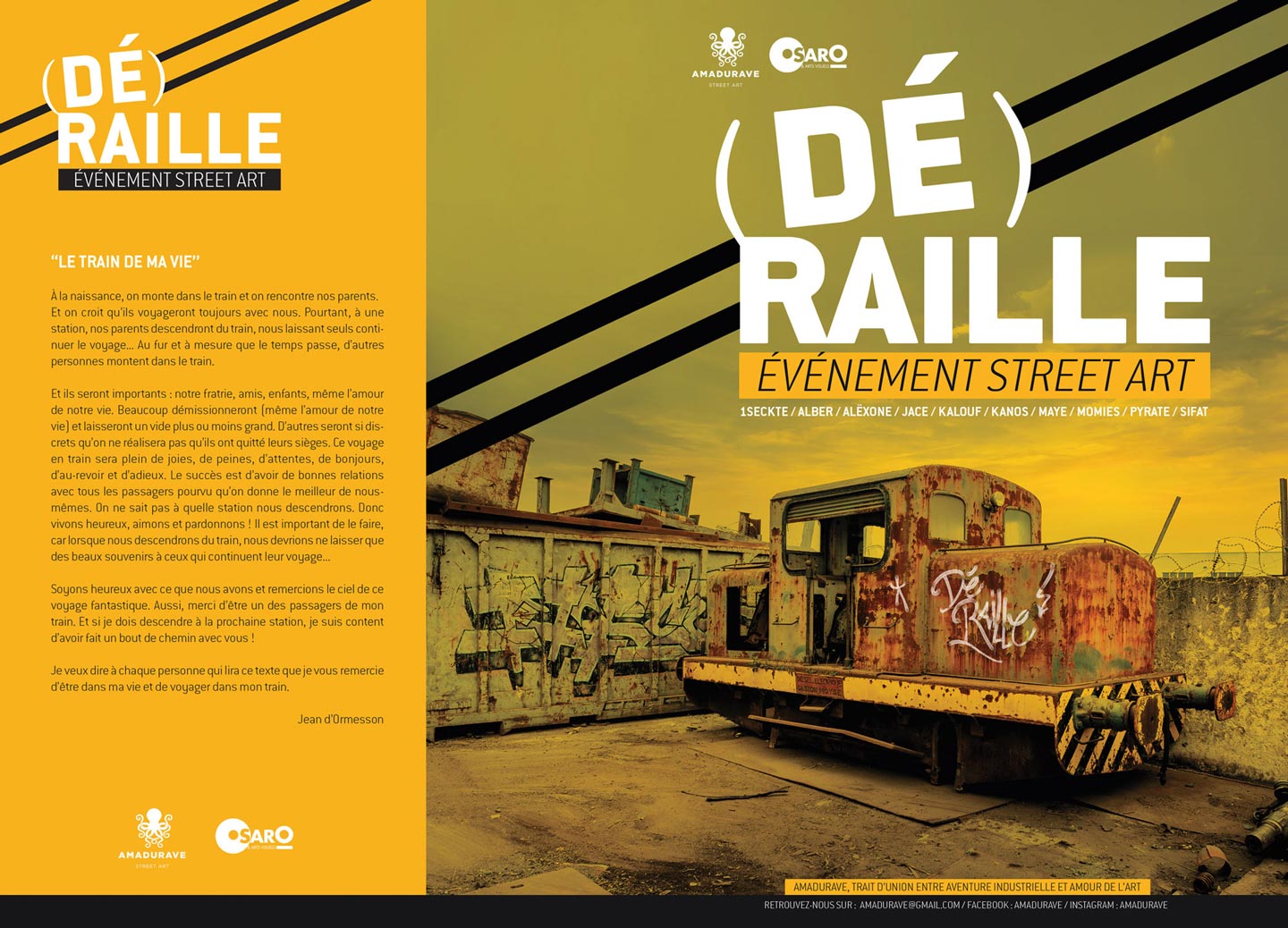
For the event’s communication, I used a striking photograph by Fabe Collage, featuring the skeletal frame of a locomotive, which perfectly captured the spirit of the event, raw, industrial, and artistic. This unique setting provided a dynamic backdrop for street artists to express themselves, blending urban art with the gritty beauty of the scrapyard. The event was a celebration of art, transformation, and creativity in an unconventional space.
This project is based on a strong industrial and documentary visual language. The choice of the train scrapyard as both location and conceptual framework establishes a direct connection between urban art and industrial heritage. The environment itself becomes part of the narrative, where abandoned structures are transformed into artistic surfaces.
The visual identity of “Déraille” is rooted in the idea of transformation. The remnants of trains, stripped of their original function, are reactivated through artistic intervention. This process reflects a broader theme present in many contemporary urban art projects, where decay and creation coexist within the same space.
The photograph by Fabe Collage plays a central role in the communication design. The skeletal locomotive frame acts as a powerful symbol of industrial memory and structural fragility. It conveys both the history of movement and the stillness of abandoned machinery, reinforcing the visual tension of the project.
Working again with Osaro agency allowed for a coherent development of the event’s identity. The collaboration focused on translating a physical space into a visual communication system capable of representing both the artistic energy of the event and the specificity of its location.
The “Déraille” event in Nîmes is also significant because of its unconventional setting. Durand Récupération is not a traditional exhibition space but an open-air industrial site. This context creates a direct dialogue between contemporary street art and industrial archaeology.
Artists participating in the event were invited to intervene directly on the surfaces of old trains. This interaction between artwork and industrial object creates a layered visual experience where each piece of graffiti or painting becomes part of a larger collective composition.
The role of graphic design in this context is not limited to promotion. It becomes a bridge between the physical event and its public perception. The visual identity must therefore reflect both the rawness of the site and the diversity of artistic expressions it hosts.
The combination of industrial imagery and contemporary street art references reinforces the identity of the project. It highlights the transformation of functional objects into aesthetic surfaces, and the reactivation of abandoned spaces through artistic practice.
The “Déraille” project ultimately reflects a broader interest in the relationship between art, industry and transformation. It demonstrates how abandoned infrastructures can be reinterpreted as creative platforms, where history and contemporary expression intersect.
Through this visual identity, the event becomes more than a gathering of artists. It becomes a structured visual narrative where industrial heritage, photographic documentation and graphic design converge into a unified artistic statement.