
Productions 2013 Street Art in Paris
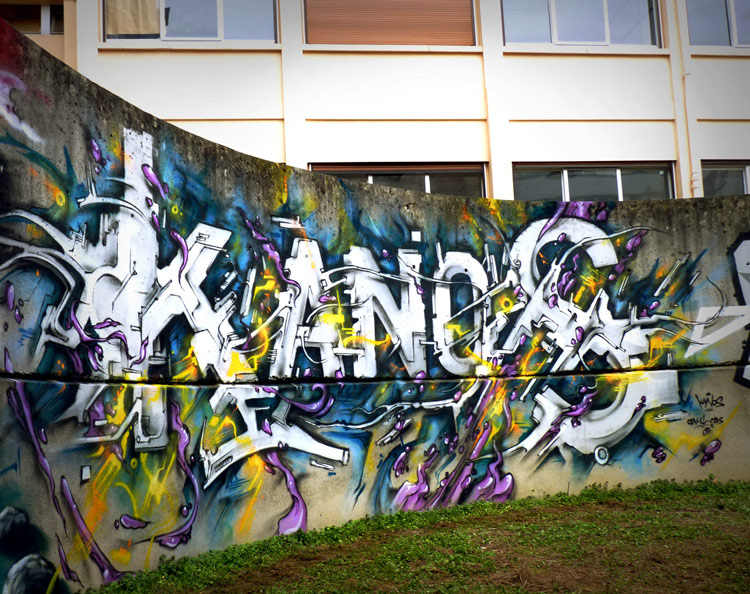
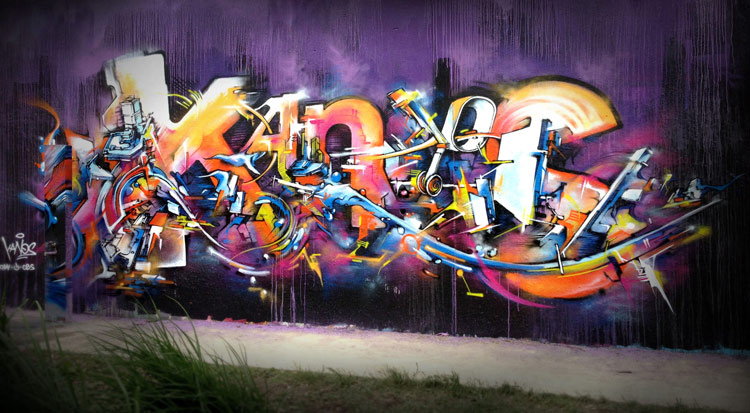
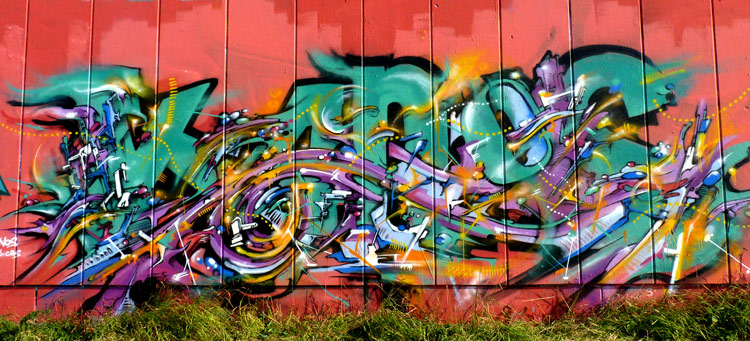
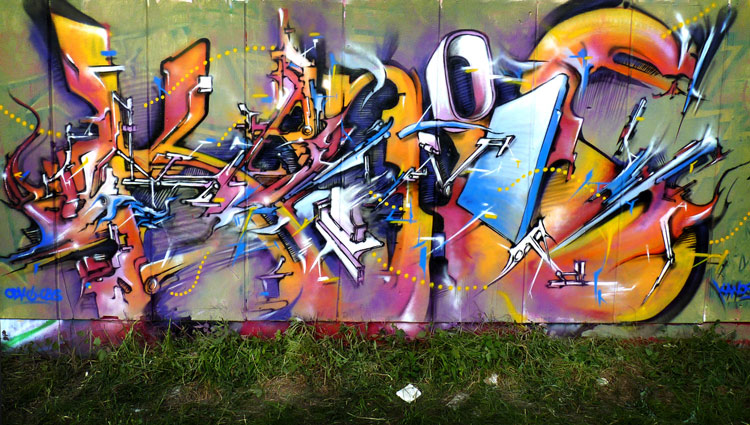
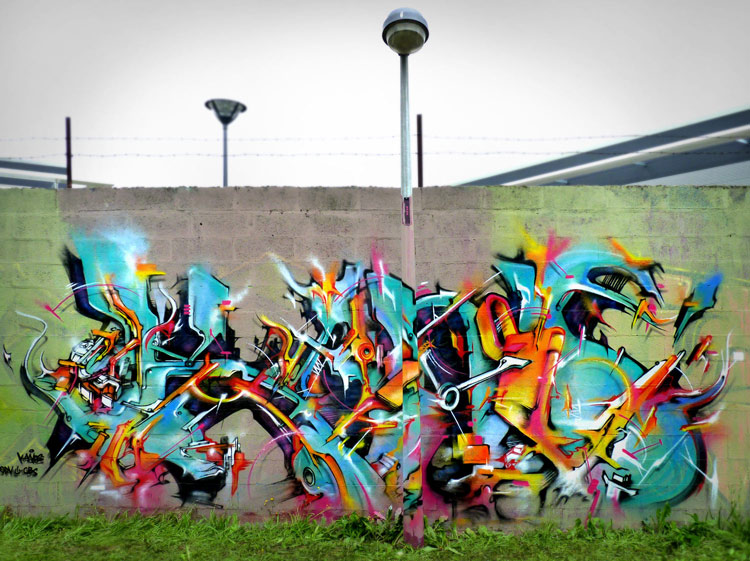
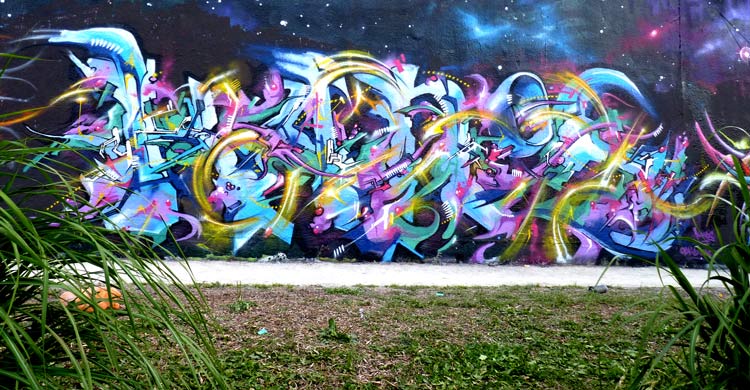
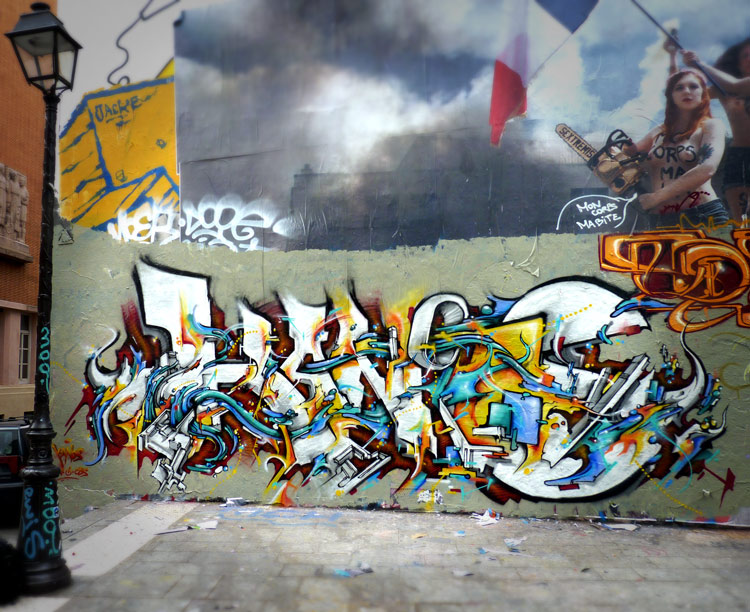
Productions 2013 archives documents a series of mural street art works created mainly in Paris and the Île-de-France region. This period is defined by the development of “Kanos” as a constructed typographic system rather than a simple graffiti signature. The name becomes a structural framework used to test visual composition, fragmentation, and integration of additional elements.
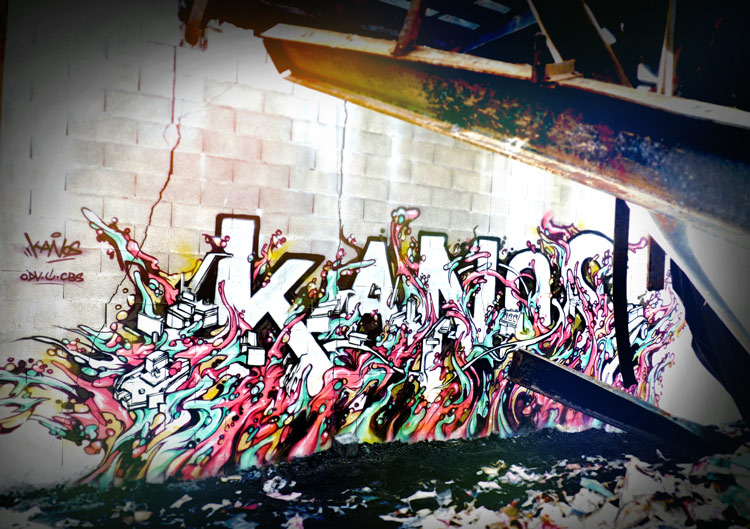
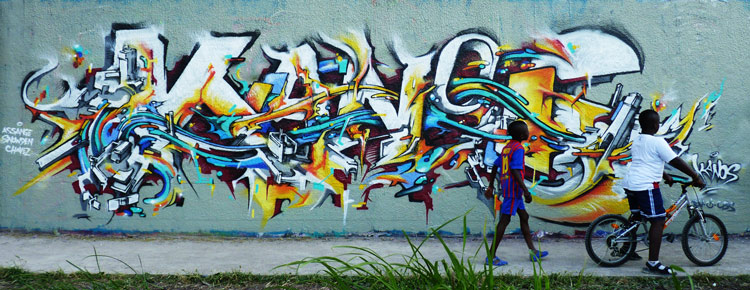
Each piece is built from a typographic base where letters are treated as modular structures. This approach allows the name to function as a flexible system rather than a fixed logo. Mechanical and organic components are inserted into the letterforms, creating layered compositions where readability and abstraction coexist.
The works were produced in multiple urban contexts, primarily in and around Paris. These include abandoned industrial buildings, squats, graffiti jams, and transitional public spaces. One of the key locations is the “Bloc” a squat on Mouzaïa street in Paris, and another place a former industrial structure partially destroyed by fire and reused as a painting site inside its ruins.
Additional works were created in Ivry-sur-Seine, during a graffiti jam in Écouen organized by Nao, and in areas such as the Parc des Courmouailles and the Pointe Poulmarch near the Canal Saint-Martin. These environments share a common condition: they are spaces in transition, shaped by abandonment, reuse, or informal occupation.
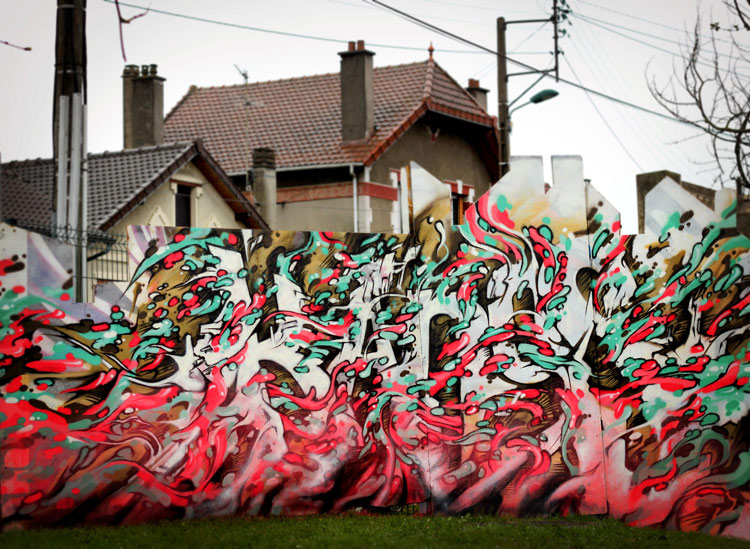
The visual system of this series is based on the interaction between mechanical and organic logics. The mechanical dimension references industrial remnants such as pipes, frameworks, and machine-like structures. These elements evoke the memory of former industrial production and the physical infrastructure of the city’s past.
The organic dimension introduces growth-like behaviors, erosion, and spreading forms that appear to invade or transform the mechanical base. The result is a continuous tension between constructed order and uncontrolled evolution.
Influences from Japanese cyberpunk culture play a structural role in this period. Works such as Akira and Ghost in the Shell inform the fragmentation of forms, the hybridization between organic and technological systems, and the representation of urban environments under transformation. These references are embedded in the logic of construction rather than used as literal imagery.
The industrial context of the works is central to their meaning. Many pieces were created in abandoned or partially destroyed spaces, where surfaces already carry traces of previous industrial use. The integration of mechanical forms into the lettering directly reflects this environment, turning the typography into a visual echo of disappearing infrastructure.
At the same time, these spaces are not only in decline but also being reactivated through informal artistic practices. Street art becomes a mechanism of transformation, overlaying new visual structures onto existing industrial remnants. This creates a layered reading of time within the urban surface.
The “Kanos” lettering functions as a continuous experimental system. Across the 2013 works, it is repeatedly deconstructed and rebuilt under different spatial and material conditions. Variations in density, fragmentation, and structure are used to test the limits of readability and abstraction within a single typographic identity.
This production phase operates at the intersection of graffiti writing and graphic experimentation. It uses the constraints of lettering as a framework for exploring broader questions of urban mutation, material decay, and visual transformation within post-industrial environments.
Frequently Asked Questions
What is the focus of the Productions 2013 post?
The focus is the development of typographic graffiti works based on the name Kanos, integrating mechanical and organic visual systems within urban environments in Paris.
Where were the works of Productions 2013 created?
They were mainly created in Paris and Île-de-France, including squats, abandoned industrial buildings, graffiti jams, and transitional urban spaces.
What influences shape this series?
The main influences are Japanese cyberpunk animation, especially Akira and Ghost in the Shell, combined with industrial decay and urban transformation.
Why are mechanical elements used in the lettering?
They reference abandoned industrial infrastructures and function as visual memory of disappearing urban production sites.
Is this series conceptual or documentary?
It is both: it documents real mural interventions while developing a conceptual system based on typographic experimentation and urban mutation.