
Belhopsession 2012 Villiers-Le-Bel
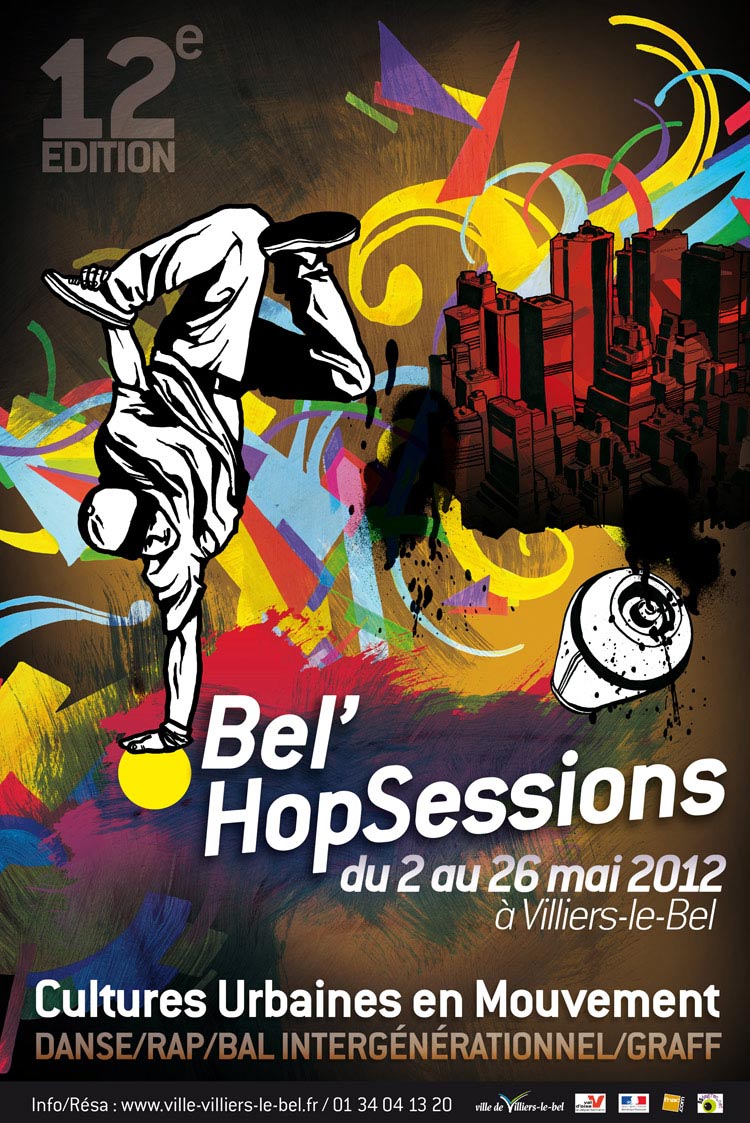
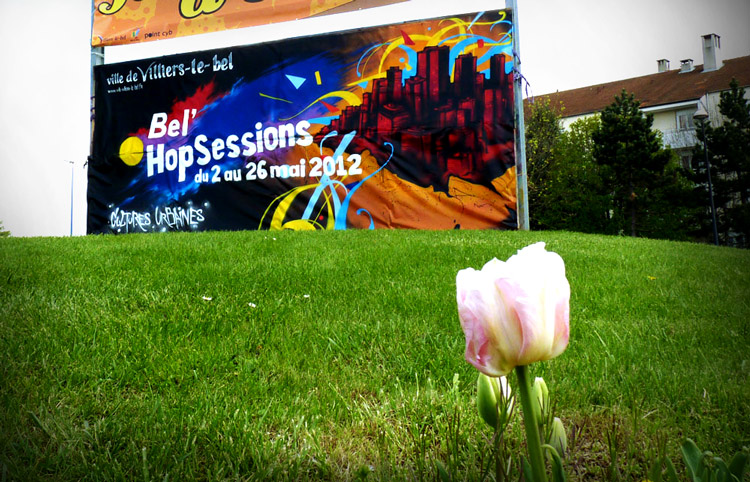
BelHopSessions 2012 is a hip hop festival organized in Villiers-le-Bel, bringing together different disciplines and expressions connected to hip hop culture. For this edition, I was commissioned to create the complete visual communication of the event, including the official poster, the festival flyer, and the graphic identity used across promotional materials.
This project followed an earlier collaboration on the 2011 edition and would later be extended through the 2013 and 2014 editions. Over several years, the BelHopSessions festival became an opportunity to develop a coherent visual identity while adapting the communication to the specific character of each edition.
The objective of the 2012 artwork was to create a visual tribute to hip hop culture while maintaining a strong connection with the city hosting the event. Rather than focusing on a single discipline, the design sought to evoke the broader spirit of hip hop as a cultural movement rooted in urban environments, creativity, self-expression, and community.
The central figure of the composition is a dancer. Positioned at the heart of the visual, the character embodies movement, rhythm, and performance. Dance has always occupied a fundamental place within hip hop culture, alongside graffiti, DJing, and MCing. By placing the dancer at the center of the image, the poster immediately communicates the energy and dynamism associated with the festival.
The figure is not isolated from its environment. Behind the dancer, a large urban landscape unfolds, composed of buildings and architectural forms directly inspired by the city of Villiers-le-Bel. These structures are not generic city elements but visual references designed to connect the event to its local context.
This relationship between culture and place was an important aspect of the project. Hip hop emerged from urban environments and continues to maintain a strong connection to the cities in which it develops. By integrating architectural references to Villiers-le-Bel, the poster establishes a direct visual dialogue between the festival and the community that hosts it.
The cityscape also serves another purpose within the composition. It provides scale and depth while reinforcing the idea that cultural expression is inseparable from its environment. The buildings become more than a backdrop; they function as part of the narrative structure of the image.
As with many of my graphic design projects from this period, the composition combines illustrative elements with a structured graphic approach. The image needed to remain immediately understandable to a broad audience while retaining enough visual richness to reflect the diversity of hip hop culture.
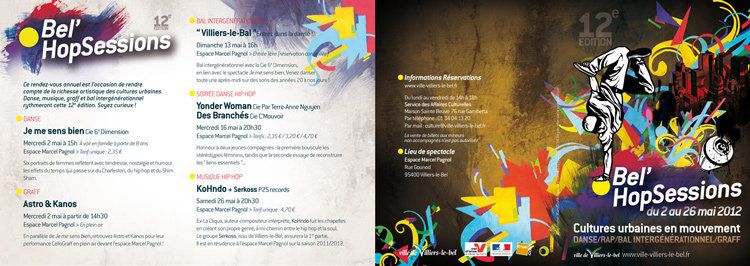
The communication work extended beyond the poster itself. A complete flyer was also designed for the event, ensuring visual consistency across different communication supports. Maintaining a coherent graphic language between poster and printed materials was essential for building recognition around the festival.
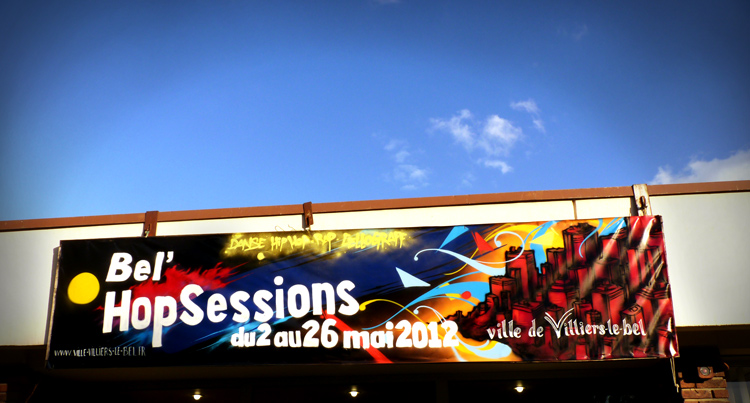
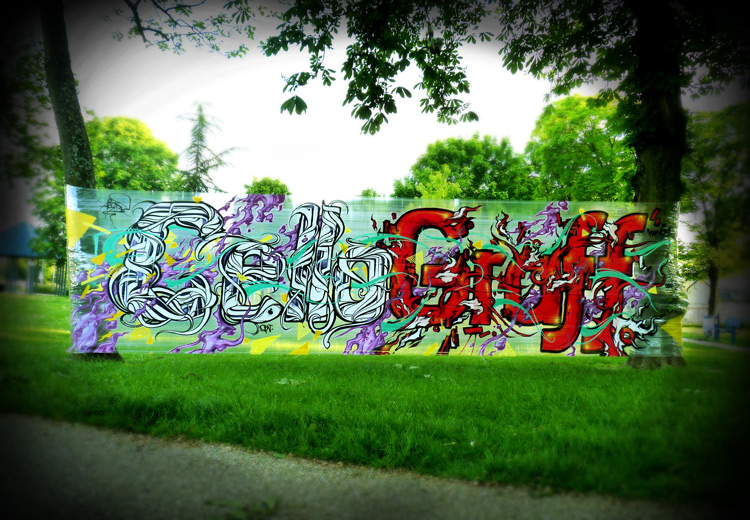
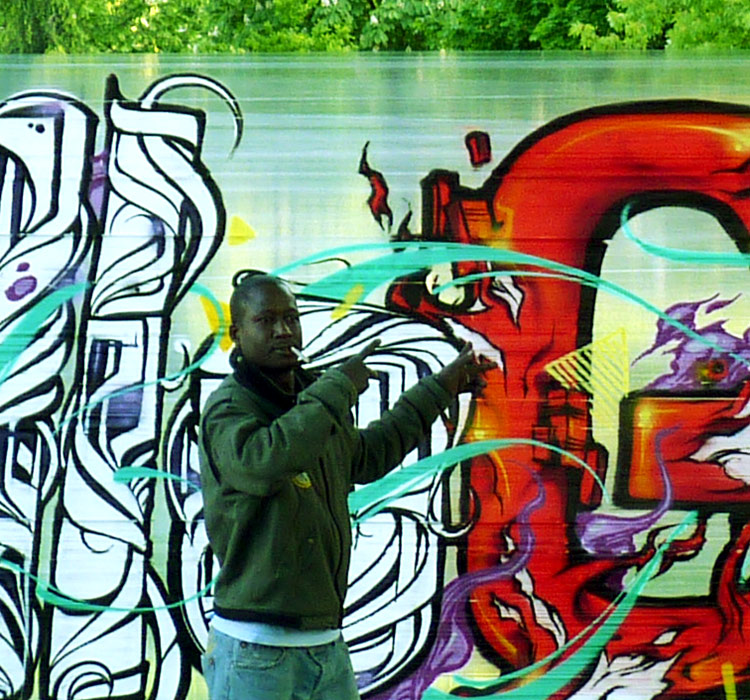
In addition to the printed communication, part of the visual identity was physically produced through painted installations. Several graphic elements developed for the campaign were painted on banners and CelloGraff supports. This approach created a direct connection between graphic design and urban artistic practice, allowing the communication materials to exist not only as printed objects but also as painted interventions in public space.
The use of CelloGraff was particularly relevant within the context of a hip hop festival. By transferring elements of the communication campaign into urban environments, the project reinforced the relationship between graphic communication and street culture. The artwork could therefore exist simultaneously as design, installation, and public intervention.
BelHopSessions occupied a unique position within the cultural life of Villiers-le-Bel. The festival brought together audiences interested in dance, music, graffiti, and urban culture, creating opportunities for exchange and participation. The visual identity needed to reflect this diversity while remaining accessible and recognizable.
The dancer chosen as the central motif symbolizes more than performance alone. The figure represents movement through space, creative freedom, and the energy that characterizes live cultural events. Combined with the architectural background, the image creates a dialogue between individual expression and collective urban experience.
The project also reflects a broader period of collaboration with the city of Villiers-le-Bel. Through repeated commissions across multiple years, a relationship developed between artistic practice and municipal cultural programming. This continuity made it possible to create visual identities that were both distinctive and connected to the local context.
Looking back, BelHopSessions 2012 represents an important example of how graphic design can support cultural events while remaining closely linked to the values and environments from which those events emerge. The combination of dance, architecture, public space, and urban culture reflects many of the themes that continue to influence my work today.
Thanks to Delphine, Lise and all the city hall team of Villiers-le-Bel for the warm welcome!!
Frequently Asked Questions
What was your role in BelHopSessions 2012?
I created the complete visual communication for the festival, including the poster, flyer, graphic identity, and painted communication elements.
Where did BelHopSessions 2012 take place?
The festival was organized in Villiers-le-Bel.
What is represented on the poster?
The poster features a hip hop dancer in the foreground and architectural references to Villiers-le-Bel in the background.
Were the visuals only printed?
No. Some elements of the communication campaign were also painted on banners and CelloGraff installations.
Did you work on other editions of BelHopSessions?
Yes. I created communication materials for the 2011 edition and later for the 2013 and 2014 editions as well.