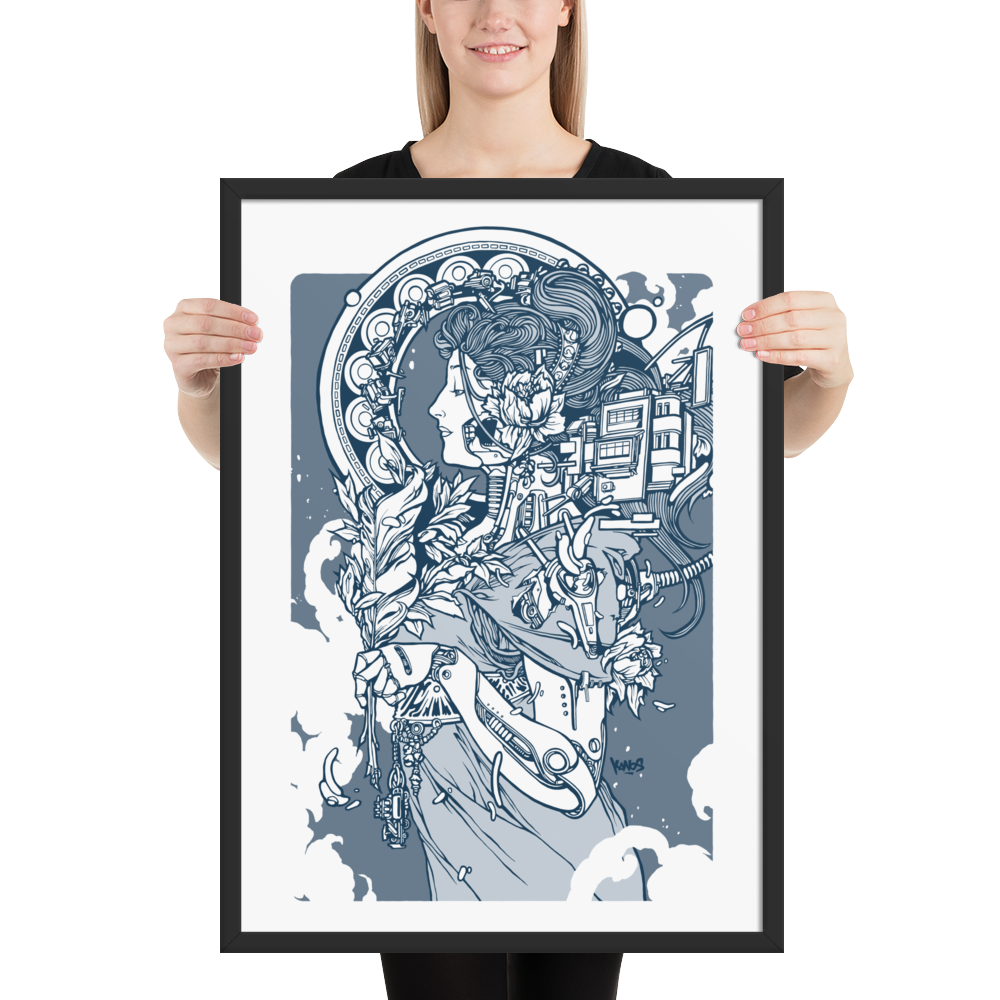
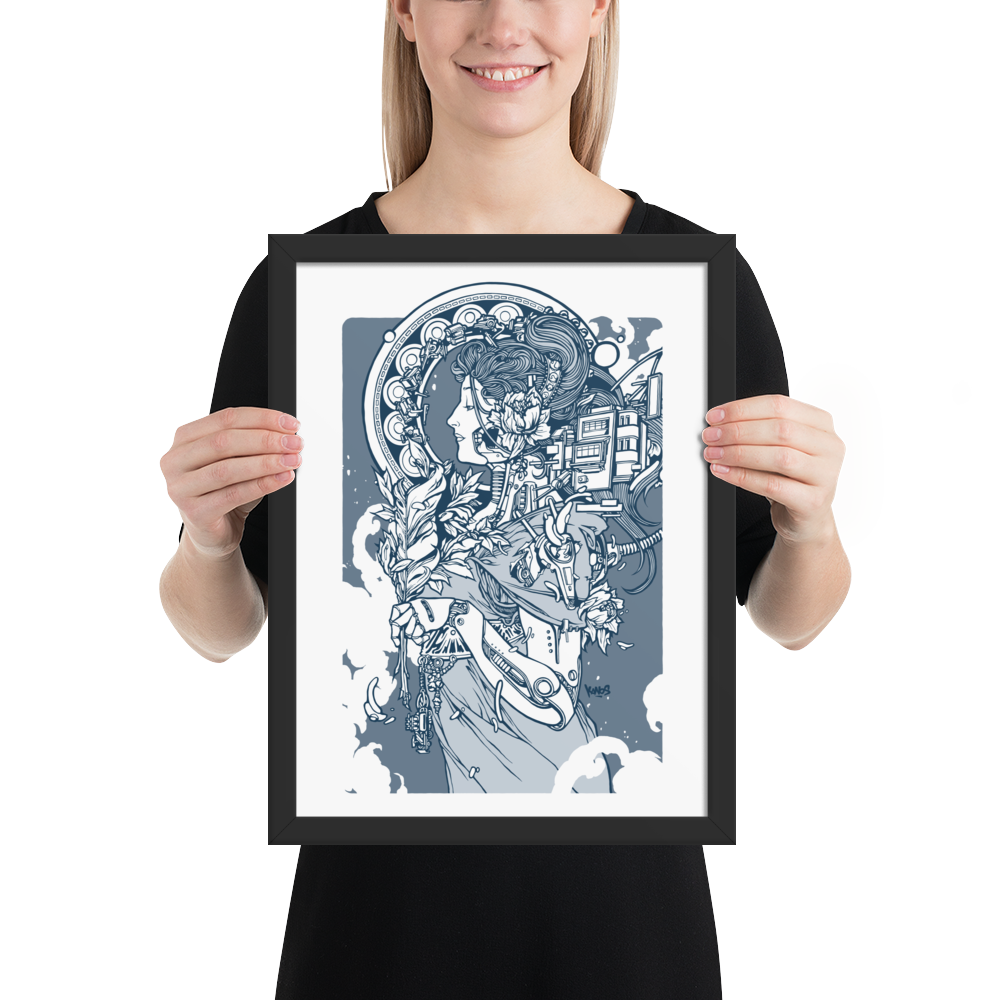
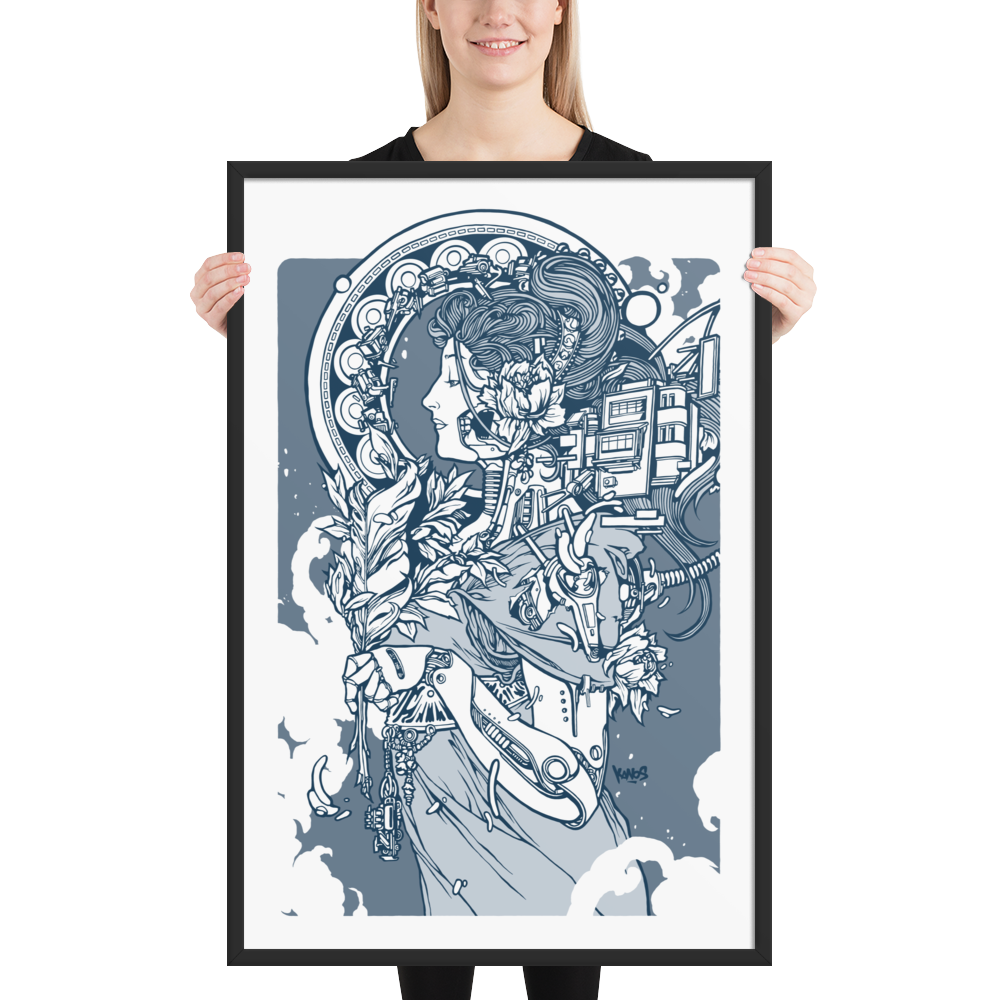
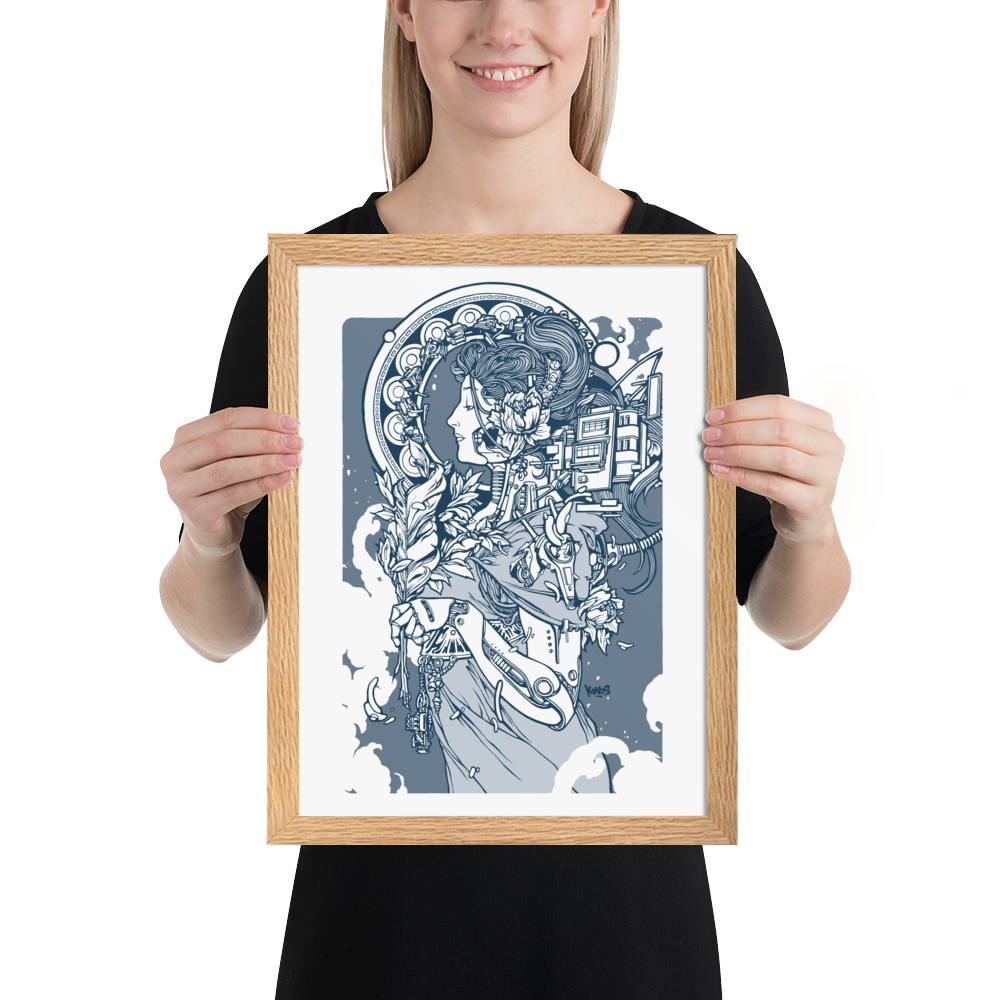
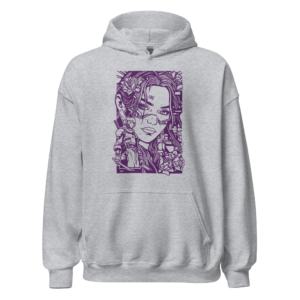
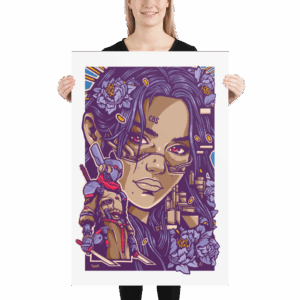
DOLORES Framed Print / Tribute to Mucha Through Cyberpunk
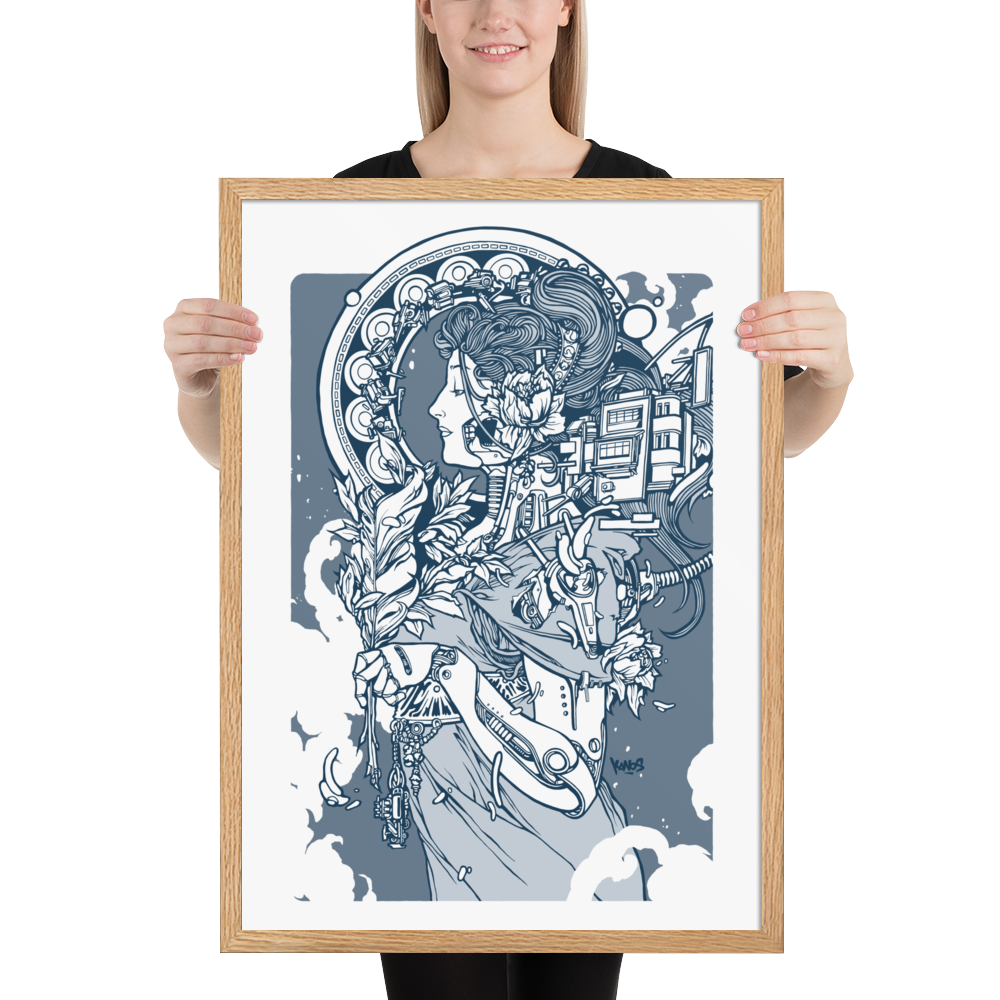
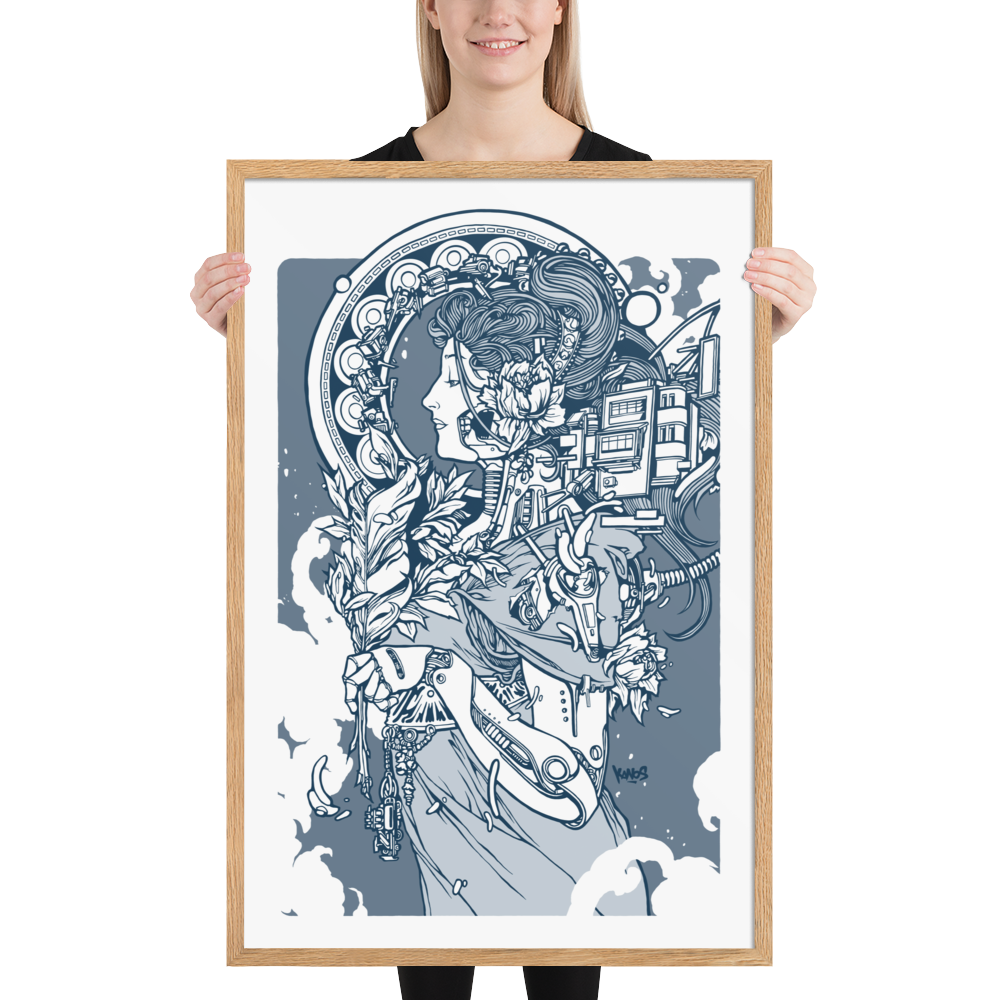
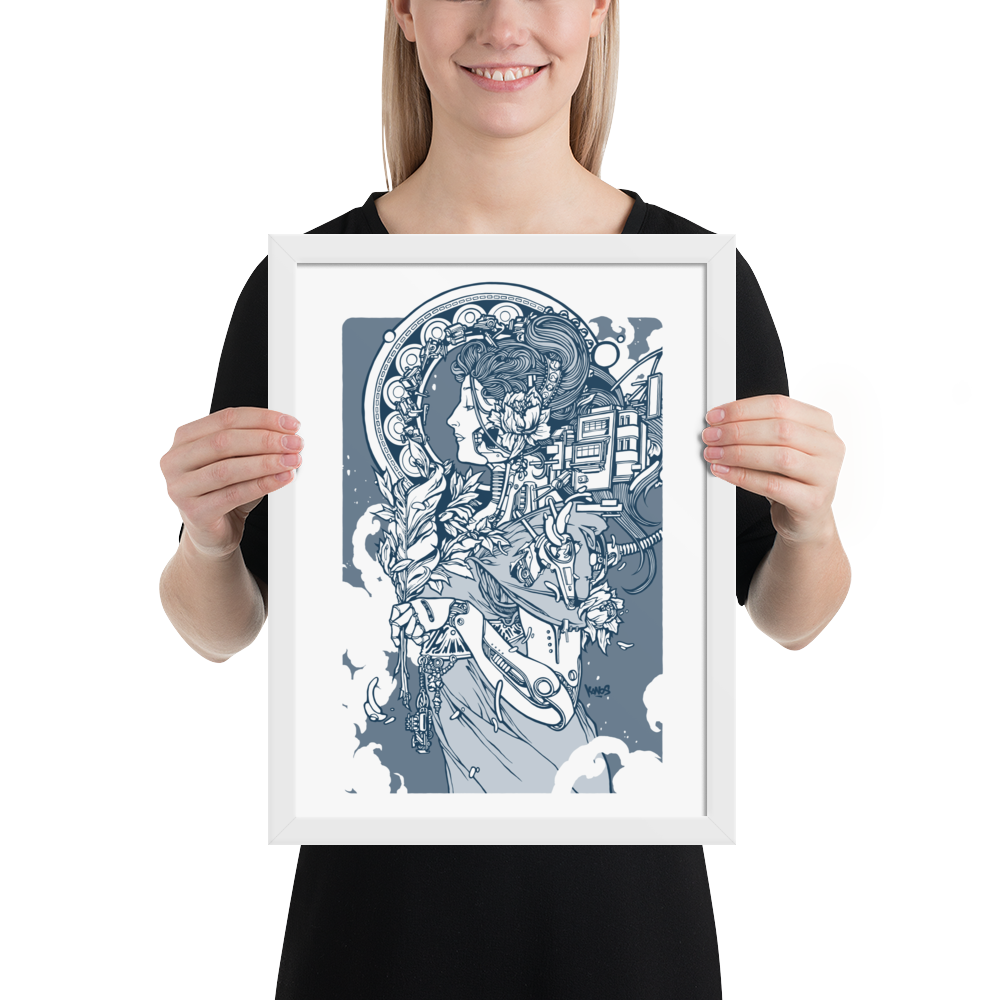
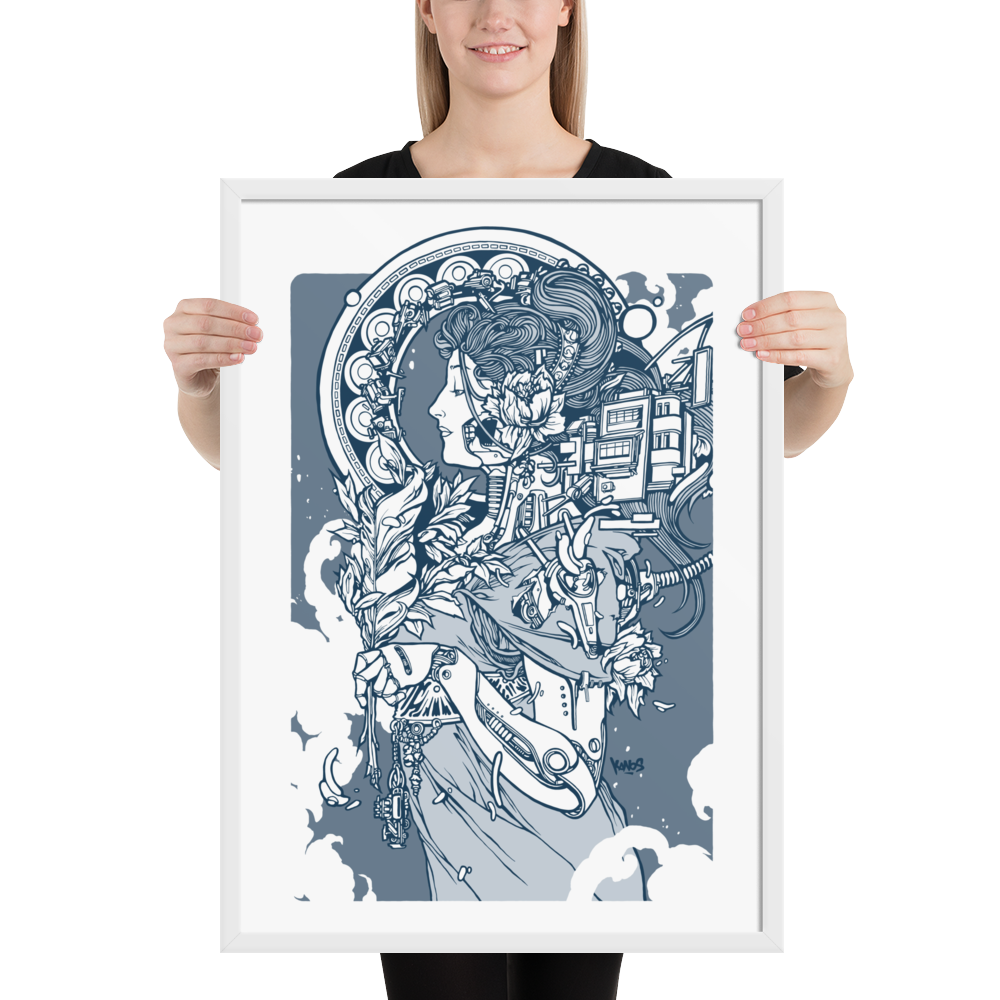
Dolores Print is based on a large-scale mural created in Geneva in collaboration with WallsStreetGVA. The artwork pays tribute to one of my greatest artistic influences, Alfons Mucha, while exploring how his visual language can evolve within a contemporary world shaped by technology, artificial intelligence, and digital culture.
Rather than reproducing Art Nouveau as a historical style, Dolores reinterprets its principles through a cyberpunk aesthetic. Flowing ornamental lines, elegant feminine figures, and decorative compositions are combined with mechanical structures and futuristic details, creating a dialogue between two seemingly distant artistic universes. The result is a mural that connects more than a century of visual culture while questioning the direction in which our own society is evolving.
Public murals have the ability to bring complex ideas into everyday life. Installed in the streets rather than inside galleries, they become part of the city itself, inviting unexpected encounters and encouraging reflection in public space. Dolores was conceived with this intention: to transform an urban wall into a visual conversation about identity, progress, and artistic continuity.
Between Art Nouveau and Science Fiction
The influence of Alfons Mucha is immediately recognizable in the composition. His characteristic use of graceful female figures, ornamental patterns, and harmonious structures serves as the visual foundation of the artwork. However, the objective was never to imitate his work. Instead, I wanted to imagine how these aesthetic principles might evolve if they emerged within the technological landscape of the twenty-first century.
Cyberpunk offers the ideal framework for this reinterpretation. As a genre, it questions the relationship between humanity and technology, examining how innovation reshapes society, identity, and everyday life. By merging Mucha's decorative elegance with cybernetic structures, Dolores creates a bridge between historical artistic heritage and speculative futures. The coexistence of these influences reflects one of the recurring ambitions of my work: to demonstrate that artistic traditions remain alive when they are reinterpreted rather than simply preserved.
Dolores as a Symbolic Figure
The central character is not intended as the portrait of a specific individual. Dolores functions as a symbolic figure representing the coexistence of vulnerability and resilience, tradition and innovation, memory and transformation. Mechanical elements integrated into her body extend her form without erasing her humanity. They become visual metaphors for the technologies that increasingly shape our daily existence. Rather than presenting machines as external objects, the artwork explores how technological systems gradually become part of human identity.
This hybrid appearance raises a question that recurs throughout many of my murals: how do we preserve our humanity while embracing technological progress? The mural deliberately avoids providing a definitive answer. Instead, it encourages viewers to reflect on their own relationship with innovation and the role technology plays in shaping individual and collective identity.
Organic Elegance and Mechanical Precision
A defining characteristic of Dolores is the balance between organic forms and engineered structures. Decorative curves inspired by Art Nouveau coexist with mechanical components that introduce rhythm, precision, and visual tension. This dialogue between natural and artificial elements has become one of the defining features of my artistic language. Rather than opposing these worlds, I seek to reveal their interdependence. Technology is not portrayed as the opposite of nature but as another system created by humanity, capable of both extending and transforming the way we live.
The composition therefore avoids dystopian clichés. Instead of illustrating conflict, it presents coexistence, suggesting that the future will likely be shaped by negotiation rather than opposition between biological and technological systems.
Geneva as a Place of Reflection
Creating Dolores in Geneva carried particular significance. The city is internationally recognized for diplomacy, scientific research, innovation, and cultural exchange. These characteristics make it an especially relevant setting for an artwork that reflects on technological evolution and human values. Installed within public space, the mural became part of the daily visual landscape, allowing residents and visitors to encounter these ideas outside institutional cultural settings. This accessibility remains one of the greatest strengths of mural painting. Art does not require a museum ticket or prior knowledge; it becomes part of everyday life The collaboration with WallsStreetGVA made it possible to develop a project where artistic experimentation could engage directly with the urban environment while remaining accessible to a broad audience.
From Monumental Wall to Fine Art Print
Dolores Framed Print preserves the visual identity of the original mural while offering a new bluescale viewing experience. Street art mural public artworks are often perceived from a distance, where their overall composition dominates. In print form, viewers can appreciate the intricate details, ornamental structures, and subtle relationships between organic and mechanical elements. The transition from wall to print transforms the way the artwork is experienced without altering its conceptual foundation. Decorative patterns, textures, and cybernetic details become more apparent, encouraging a slower and more intimate observation.
The Frame Print extends the life of the mural beyond its original location while maintaining the narrative and symbolism that inspired its creation.
About the Artist
Alex Kanos is a French contemporary mural artist whose work combines Art Nouveau influences, science fiction, and urban culture. Through large-scale murals and graphic design, he explores the relationship between organic life and technological evolution, creating hybrid compositions where history, mythology, and speculative futures intersect. His work frequently examines themes of identity, transformation, resilience, and cultural memory through elegant yet complex visual narratives. Each project seeks to establish a dialogue between past and future, demonstrating that artistic heritage continues to evolve when viewed through the lens of contemporary society.
Dolores Print perfectly reflects this approach, bringing together the decorative legacy of Alfons Mucha and the speculative imagination of cyberpunk into a single composition that questions what it means to remain human in an increasingly technological world.