Frequently Asked Questions
What is La Semeuse mural in Geneva?
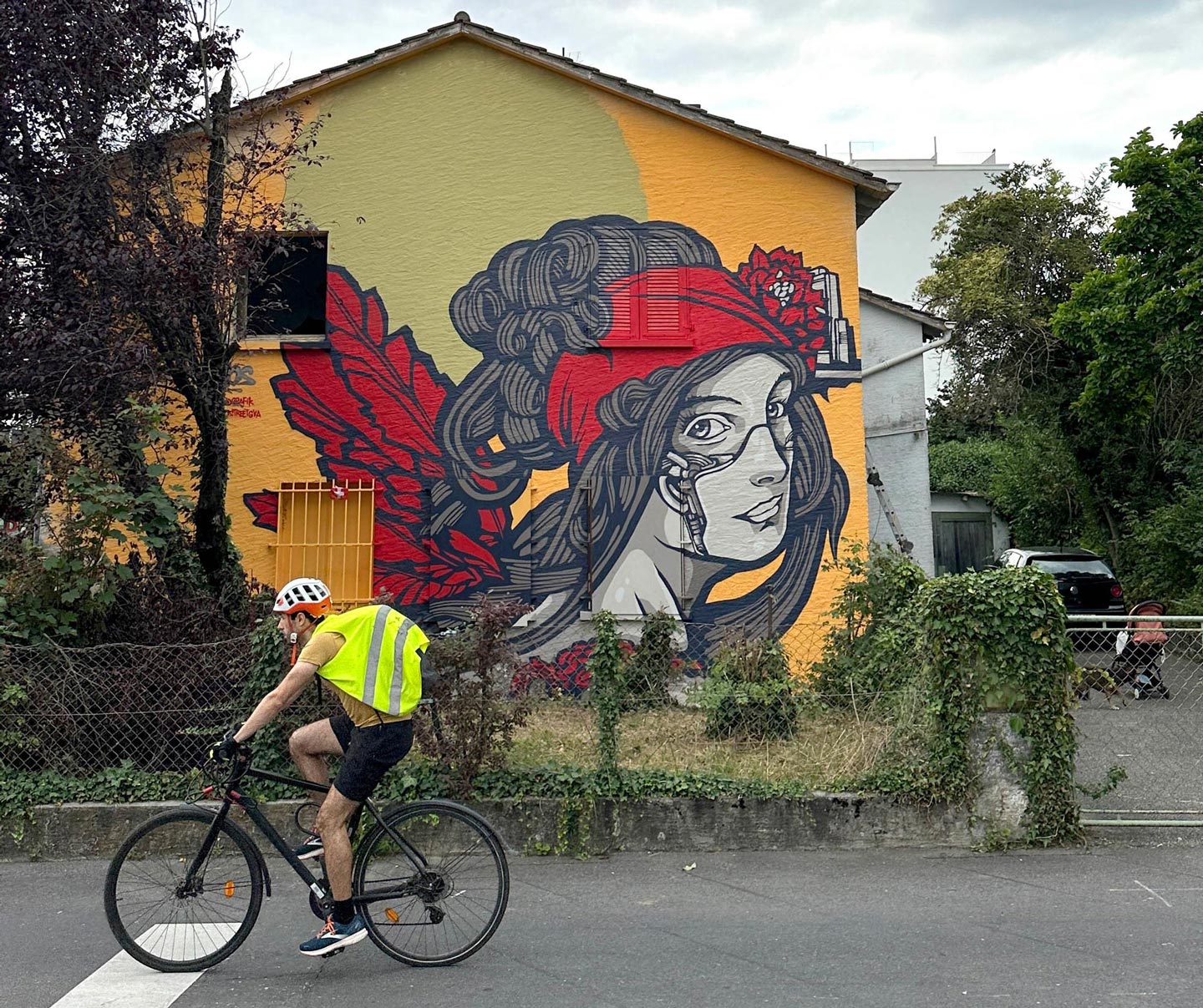
It is a mural by Alex Kanos created for WallsStreet, inspired by Alfons Mucha and reinterpreted through a cyberpunk aesthetic.
What does La Semeuse reference?
The work references the historical one-franc coin and its symbolic figure “La Semeuse”.
What artistic styles influence this mural?
It combines Art Nouveau, cyberpunk aesthetics and industrial visual language.
What is the main concept of the artwork?
The fusion between human and machine, past and future, and the transformation of symbolic imagery.
Where was this mural created?
It was created in Geneva, Switzerland for WallsStreet agency.
La Semeuse: A Mural for WallsStreet in Geneva
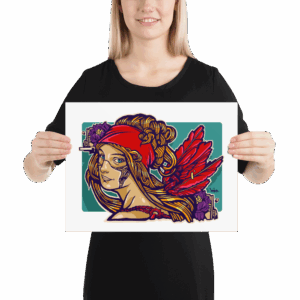
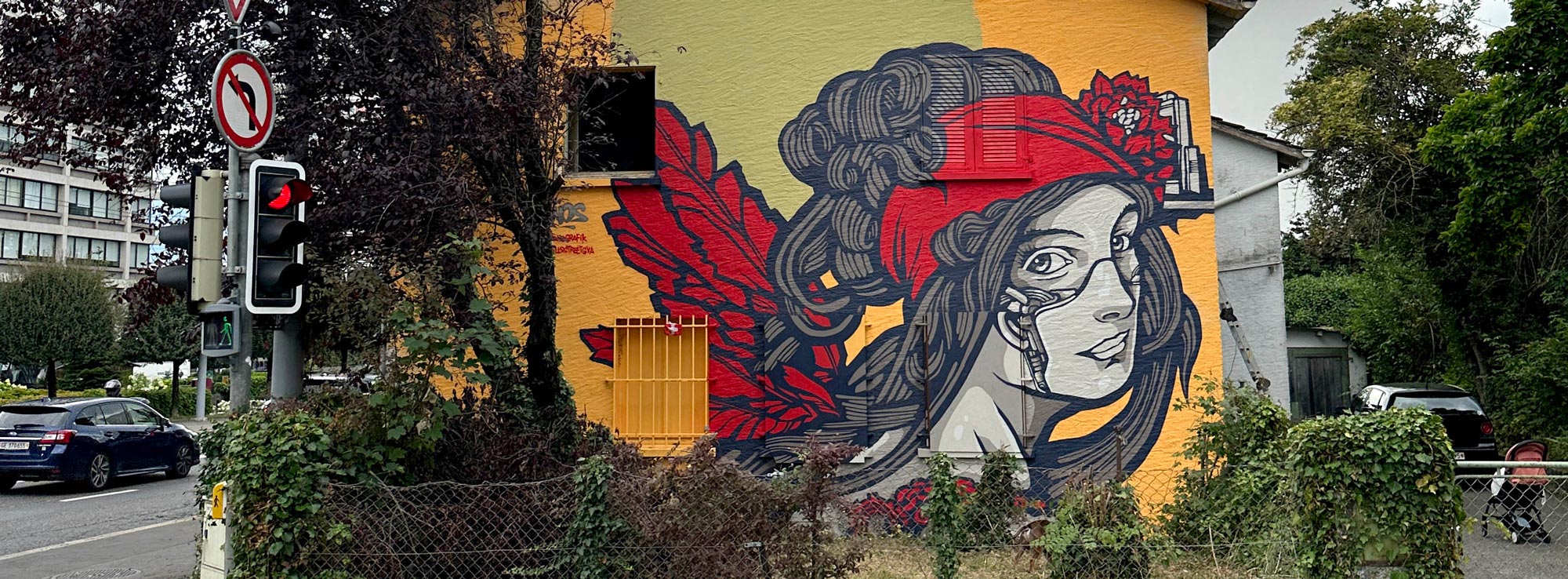
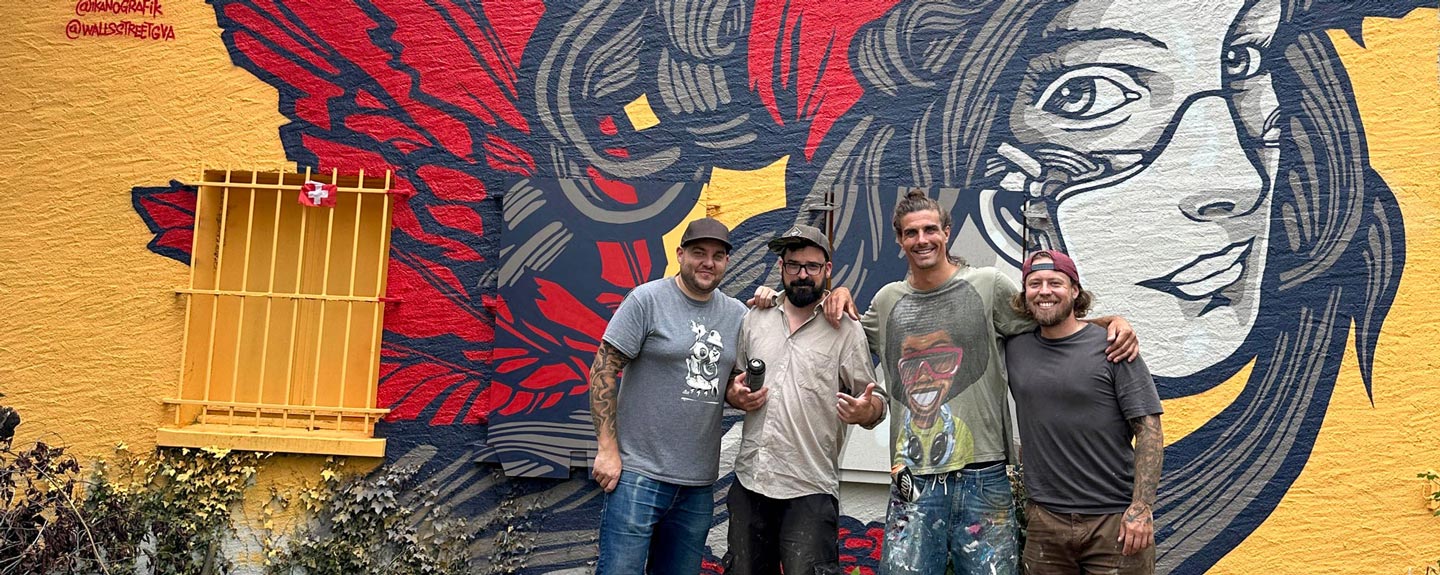
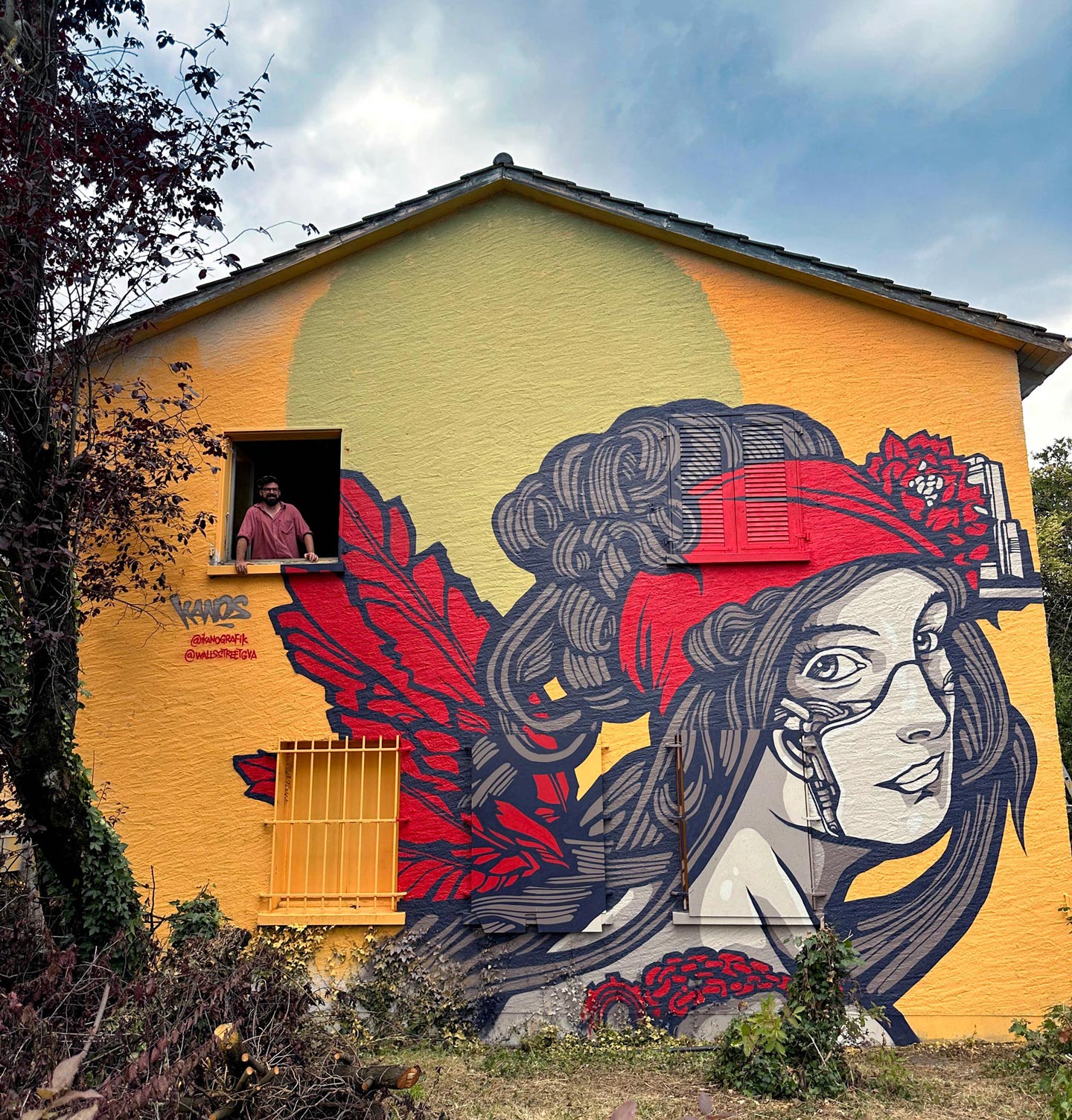
One more time, I had the opportunity to create a painting for WallsStreet agency in Geneva, Switzerland, inspired by a character from Alfons Mucha. I already did a tribute to Mucha many years ago. This piece titled “La Semeuse”, references the now-disappeared one-franc coin. Howewer the franc still exists in Switzerland. My character features mechanical and cyberpunk elements, blending a futuristic aesthetic with 19th-century imagery. More murals i did in Geneva here, Judith, Lancy and Clémence.
A Cyberpunk Tribute to Art Nouveau and Industrial Memory in Geneva
“La Semeuse” is a mural created by Alex Kanos for WallsStreet agency in Geneva, Switzerland. This artwork continues an ongoing exploration of hybrid visual languages combining art history, industrial memory, and futuristic aesthetics. The piece is deeply rooted in references to Alfons Mucha, while reinterpreting his visual universe through a contemporary, mechanical and cyberpunk lens.
The starting point of the mural is a character inspired by Mucha’s ornamental and symbolic style. This reference establishes a connection with the Art Nouveau movement, known for its organic lines, decorative composition, and symbolic representation of femininity and nature. However, in “La Semeuse,” this historical reference is transformed into a hybrid figure where classical imagery meets technological evolution.
The character embodies a fusion between human and machine. Mechanical elements are integrated into the body and structure of the figure, suggesting a post-industrial reinterpretation of the human form. This duality reflects a broader artistic theme present throughout the work: the coexistence of organic life and mechanical systems within contemporary society.
A central symbolic reference in the work is the now-disappeared one-franc coin. “La Semeuse” directly references this historical object, which still exists in memory and cultural imagination, particularly in Switzerland where the franc remains a currency. The figure of the “Semeuse” (the sower) becomes a symbolic carrier of value, circulation, and transformation.
This reference introduces a layer of economic and historical meaning into the mural. The coin is not only a financial object but also a visual artifact that carries identity, national memory, and cultural continuity. By reinterpreting it in a mural context, the work transforms monetary symbolism into a visual narrative.
The composition also reflects a strong influence from cyberpunk aesthetics. Mechanical structures, fragmented visual systems, and futuristic distortions blend with classical ornamental references. This tension between past and future creates a visual instability that defines the core identity of the work.
The contrast between 19th-century imagery and futuristic elements is intentional. It highlights the evolution of visual culture, where historical references are not replaced but reconfigured. The mural becomes a space where different temporalities coexist, forming a layered visual system.
Geneva provides a meaningful context for this work. As an international city with strong cultural, financial and historical identity, it becomes a fitting environment for a piece that connects symbolism, economy, and artistic heritage. The presence of WallsStreet agency reinforces the dialogue between public space and artistic intervention.
Throughout the mural, the fusion between organic and mechanical elements reflects a recurring theme in Alex Kanos’ practice. This hybridization is not presented as conflict, but as continuity. The human figure becomes a site of transformation, where technological influence reshapes identity without erasing its symbolic origins.
The peony-like ornamental references and decorative structures contribute to a sense of continuity with classical symbolism while being reinterpreted through a modern visual language. The result is a composition that balances elegance and disruption, history and speculation.
“La Semeuse” ultimately functions as a visual bridge between different artistic eras. It connects the ornamental legacy of Alfons Mucha, the industrial and economic symbolism of the franc coin, and the futuristic aesthetics of cyberpunk culture.
The mural invites viewers to interpret these layers individually, constructing their own reading of the work. In doing so, it maintains an open structure where meaning is not fixed but continuously evolving, reflecting the complexity of contemporary visual culture.