

Frequently Asked Questions
What is the Victoria mural about?
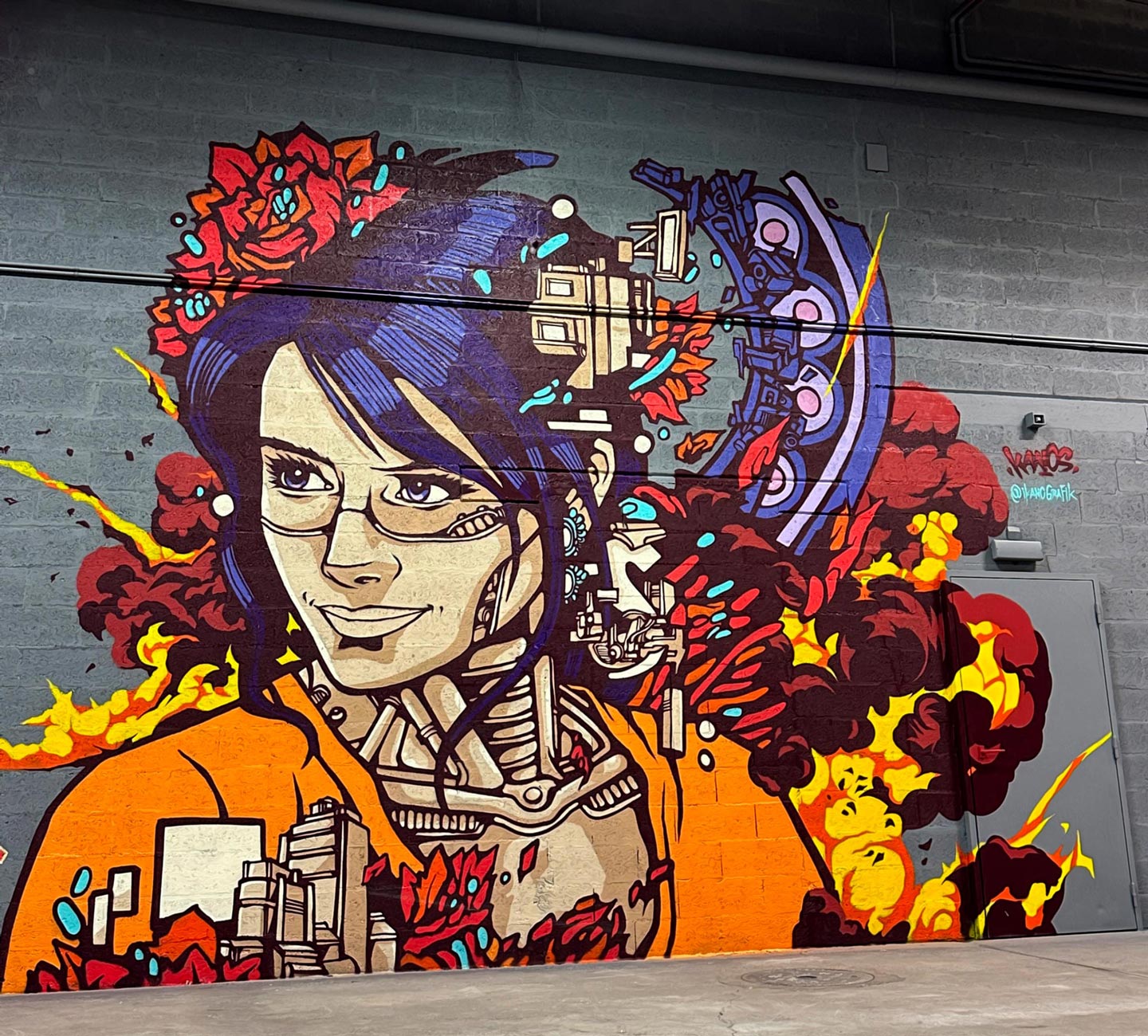
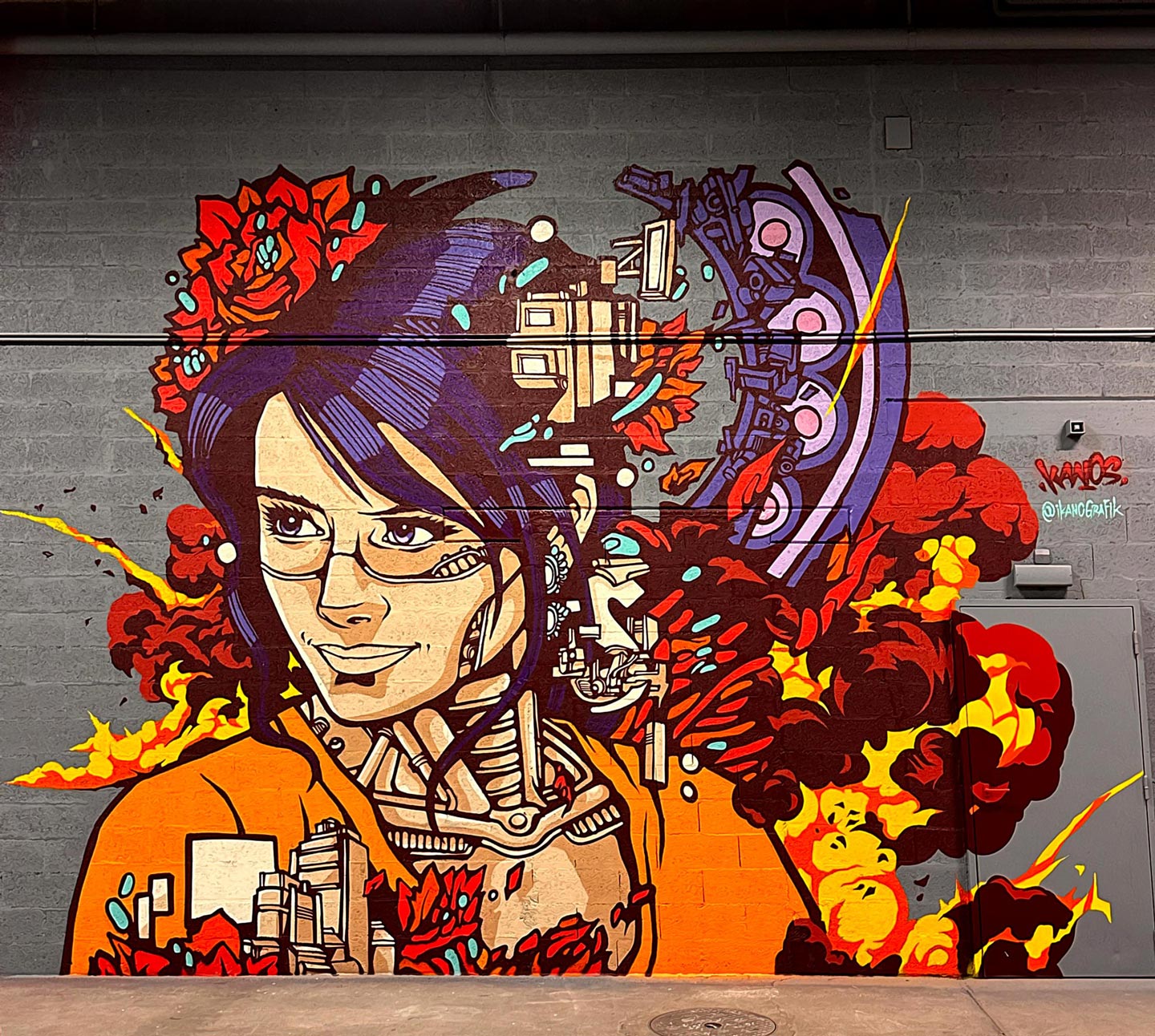
Victoria explores the fusion of human beings and technology through a character inspired by both nineteenth-century aesthetics and cyberpunk culture.
Where was the mural created?
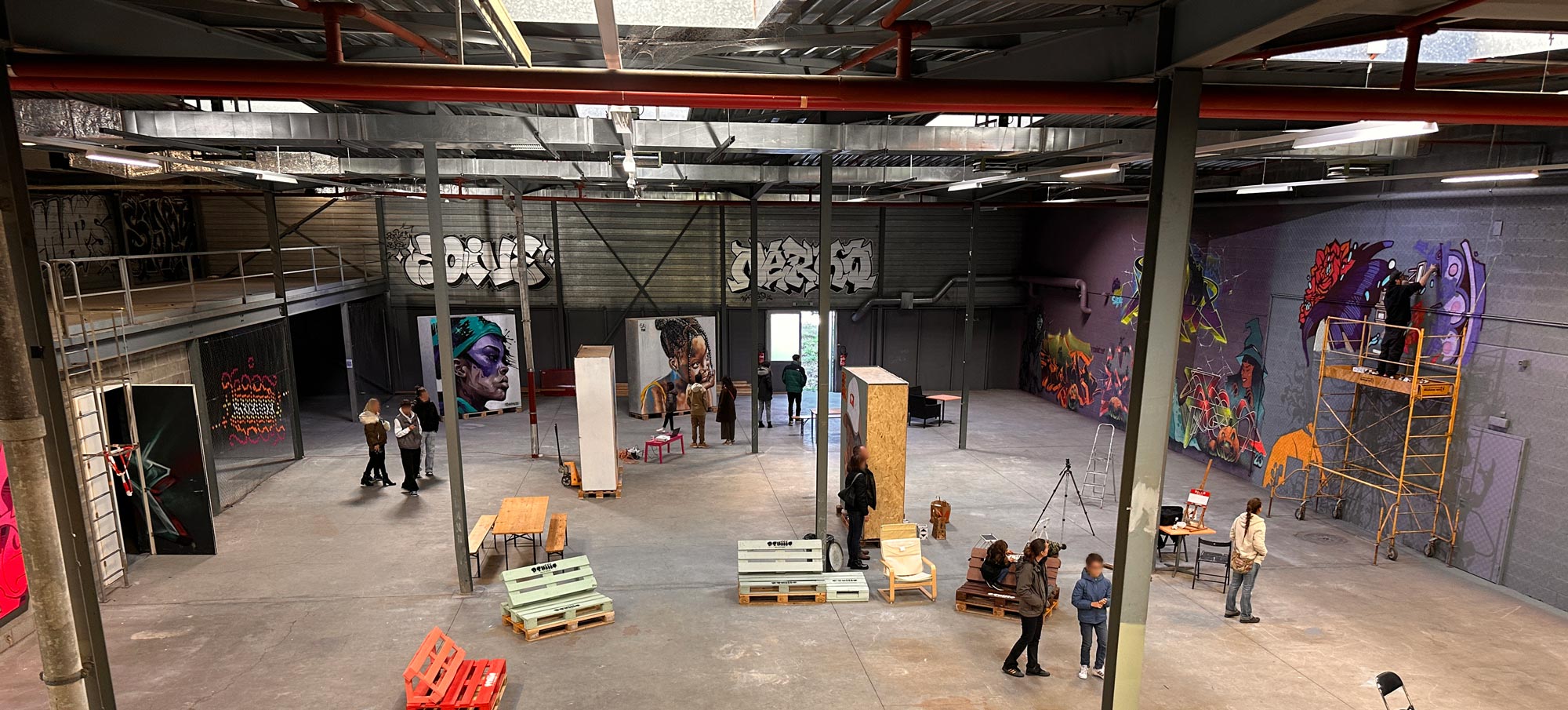
The artwork was created for the House of Paint exhibition in Geneva, Switzerland.
What artistic influences appear in Victoria?
The mural combines nineteenth-century visual references, cyberpunk aesthetics, industrial design and contemporary urban art.
What do the explosions around the character represent?
They can be interpreted as symbols of transformation, uncertainty and the challenges associated with technological change.
What is the main theme of the artwork?
The central theme is the relationship between humanity and technology and the way technological evolution transforms identity and society.
Victoria, Blending Cyberpunk and 19th-Century Elements
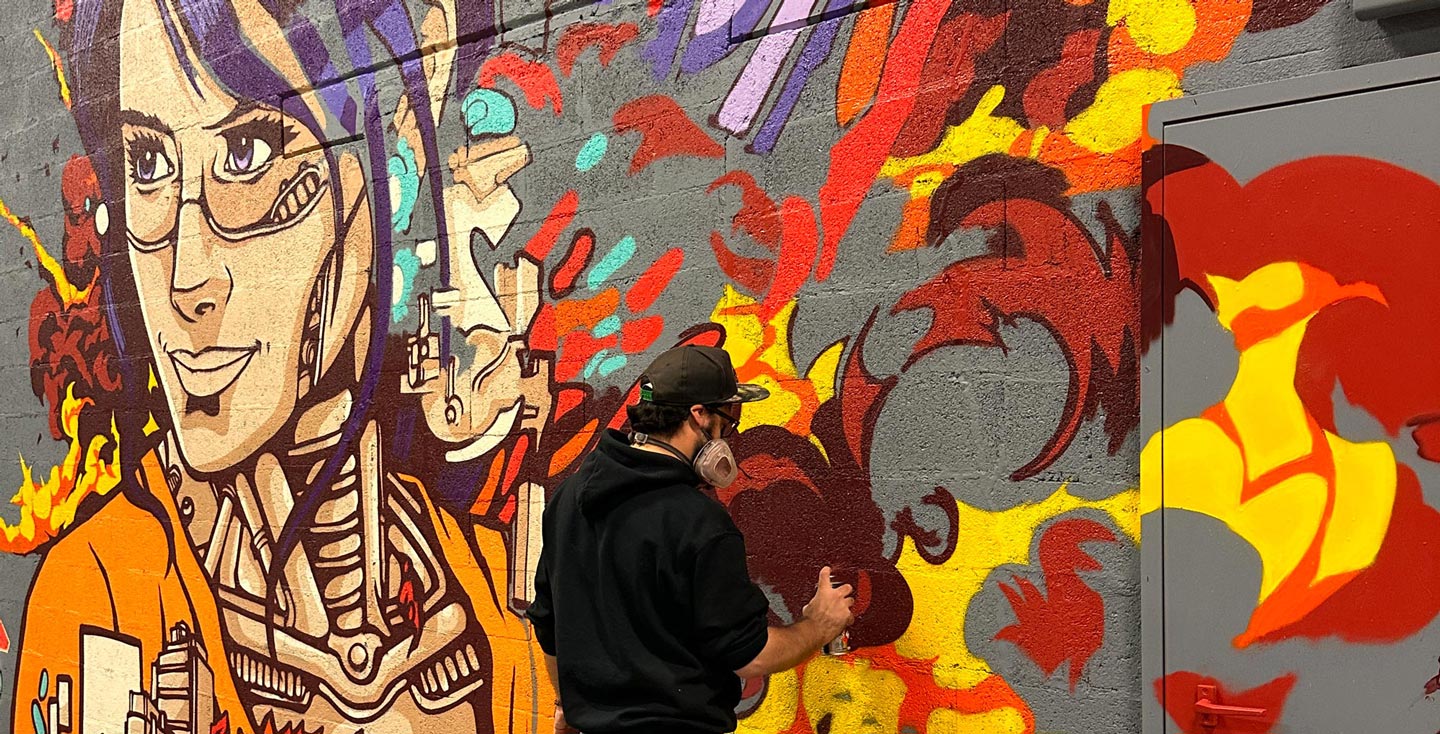
WallsStreetGVA warmly invited me to participate in the House of Paint exhibition, a key gathering for street art enthusiasts. For this edition, I created an indoor mural depicting a character named Victoria. This artwork blends 19th-century aesthetics with cyberpunk influences, symbolizing the melting of human and new technologies. Explosions around looks like a warning of future challenges who awaited us. More murals i did in Geneva here, Dolores, Judith, Lancy, Salomé and Clémence.
The mural continues an artistic research developed by Alex Kanos around the relationship between historical imagery and speculative futures. Rather than opposing past and future, the work combines them within a single visual language where classical references coexist with technological transformations.
Victoria is represented as a hybrid character situated between two eras. Her appearance draws inspiration from the elegance and visual codes associated with the nineteenth century, while mechanical details and futuristic elements introduce a distinctly cyberpunk dimension. This coexistence of references creates a deliberate tension between tradition and innovation.
The choice of the name Victoria is not accidental. The character functions as a symbolic figure rather than a portrait. She embodies a transitional state where humanity is progressively transformed by technological systems. The mural does not present this evolution as entirely positive or entirely negative. Instead, it explores the complexity of a world where technological progress constantly reshapes human identity.
One of the central themes of the artwork is the fusion of human and machine. Throughout history, technological tools have extended human capabilities. Today, digital systems, artificial intelligence and interconnected networks increasingly influence the way individuals communicate, work and perceive reality. Victoria reflects this transformation through her hybrid visual construction.
Mechanical components integrated into the figure are not designed to erase her humanity. Instead, they become extensions of it. This relationship between organic and artificial forms echoes a recurring theme in Alex Kanos’ work, where boundaries between natural systems and industrial structures are deliberately blurred.
The cyberpunk influence visible in the mural provides a framework for reflecting on contemporary society. Cyberpunk imagery traditionally explores questions related to technology, urbanization, surveillance and the future of human autonomy. By combining these references with nineteenth-century aesthetics, the mural creates a dialogue between past expectations and present realities.
Another significant element of the composition is the presence of explosions and fragmented structures surrounding the character. These visual elements can be interpreted as symbols of disruption and transformation. Rather than depicting a specific event, they suggest the instability of periods marked by rapid technological and social change.
The explosions also function as a visual warning. They evoke uncertainty about the future and raise questions about the consequences of technological acceleration. The mural invites viewers to consider both the opportunities and risks associated with emerging technologies. In this sense, the work operates as an open reflection rather than a definitive statement.
Created for the House of Paint exhibition in Geneva, the mural was conceived for an audience familiar with contemporary urban art. The indoor setting allowed the piece to be experienced differently from a public mural, encouraging a closer observation of details, textures and symbolic elements embedded throughout the composition.
Geneva itself provides an interesting context for this work. As an international city associated with innovation, diplomacy and global exchange, it becomes a fitting location for an artwork exploring the relationship between humanity and technological evolution. The city acts as a backdrop that reinforces the relevance of these themes within a contemporary context.
Victoria ultimately represents a state of transition. The mural does not describe a distant science-fiction future but reflects concerns already present in contemporary society. Through the fusion of nineteenth-century aesthetics and cyberpunk visual culture, the work proposes a reflection on identity, adaptation and the uncertain future created by technological change.
By combining historical references, futuristic imagery and symbolic storytelling, Victoria becomes a visual meditation on transformation, inviting viewers to question how humanity may evolve as technology becomes increasingly integrated into everyday life.