
Frequently Asked Question
What is Elsa Belgium mural in Aubange about?
It explores digital transformation and its impact on cultural institutions like public libraries.
Where is the mural located?
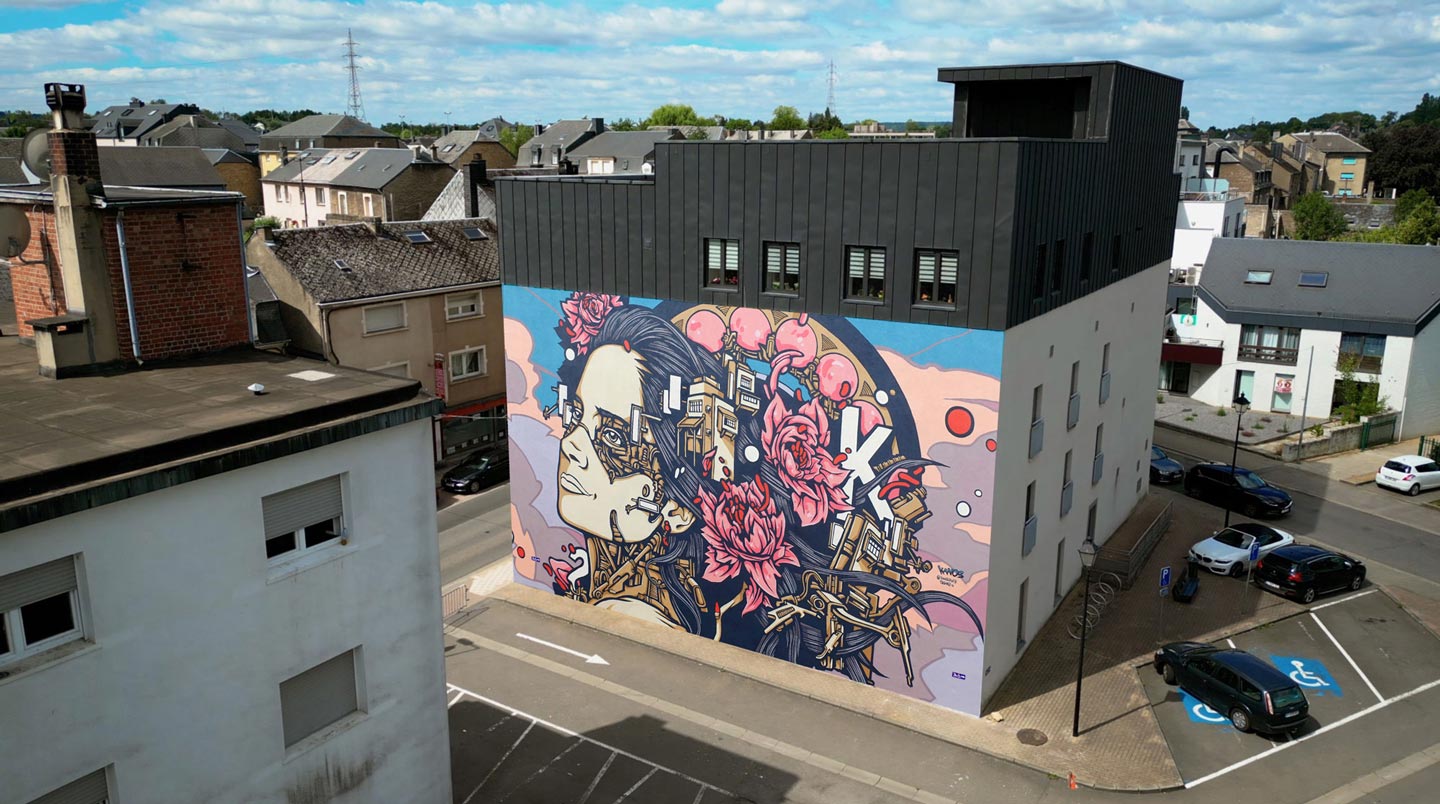
The mural is located on the facade of a media library in Aubange, Belgium.
Who organized the project?
The project was supported by Osaro agency following previous collaborations.
What is the main theme of the artwork?
The theme is the coexistence between digital culture and traditional paper-based media.
What artistic style is used?
The mural combines organic and mechanical visual elements representing technological transformation.
Elsa Belgium, exploring the Cultural Future: A Mural in Aubange
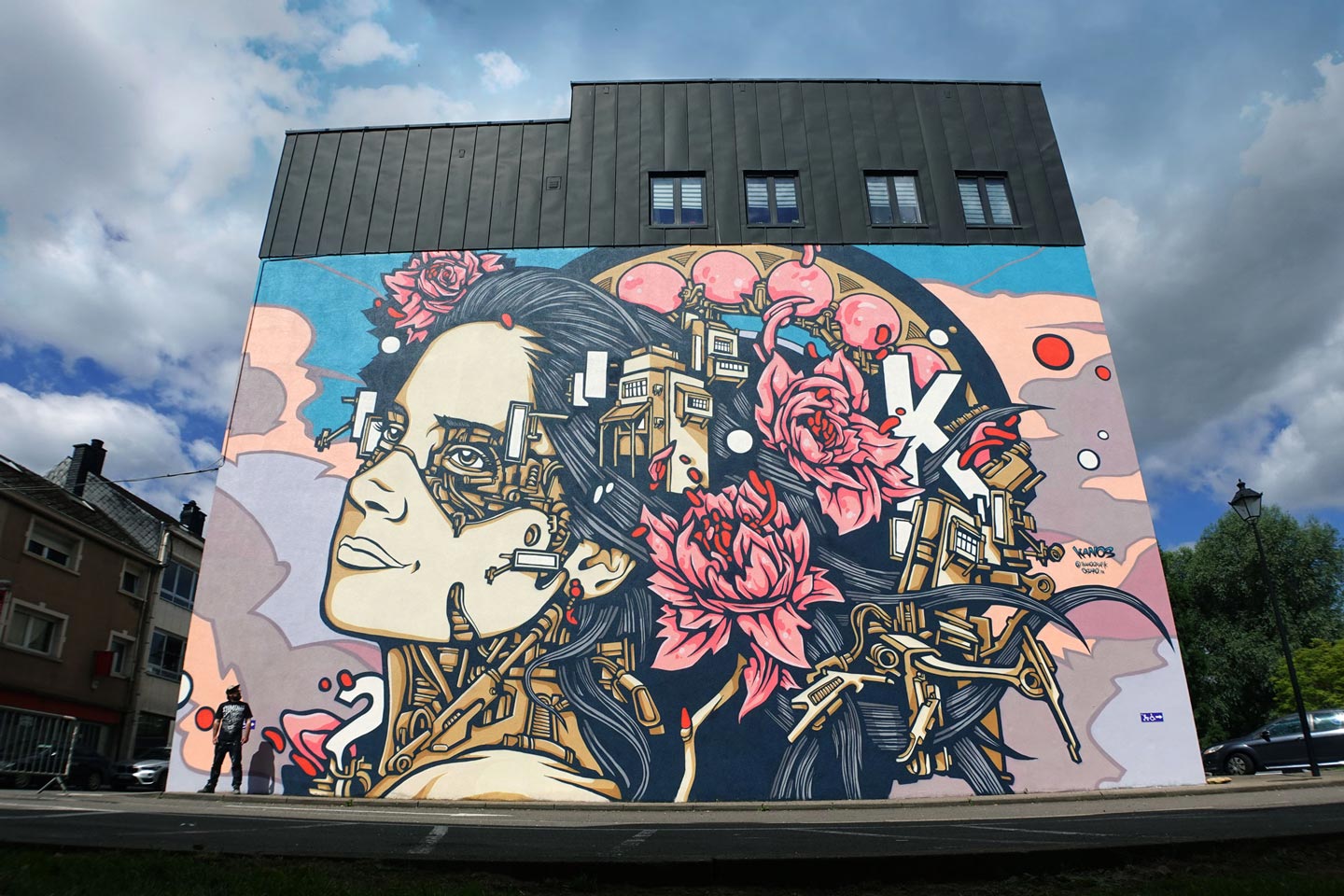
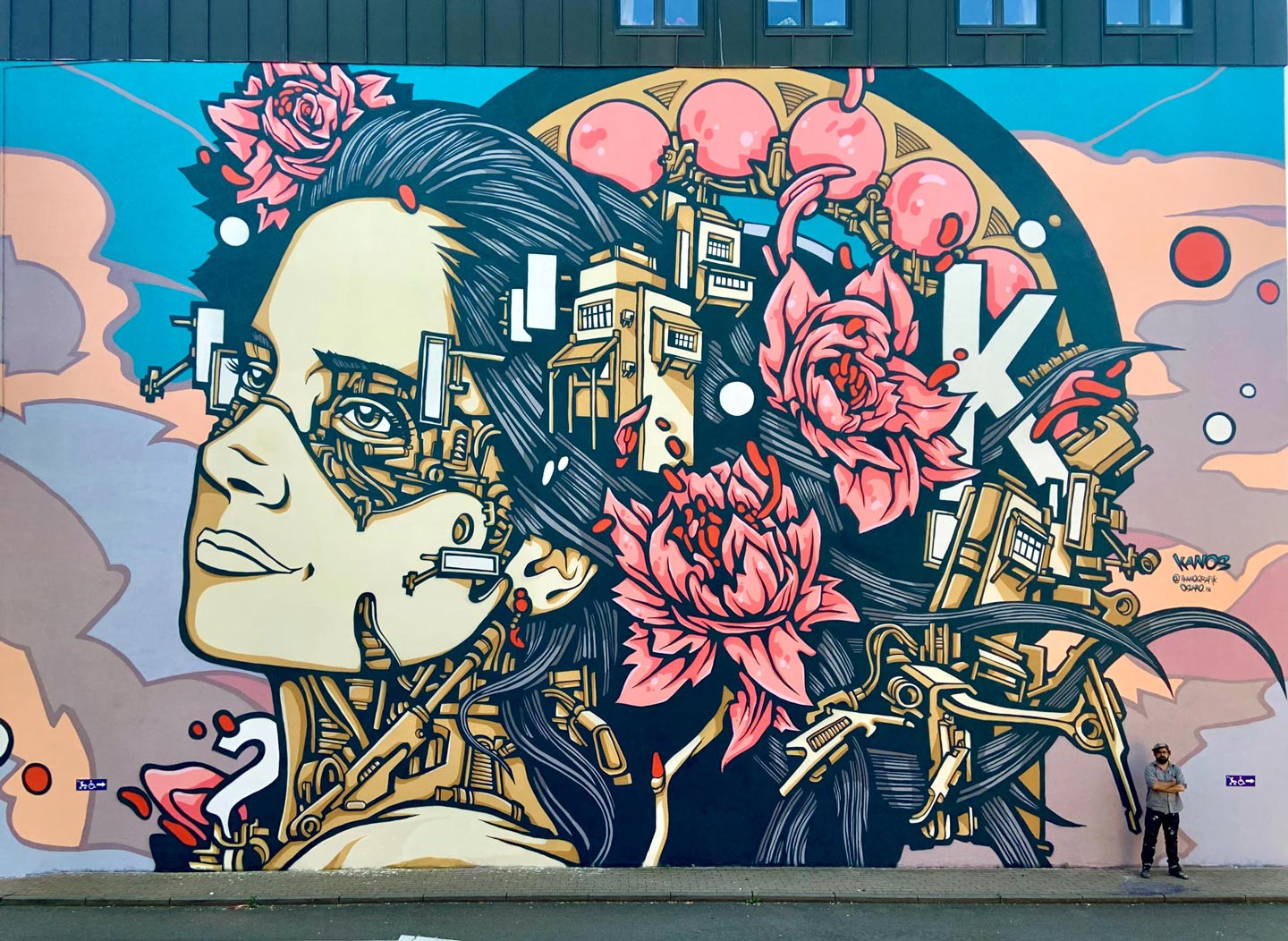
For Elsa Belgium, Osaro agency call me after the Barricade project in Gennevilliers for a new mural on the facade of a media library, capturing the essence of the digital revolution and its impact on cultural and social practices.
This artistic project, realized in a key location dedicated to access to culture, illustrates how digital technology is transforming the dissemination of artworks and access to information. Public libraries play a crucial role in this transition by facilitating access to digital culture, offering training in digital skills, and distributing online content.
They represent an essential bridge between traditional paper-based media and new digital technologies, demonstrating that these two media can mutually complement each other. According to my work who mix organic and mecanic elements, this mural explores digital transformations and their influence on cultural practices offering a unique perspective on the coexistence of paper and digital.
This mural is part of a broader reflection on the transformation of cultural infrastructures in the digital age. The choice of a media library as the support for the artwork is significant, as it directly connects the mural to institutions that are evolving from traditional repositories of knowledge into hybrid digital-access spaces.
The concept of digital revolution is central to the composition. Rather than presenting technology as an abstract force, the mural translates it into a visual language that interacts with architecture and public space. This approach allows the artwork to become part of the cultural dialogue surrounding access to information and education.
Public libraries, as highlighted in the project, play a critical role in bridging the gap between analog and digital systems. They are not only spaces for books but also for digital learning, access to online resources and community engagement. The mural reflects this dual function by visually integrating themes of transition and coexistence.
The collaboration with Osaro agency provides a structural framework for the realization of large-scale public art projects. Their involvement ensures that the artwork is not isolated but embedded within a wider cultural and institutional context.
The visual language of the mural continues my artistic exploration of hybrid forms combining organic structures and mechanical elements. This fusion reflects the tension between natural evolution and technological acceleration, a recurring theme in my work.
By placing this visual language on the facade of a media library, the mural directly engages with the idea of knowledge transformation. It suggests that cultural institutions are no longer static but constantly evolving systems that adapt to new technological environments.
The coexistence of paper-based culture and digital systems is not presented as a conflict but as a complementary relationship. The mural emphasizes continuity rather than rupture, suggesting that both systems can coexist and enrich each other.
The location in Aubange gives the project a specific geographical and social context. It anchors the work within a real community space where access to culture and education is actively supported through public infrastructure.
Ultimately, this mural serves as a reflection on how cultural identity is shaped by technological change. It proposes a visual interpretation of transition, where traditional knowledge systems and digital innovation merge into a shared cultural framework.