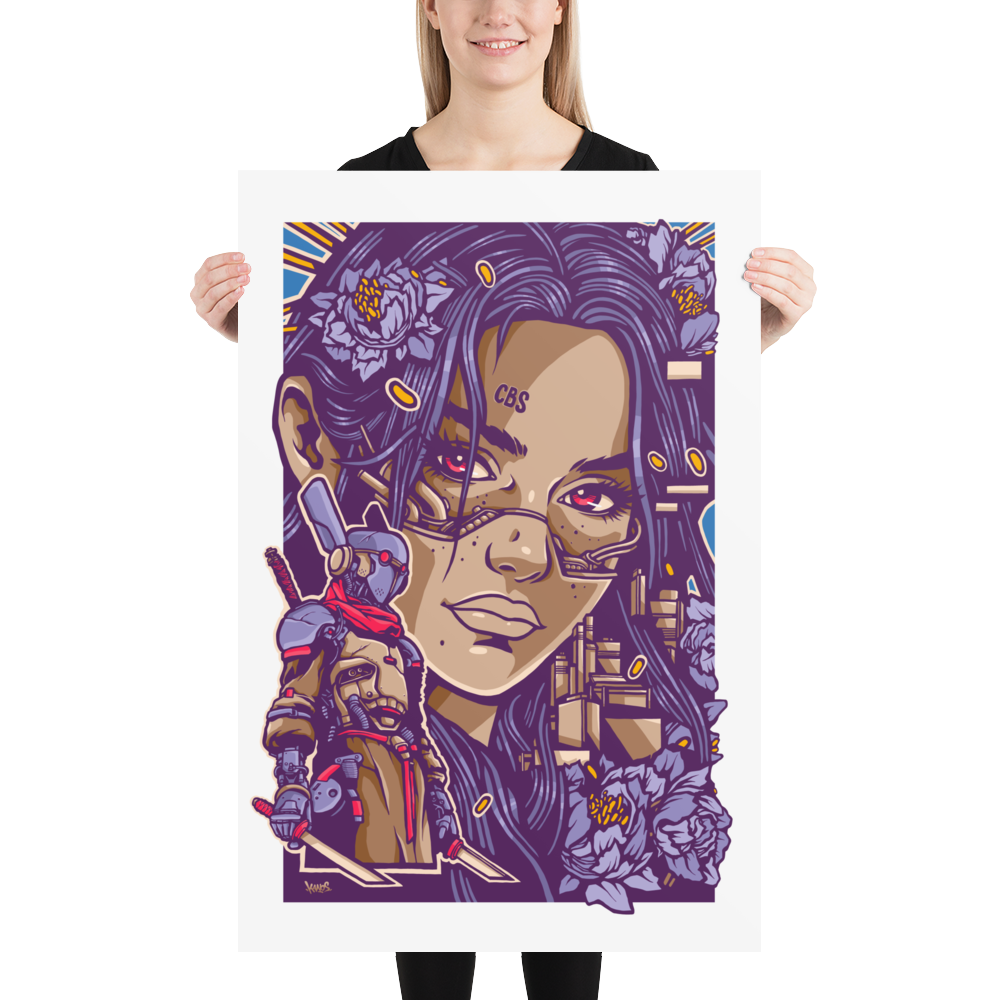
JUDITH Print / Ephemeral Mural Between Nature and Technology
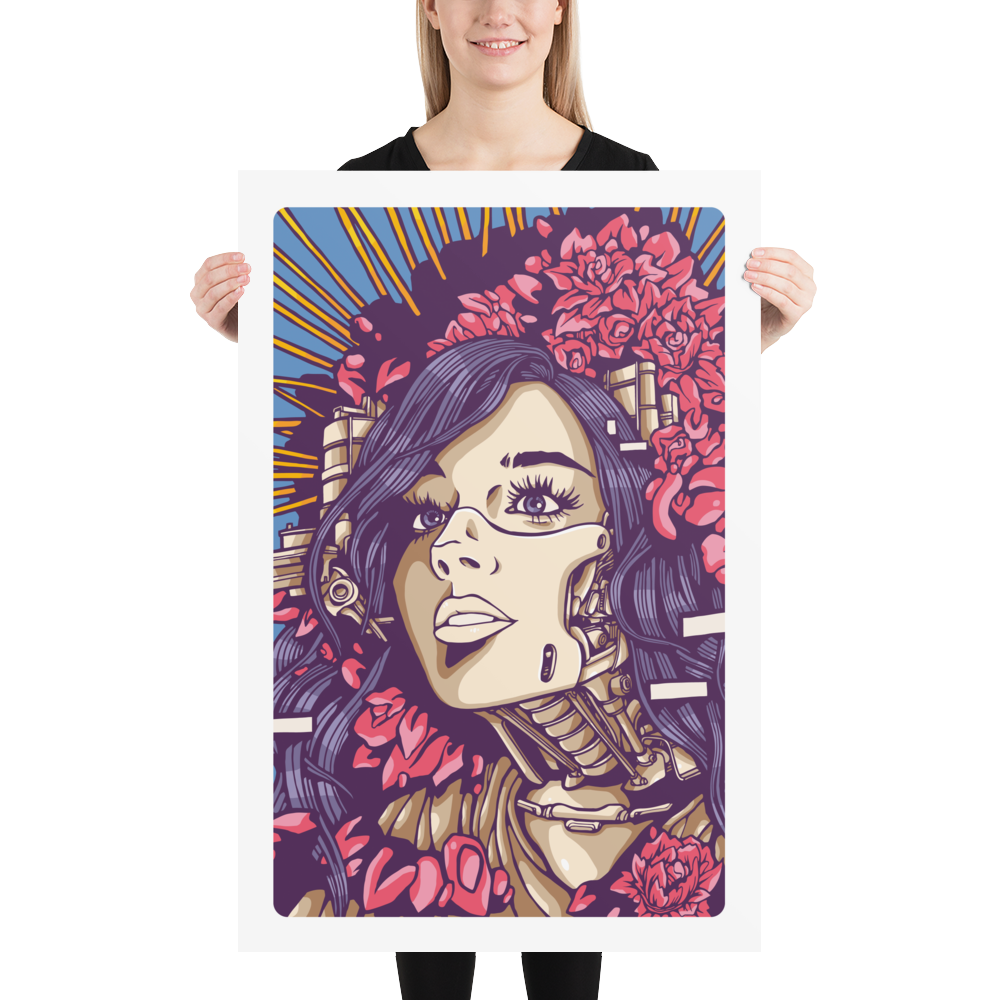
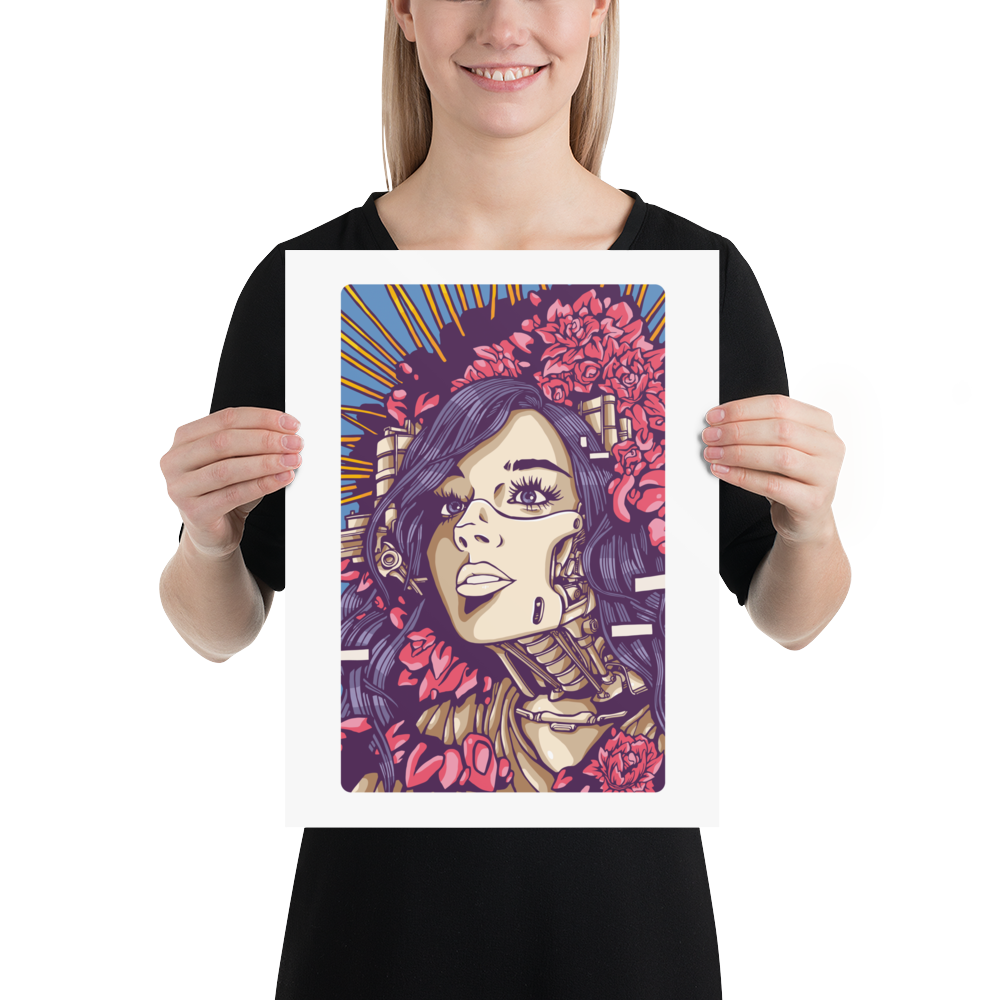
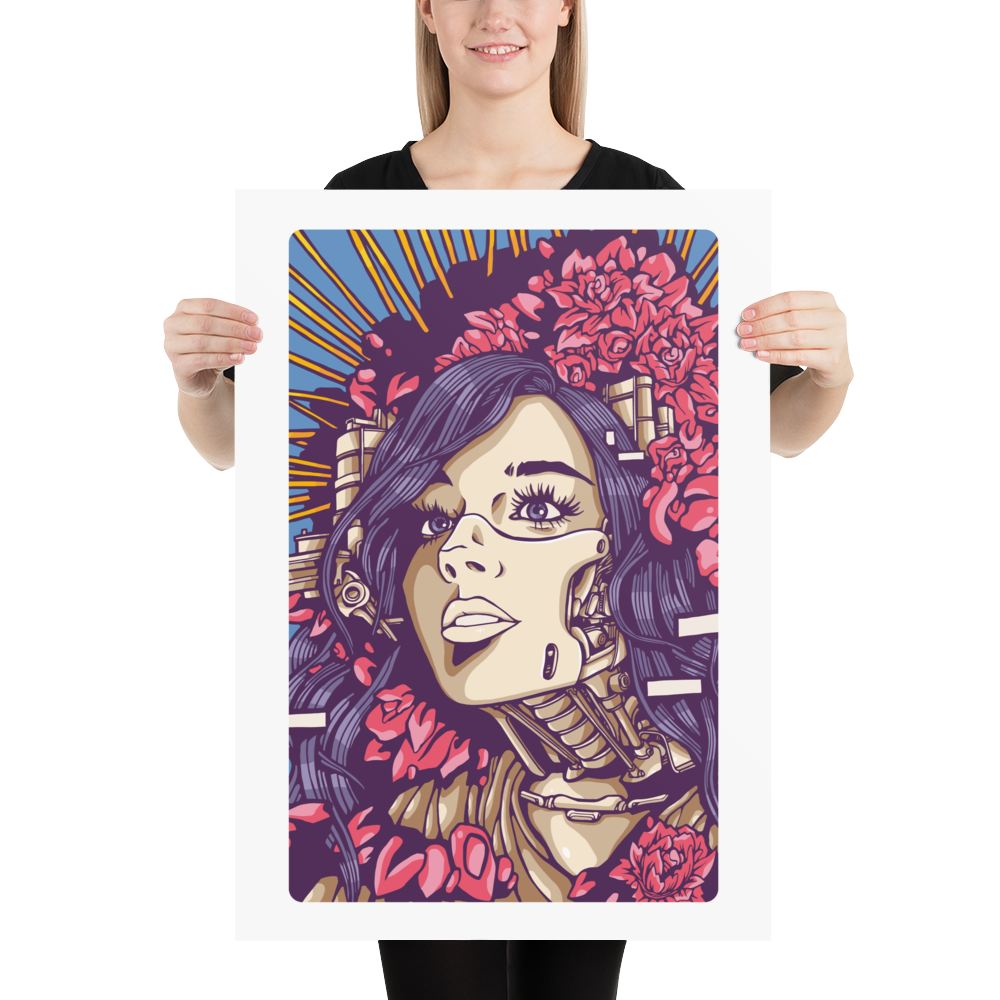
Judith Print is based on a large-scale mural painted in Geneva during the winter of 2022 on a building scheduled for demolition. Created for WallsStreetGVA during House of Paint, the artwork was conceived as a temporary intervention, fully embracing the transient nature of urban art. Although the mural no longer exists in its original form, this print preserves the image and the ideas behind it, allowing the work to continue beyond the life of the wall that first carried it.
The project explores one of the recurring themes in my artistic practice: the relationship between organic life and mechanical evolution. Rather than presenting these two worlds as opposing forces, Judith seeks to reveal the subtle dialogue that exists between them. The composition reflects the constant transformation of our environment, where technology increasingly integrates into everyday life while nature continues to assert its presence.
Painting on a building destined for destruction gave the mural an additional conceptual dimension. The architecture itself became part of the artwork, reminding viewers that cities are in a perpetual state of change. Walls disappear, neighborhoods evolve, and public spaces are continuously rewritten. Street art exists within this cycle, often surviving only through photographs, memories and the impressions it leaves on those who encountered it.
A Hybrid Figure Between Organic and Mechanical Worlds
At the center of the composition stands Judith, a female figure whose identity exists somewhere between human anatomy and engineered structure. Her body incorporates mechanical elements that appear to emerge naturally from her form rather than being imposed upon it. Instead of depicting a conflict between humanity and machines, the artwork imagines a gradual transformation in which technology becomes an extension of the living body.
This hybridization is a recurring subject throughout my work. I am interested in the way technological systems influence our perception of identity without completely replacing what makes us human. Mechanical forms become part of the visual language, but emotion, expression and organic movement remain essential. Judith therefore represents adaptation rather than domination. She embodies a future where biological and technological systems coexist, creating new possibilities instead of simple opposition.
Flowers as Symbols of Renewal
Surrounding the central figure are flowers that provide an essential counterbalance to the industrial structures integrated into the composition. Their presence is not merely decorative. They introduce movement, softness and a sense of continuity within an environment defined by concrete and engineered materials. Flowers have become a recurring motif in my artistic universe because they naturally evoke cycles of growth, transformation and renewal. In Judith, they also remind us that even within highly urbanized environments, nature continues to reclaim space. This coexistence between delicate organic forms and rigid architectural structures creates the visual tension that defines the artwork. The mural does not celebrate one world over the other. Instead, it suggests that both systems constantly reshape each other.
The Architecture as Part of the Artwork
Unlike a canvas displayed inside a gallery, a mural cannot be separated from its support. In this project, the building scheduled for demolition was never simply a surface to paint. It became an active component of the artwork itself. Knowing that the structure would eventually disappear fundamentally influenced the way the mural was conceived. The painting was created with the awareness that its physical existence would be limited, making impermanence one of its defining characteristics. This relationship between artwork and architecture reflects an important aspect of contemporary mural practice. Street art is often experienced within moments of urban transition, where abandoned factories, vacant buildings and redevelopment projects become temporary spaces for artistic expression.
Once the building disappeared, the mural ceased to exist physically. What remains today are photographs, memories and reproductions such as this print, which preserve the visual narrative while acknowledging the temporary nature of the original intervention.
Transformation Rather Than Opposition
Throughout Judith, the dialogue between concrete, flowers, machinery and the human figure is built around transformation rather than conflict. The composition does not present technology as a threat, nor does it idealize nature as a lost paradise. Instead, it asks how these different systems continuously influence one another. Mechanical structures extend the body rather than replacing it. Organic elements grow alongside industrial forms instead of being erased by them. The result is a visual equilibrium where each component contributes to the overall identity of the artwork.
This approach reflects broader questions about contemporary society. As technology becomes increasingly integrated into daily life, our relationship with the natural world also evolves. Rather than offering definitive answers, Judith invites viewers to reflect on these ongoing changes and to consider how coexistence might replace opposition.
Bringing the Mural into Your Space
Judith Print translates the original mural into a format designed for interior spaces while preserving the visual richness of the large-scale composition. The reproduction reveals details that can easily be overlooked when viewed from street level, allowing the intricate balance between floral elements, architectural forms and mechanical structures to emerge more clearly. Whether displayed in a home, studio or professional workspace, the print carries the same conceptual foundation as the original mural while offering a more intimate viewing experience. It allows the artwork to continue its dialogue with new audiences long after the disappearance of the building on which it was first painted.
Rather than functioning simply as a reproduction, the print becomes another chapter in the life of the artwork. It extends the existence of an ephemeral mural beyond its original location, preserving not only its visual appearance but also the questions it raises about transformation, memory and the evolving relationship between humanity, architecture and technology.
About the Artist
Alex Kanos is a French contemporary mural artist whose work combines influences from Art Nouveau, science fiction and urban culture. His artistic practice explores the meeting point between organic forms and mechanical structures, creating hybrid compositions that question identity, resilience and the place of humanity in an increasingly technological world.
Large-scale murals and graphic design remain at the heart of his work, each project responding to the architecture and history of its location. Through both public artworks and fine art prints, he continues to develop a visual language where nature, machinery and human experience exist in constant dialogue.
Judith Print preserves one of these temporary urban interventions, transforming an ephemeral mural into a lasting artwork while remaining faithful to the ideas that inspired its creation.