
Glücksbringer 2014 – Graffiti Journey Across France and Germany
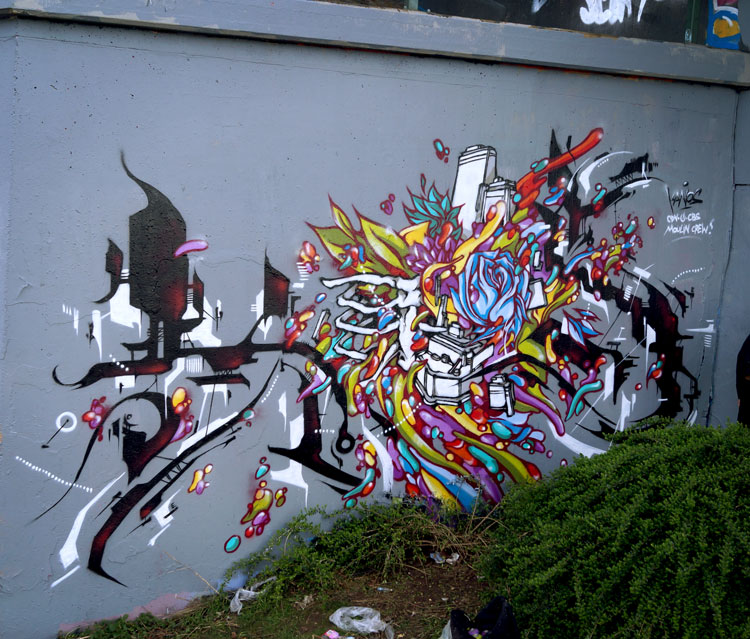
Glücksbringer 2014 is a documentary-style graffiti journey that follows a sequence of artistic interventions across France and Germany. The project documents a continuous travel experience between Metz, Saarbrücken and Toul, combining outdoor graffiti sessions, collaborative painting and underground exploration.
The journey begins in eastern France in Metz, where I joined the artist Skule from association unephase2styles for a series of graffiti sessions. Metz has long been an important stop in the European graffiti scene, offering a mix of industrial architecture and urban surfaces that naturally support large-scale painting.
From Metz, the project continues toward Saarbrücken in Germany. Along the river quays, we carried out additional graffiti interventions in a context shaped by cross-border urban culture. The proximity between France and Germany in this region creates a unique artistic environment where styles, influences and graffiti traditions constantly interact.
The trip then moves to Toul, where I participated in the exhibition Home with the Moulin Crew. This stage of the project introduced a different dimension, combining institutional exhibition work with more experimental and immersive urban exploration.
One of the most significant moments of the journey took place in the underground galleries of an old military fort near Toul. Accessing these abandoned spaces at night with torches fueled by gasoline created a raw and intense atmosphere. These underground environments became temporary studios, where painting, exploration and storytelling merged into a single experience.
The use of abandoned military infrastructure adds a historical and symbolic layer to the project. These spaces, originally designed for control and defense, are repurposed as sites of artistic expression. The contrast between their original function and their current use reflects a broader transformation in the perception of urban and industrial heritage.
Glücksbringer captures a period of graffiti culture where travel, improvisation and physical exploration were central to the practice. Painting was not confined to studios or legal walls but extended into abandoned sites, riverbanks, industrial zones and temporary spaces of encounter.
The collaboration with Moulin Crew played an important role in the Toul segment of the project. The collective approach allowed for shared experimentation and reinforced the idea that graffiti is both a personal and collective practice.
The video documentation of this journey reflects the spontaneity and intensity of these experiences. Rather than presenting a fixed narrative, it assembles fragments of travel, painting sessions and exploration into a continuous visual flow.
This project also highlights how graffiti practices evolve over time. The conditions, access to spaces and ways of traveling have changed significantly since 2014. Glücksbringer serves as a record of a specific moment in this evolution, where mobility and direct physical engagement with urban environments were central to the creative process.
More than a simple travel report, Glücksbringer 2014 documents a network of encounters, locations and temporary interventions that shaped a distinct artistic period.
Pix By Xela Lepytr. Thanks Skule and the entire Moulin Moulin crew for this incredible adventures in Est of France.
Frequently Asked Questions
What is Glücksbringer 2014?
It is a graffiti travel project documenting artistic sessions across Metz, Saarbrücken and Toul.
Who participated in the project?
Alex Kanos, Skule and members of the Moulin Crew were involved in different stages of the journey.
What locations are featured?
Metz, Saarbrücken (Germany) and Toul in France, including underground military fort galleries.
What makes this project unique?
It combines street graffiti, cross-border travel and underground exploration in abandoned military spaces.
Was the project documented?
Yes, it was documented through video and photography, including work by Xela Lepytr.