
Art, Memory and Conflict: Bangui – Médecins Sans Frontières
Bangui – Médecins Sans Frontières was a live painting project created in Paris as part of an exhibition dedicated to the humanitarian realities of conflict zones. Invited by Médecins Sans Frontières, I participated in an event that combined documentary photography, public awareness and live artistic intervention.
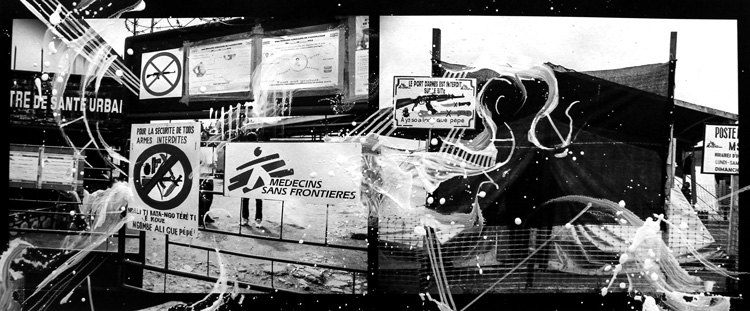
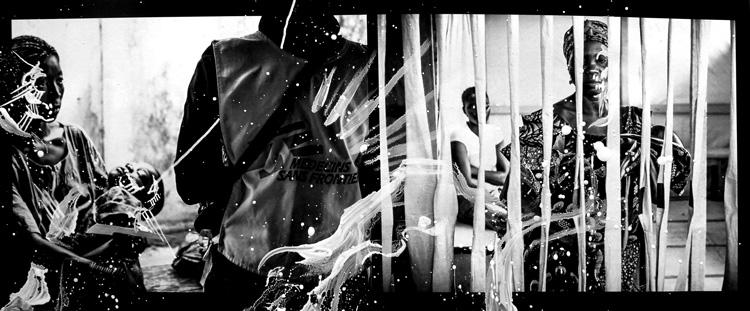
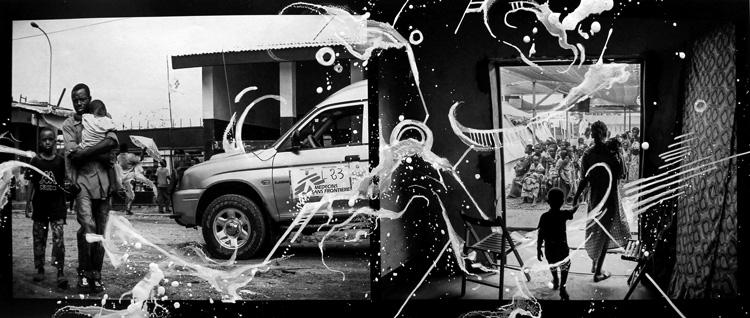
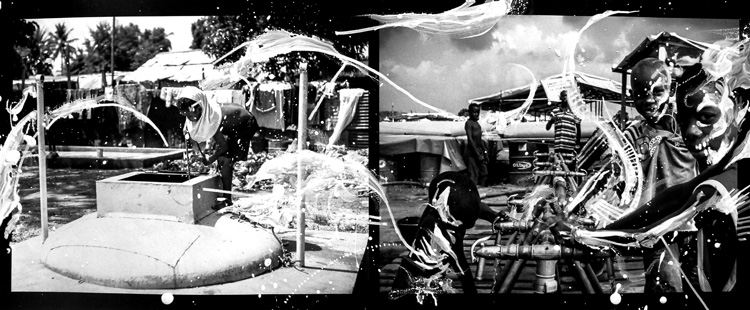
The exhibition focused on photographs taken in Bangui, the capital of the Central African Republic, during a period marked by violence and instability. The images documented the consequences of armed conflict, including the presence of child soldiers and the impact of war on civilian populations.
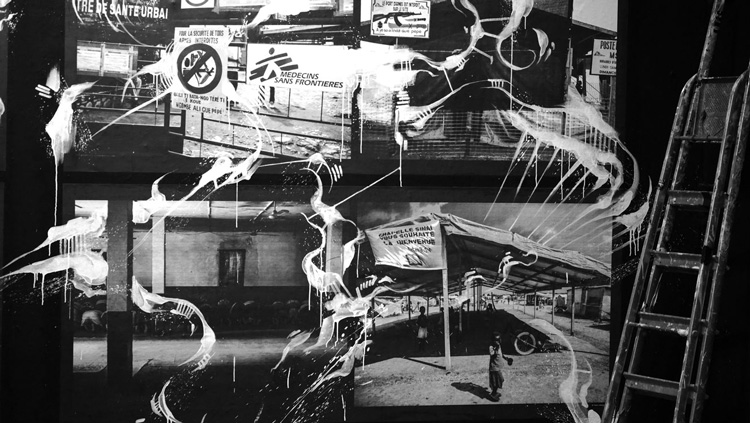
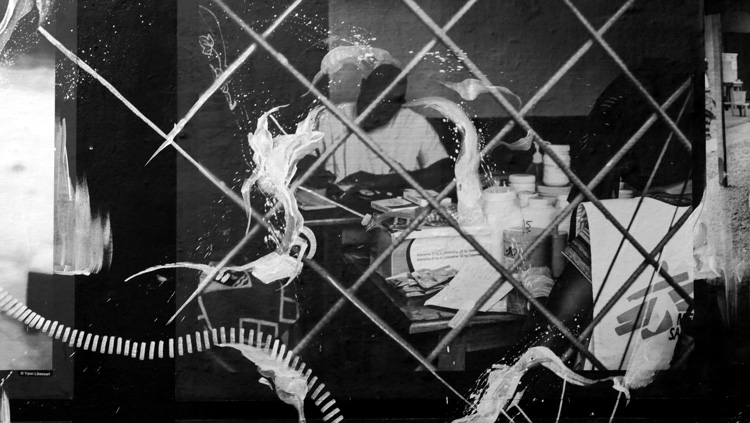
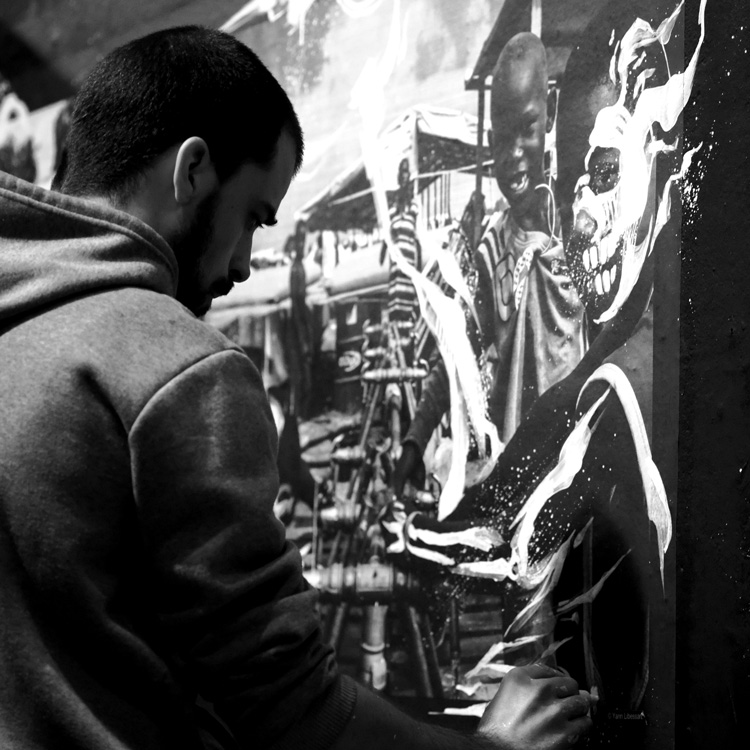
Rather than creating an independent artwork, my role was to intervene directly on photographic images produced by war reporters and documentary photographers. These photographs already carried a powerful testimony. My challenge was therefore not to replace their message, but to create a visual dialogue capable of amplifying the emotional and symbolic dimensions of the images.
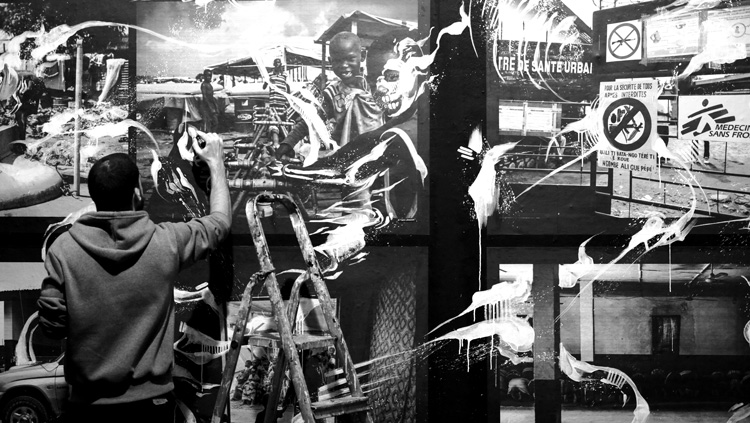
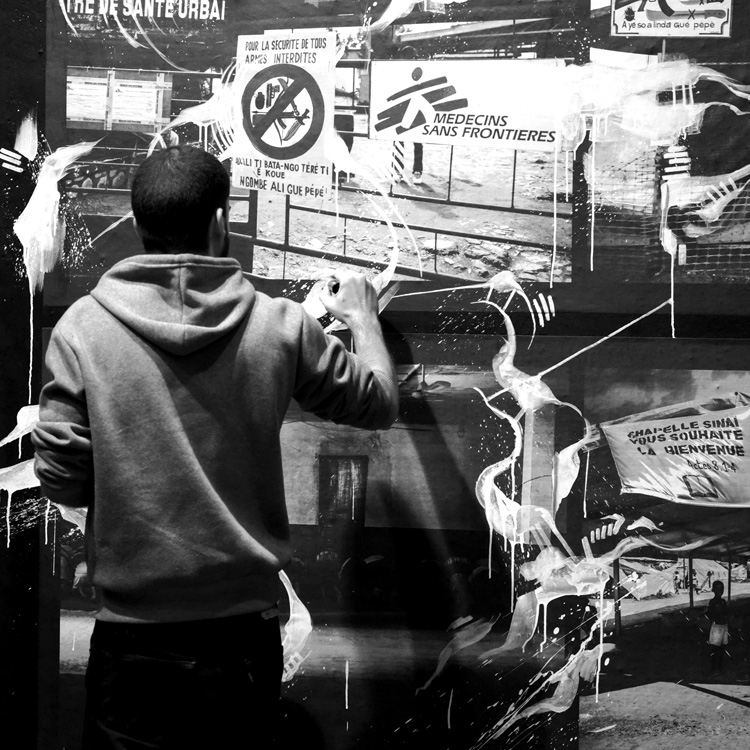
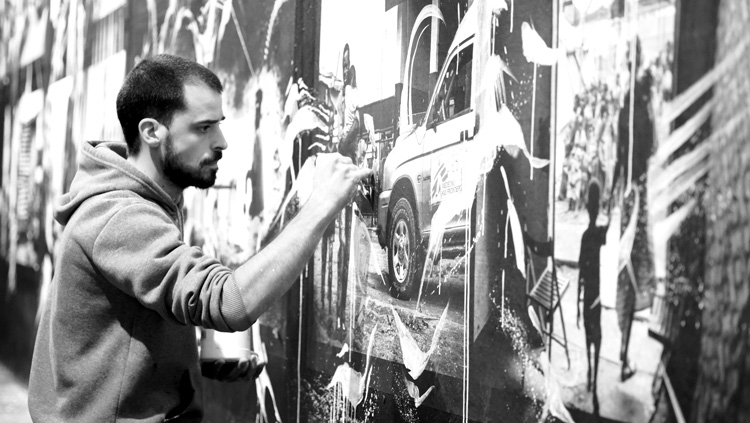
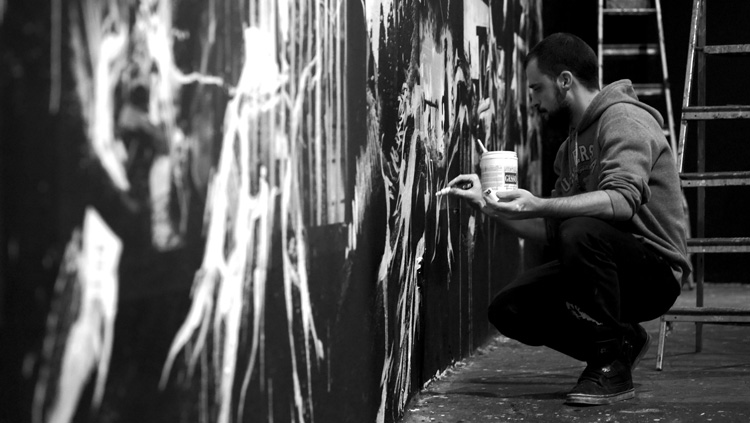
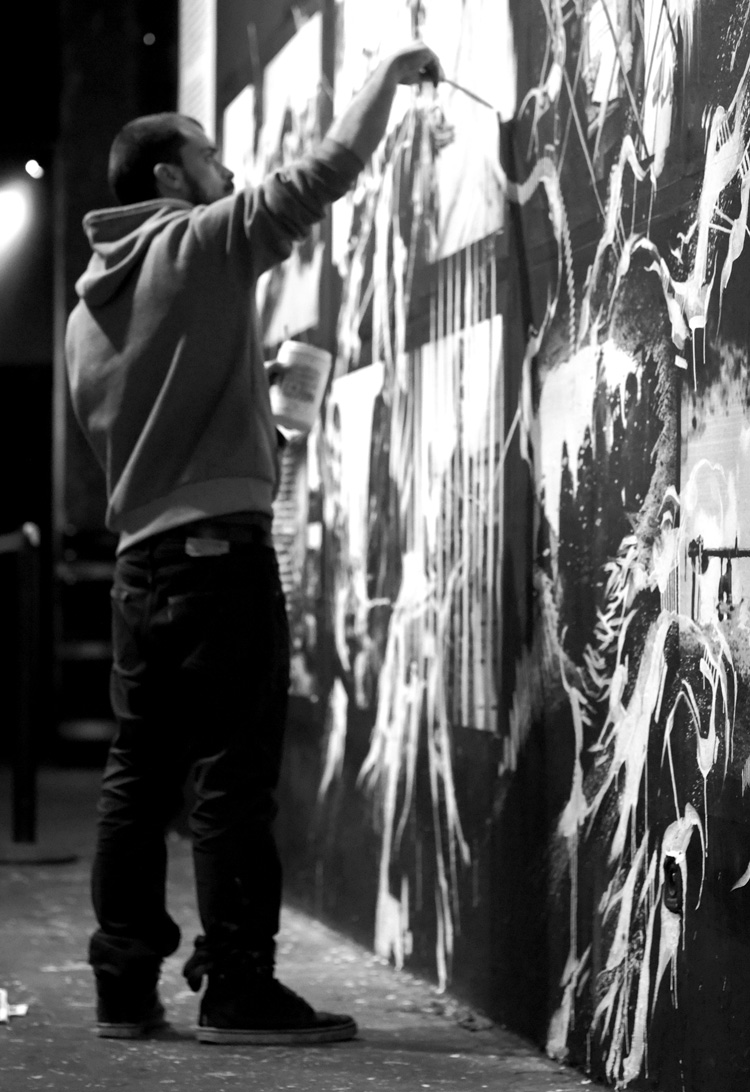
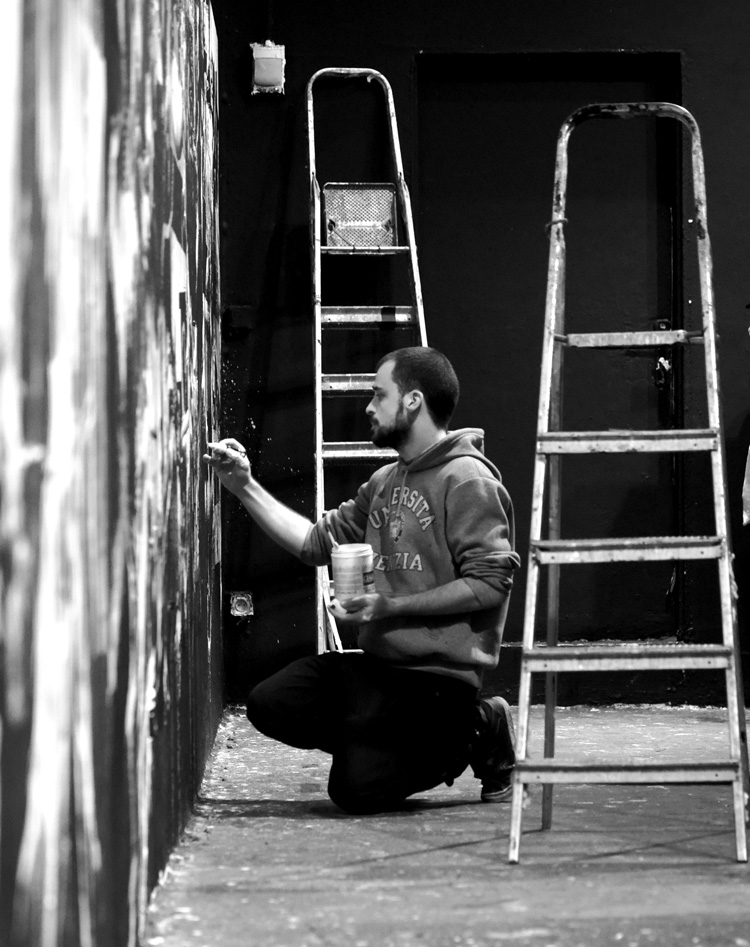
The intervention took place live at Point Éphémère in Paris. Working in front of an audience introduced an additional layer to the project. Visitors were able to witness the transformation of the photographs as the painted elements gradually appeared on their surface.
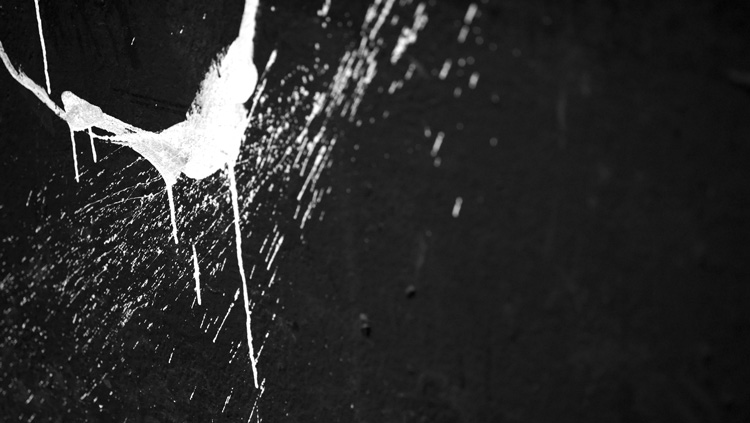
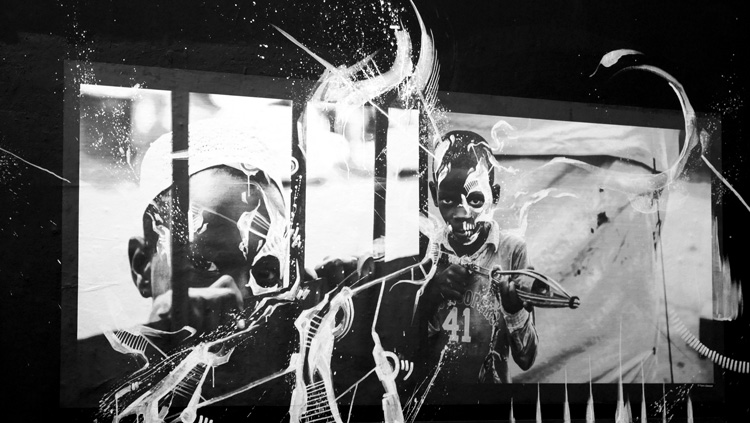
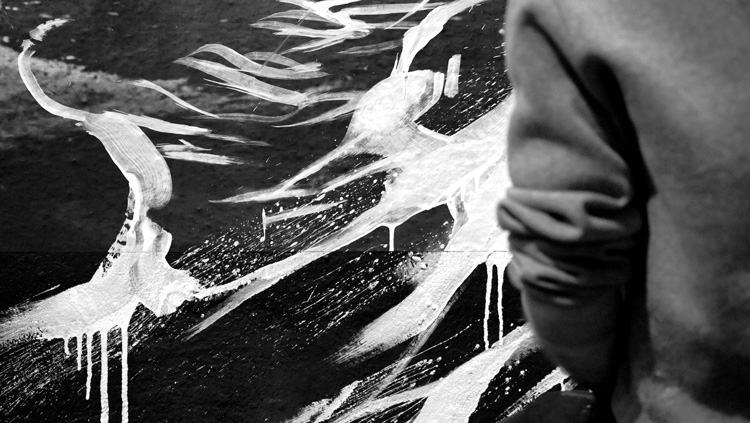
For this project, I deliberately chose to work with white acrylic paint on black-and-white photographs. This decision was driven by the search for maximum visual contrast. The stark opposition between the monochrome photographic image and the bright painted intervention created an immediate visual tension that echoed the brutality of the subject matter.
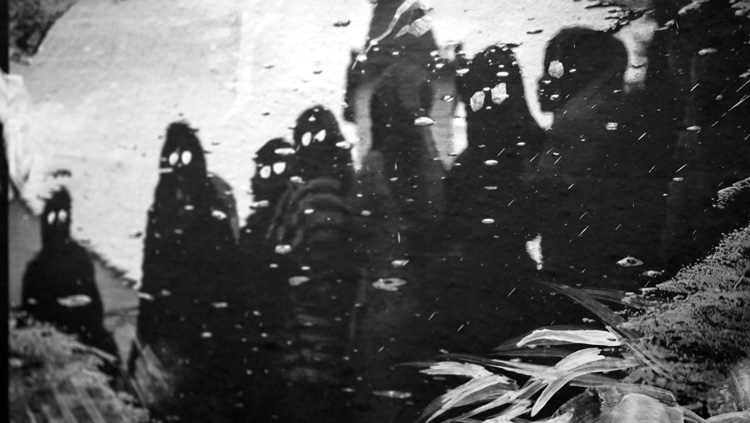
The painted forms were not intended as decorative additions. Instead, they functioned as symbolic extensions of the photographs. Through graphic elements, abstract structures and visual distortions, the paintings sought to evoke danger, violence, trauma and the invisible psychological consequences of war.
The theme of child soldiers was particularly important within the project. Few subjects reveal the destructive impact of conflict more clearly than the recruitment of children into armed groups. The photographs documented a reality that is often difficult to confront, while the painted interventions attempted to make visible the fears, threats and mechanisms of violence surrounding these young individuals.
Throughout my artistic practice, I frequently explore the relationship between humanity and the systems that shape human behavior. In many projects, these systems are technological. In Bangui – Médecins Sans Frontières, the focus shifted toward political and military structures capable of transforming childhood into a tool of conflict.
The live format also played a significant role. Unlike a finished artwork displayed on a wall, live painting exposes the process itself. The audience witnesses each gesture, each decision and each transformation. This creates a direct connection between artist, image and viewer, encouraging active reflection rather than passive observation.
The project was also an opportunity to collaborate with professionals working in different fields. Humanitarian organizations, photographers, journalists and artists each contributed a distinct perspective on the same reality. Bringing these approaches together reinforced the idea that art can participate in broader conversations about social and humanitarian issues.
Importantly, the work did not attempt to provide answers. Instead, it sought to create a space for reflection. The combination of documentary photography and contemporary painting encouraged viewers to look beyond the image itself and consider the human stories, historical contexts and ethical questions embedded within it.
Bangui – Médecins Sans Frontières ultimately demonstrates how art can engage with difficult subjects while respecting the integrity of documentary testimony. Through live intervention, visual symbolism and public participation, the project transformed photographic evidence into a collective experience of observation, remembrance and awareness.
More than a painting performance, the project became a reflection on conflict, vulnerability and the responsibility of images in shaping our understanding of distant realities.
Thanks to Mélissa & Aurélie from Médecins Sans Frontières, to the team of Point Éphémère, to Yann Libessart for photo taken in Bangui, and RedGiice for his pix taken in live.
Frequently Asked Questions
What is Bangui – Médecins Sans Frontières?
It is a live painting project created by Alex Kanos during an exhibition organized with Médecins Sans Frontières.
Where did the project take place?
The live performance was presented at Point Éphémère in Paris.
What was the subject of the exhibition?
The exhibition focused on photographs documenting the consequences of conflict in Bangui, Central African Republic.
Why were the photographs painted over?
The painted interventions were designed to emphasize themes such as danger, violence and the human consequences of war.
What materials were used?
White acrylic paint was applied directly onto black-and-white documentary photographs.