
Valkyrie Sequel: The Kuleshov Effect
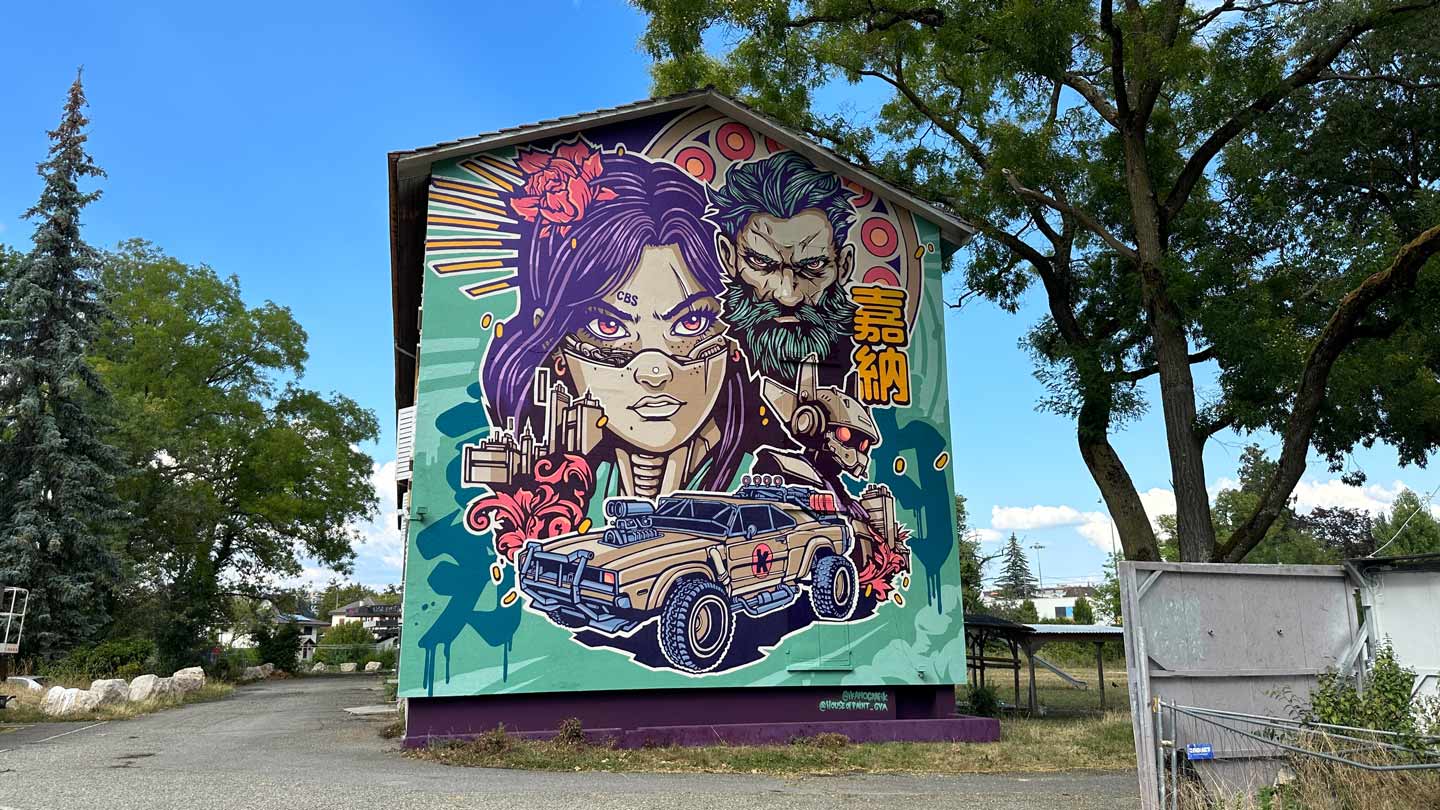
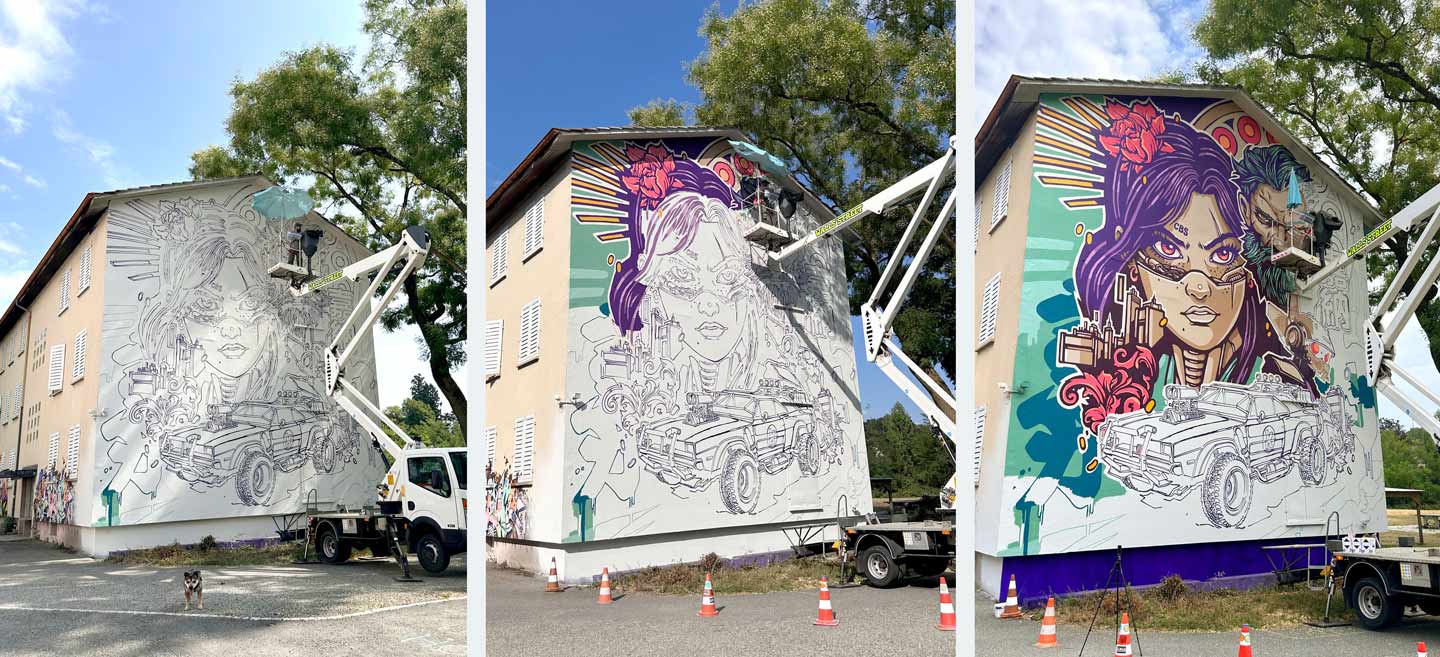
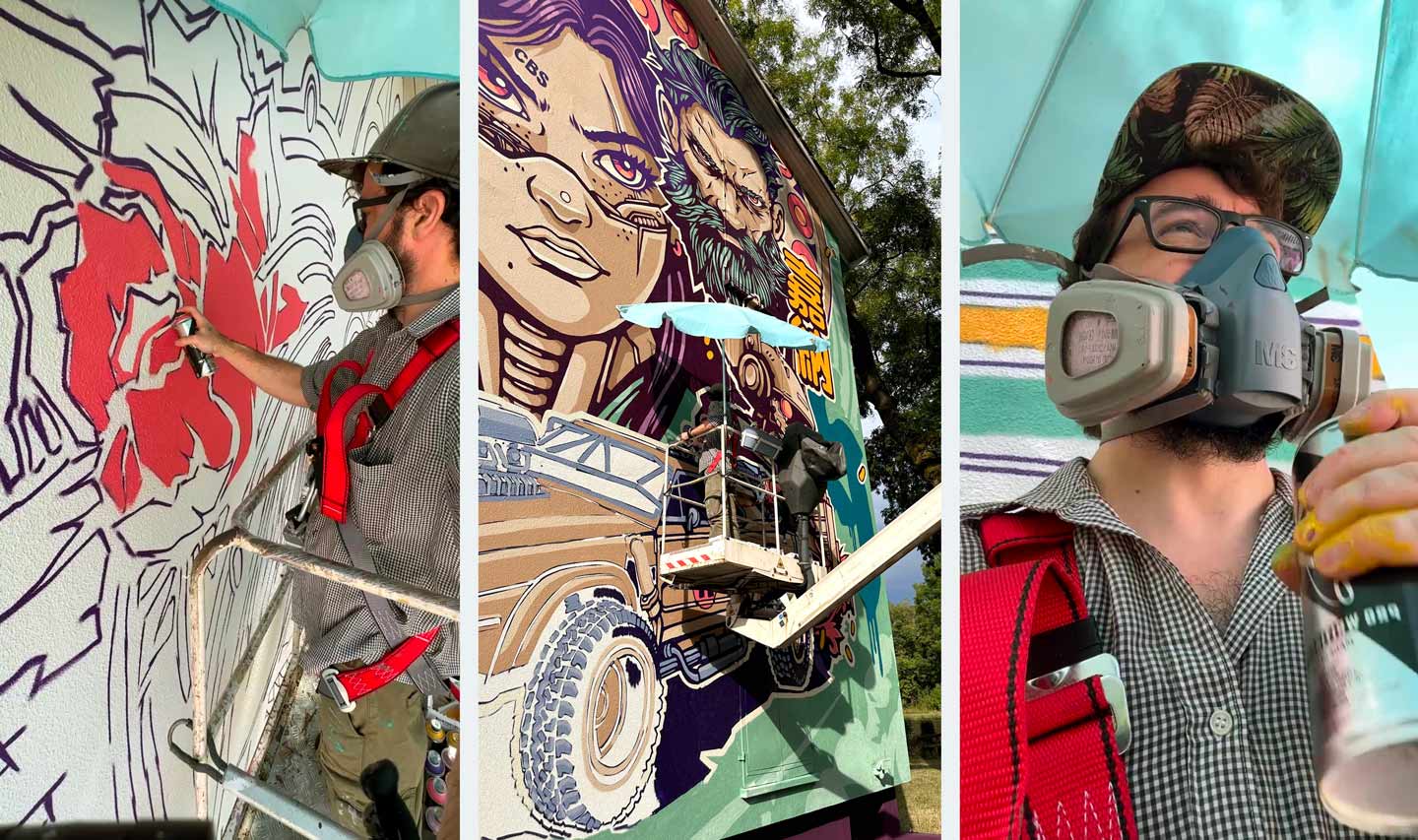
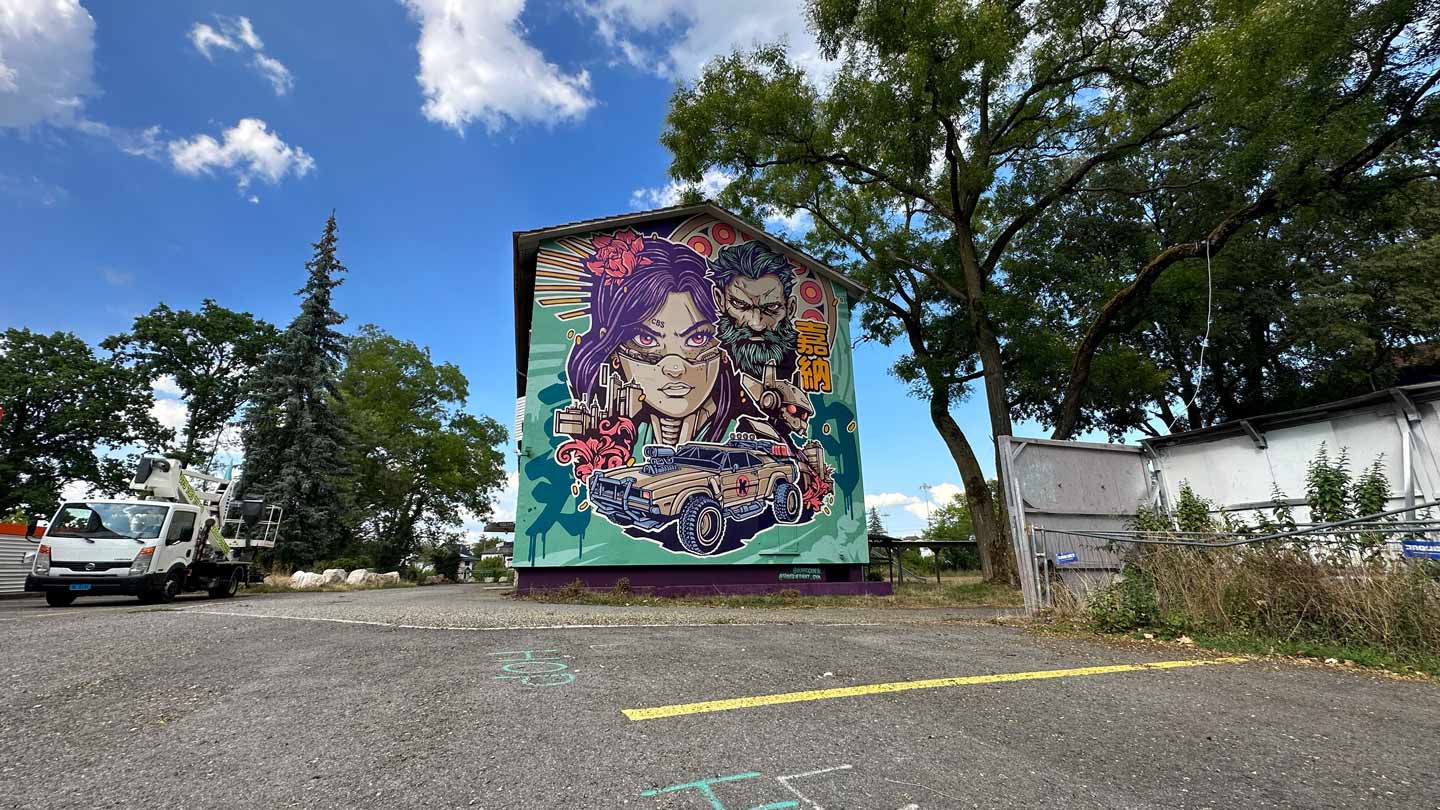
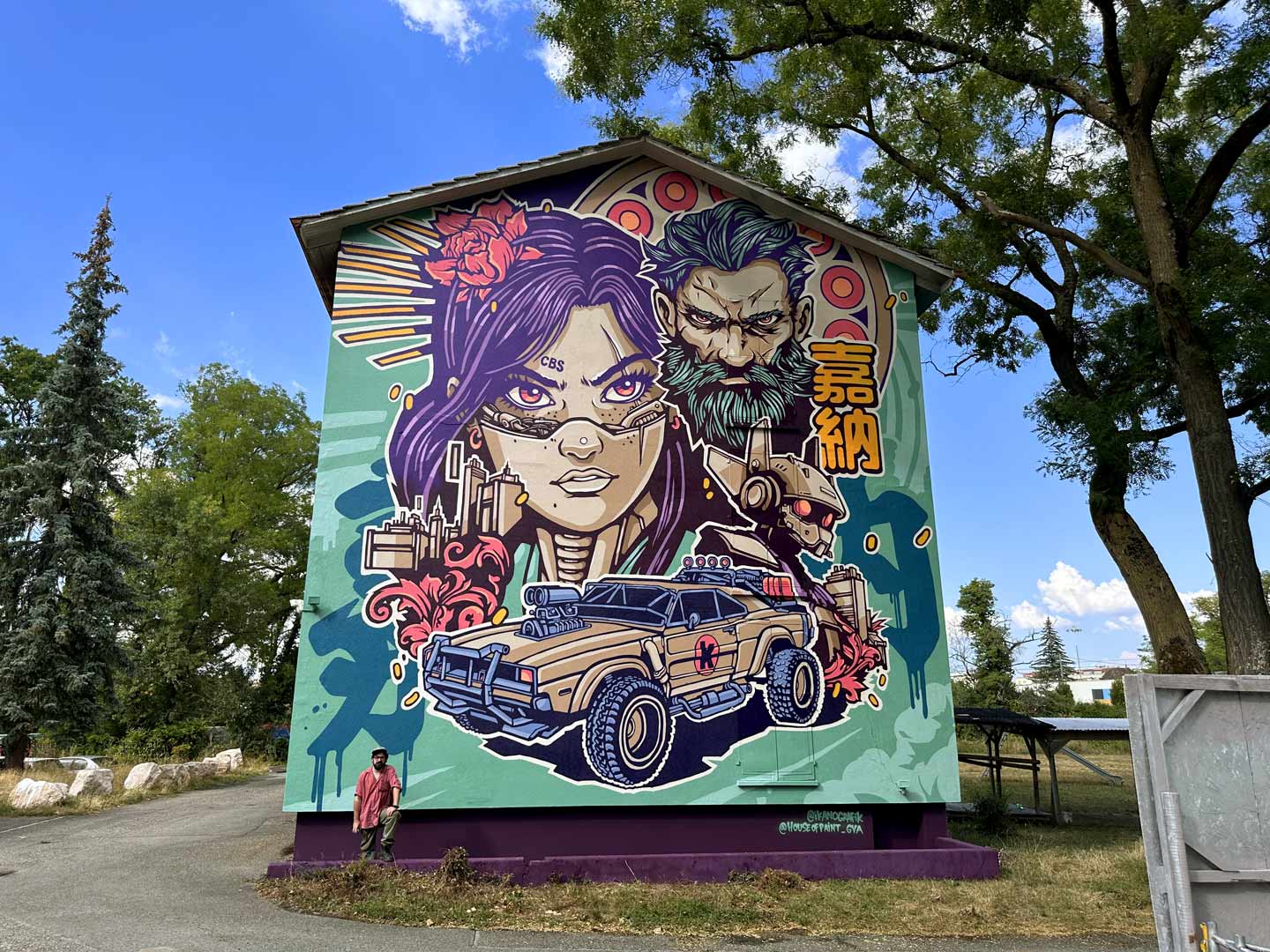
What happens when a painting becomes the next frame of a story? This mural in Geneva is the continuation of my previous artwork, Valkyrie, painted on the same wall during the House of Paint project. Instead of creating an entirely separate image, I wanted to treat the wall as a cinematic sequence: the new mural would become the next frame of an existing story.
The idea behind Valkyrie Sequel comes from the Kuleshov effect, a cinematic principle demonstrating how the meaning of an image can change depending on the image that follows it. When two frames are placed next to each other, the viewer naturally creates connections between them, imagining events, emotions and relationships that may never have been explicitly shown. I wanted to transpose this principle from cinema into a large-scale street art mural.
For this project, the original Valkyrie mural was completely painted over. The previous artwork disappeared physically from the wall, but it remained in the memory of the people who had seen it. The new painting therefore exists in relation to something that is no longer visible. The wall becomes a kind of memory device, where the previous image survives through the viewer’s recollection. This is the central idea behind Valkyrie Sequel: the second painting changes the meaning of the first one.
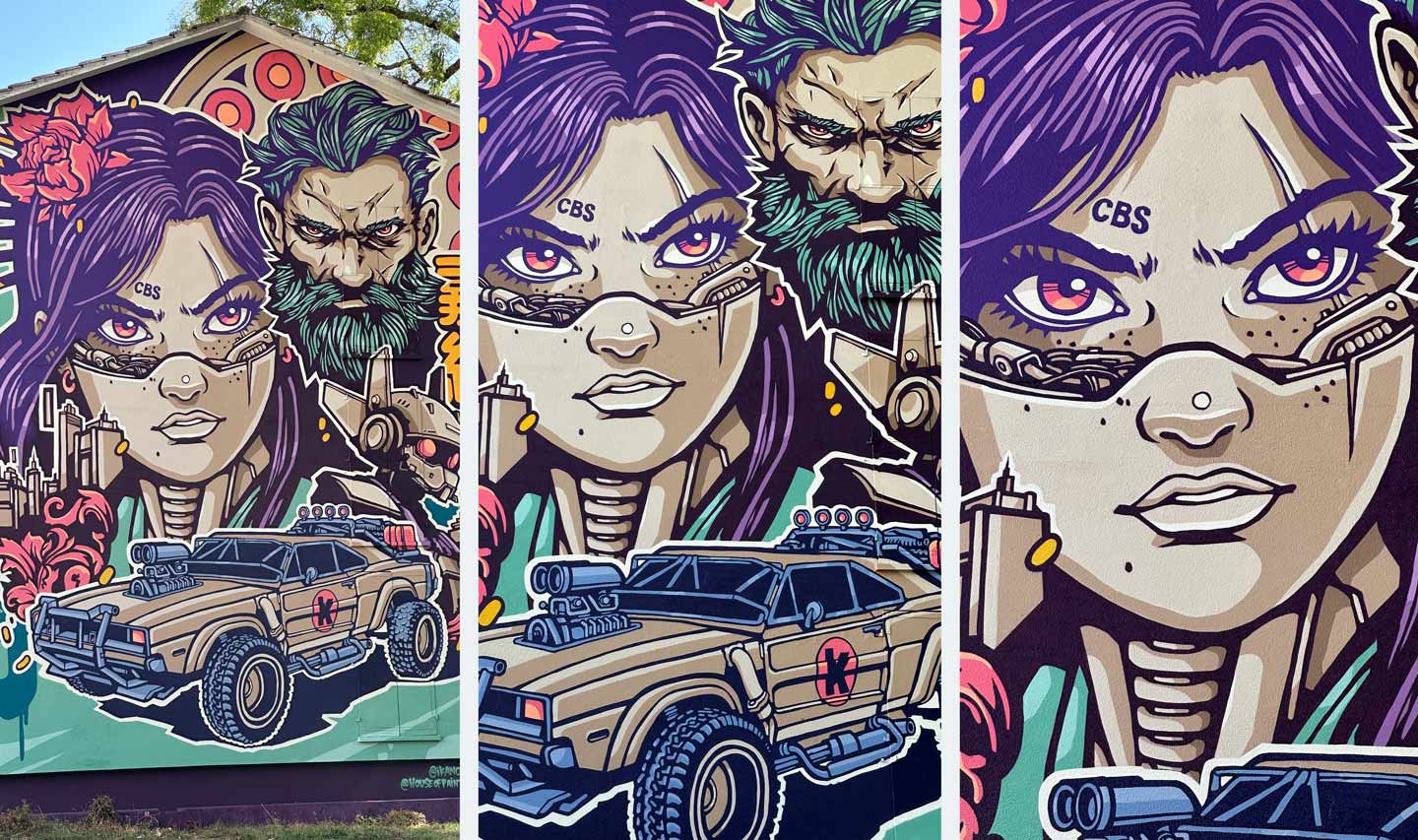
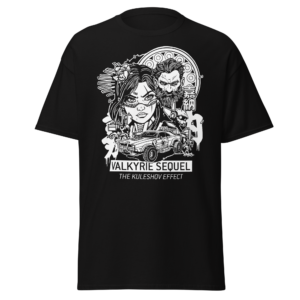
The central character is once again a cyberpunk Valkyrie. In the previous mural, she appeared calm and still. Here, her attitude has completely changed. She is alert, focused and apparently reacting to something outside the frame. Her gaze becomes an important narrative element. It suggests that she has seen or understood something that the viewer cannot fully see. The threat is therefore not necessarily represented directly. Instead, it exists through her reaction to it.
An antagonist with a weathered face appears to her right, introducing a new element of tension into the composition. His presence raises questions rather than providing answers. Who is he? What happened before this moment? Is he the threat the Valkyrie is watching, or is there something else outside the frame? Her robotic sidekick remains at her side, connecting this new chapter with the visual world established in the original Valkyrie mural. The mechanical companion is not simply an accessory to the character but part of the continuing narrative, reinforcing the relationship between human identity, technology and survival that runs through my work.
At the bottom of the composition, a post-apocalyptic vehicle suggests that the story is not taking place in a stable or familiar world. It evokes a journey through a desert landscape and introduces the idea of movement. The characters may be preparing to leave, escaping from something, searching for something, or simply continuing their journey. The painting deliberately does not provide the answer.
Like a movie poster, the mural captures one precise moment while leaving the larger story incomplete. The missing frames are left to the imagination of the viewer. What happened between the first Valkyrie mural and this one? What happened immediately before this scene? And what will happen after it? This approach is particularly interesting in the context of street art because the wall itself becomes part of the narrative. Unlike a conventional canvas, the mural has a physical history. People who saw the original Valkyrie painting can mentally reconstruct what once occupied the surface. People discovering the new mural without knowing the previous one experience a different story.
The artwork therefore exists through two versions of the same wall: the physical present and the remembered past. A Japanese element is also integrated into the composition as a discreet signature. The characters 嘉納 refer to Kanō, the family name of Jigoro Kanō, founder of the Kodokan and one of the key historical figures in the development of judo. This reference connects the artwork to a personal visual vocabulary while remaining subtle within the larger composition.
The project continues several recurring themes in my work: hybrid human and mechanical characters, cyberpunk aesthetics, narrative imagery, memory, transformation and the relationship between technology and humanity. But here, the storytelling itself becomes part of the subject. The mural is not simply an image depicting a scene. It is an image that depends on another image. This is what makes Valkyrie Sequel different from a conventional continuation. The first mural has disappeared, but its disappearance is precisely what gives the second one its meaning. The viewer is invited to become part of the narrative by reconstructing what cannot be seen.
The project was made possible through the support and organization of Wall’s Street GVA and House of Paint project. Their trust and continued support have allowed me to develop several projects in Geneva and to explore different approaches to large-scale street art. Valkyrie Sequel: The Kuleshov Effect is ultimately an experiment in visual storytelling. It asks whether a wall can function like a film sequence, whether a painting can alter the meaning of another painting, and how much of a story can exist inside the imagination of the viewer. The first frame has disappeared. But the story continues. What do you think happens in the next frame?
By Alex KANOS, Spray on wall / Organised by Wall’s Street GVA / During the House of Paint project / Location Geneva Switzerland / Thanks to Mic Plasti

Frequently Asked Questions
What is Valkyrie Sequel: The Kuleshov Effect?
Valkyrie Sequel: The Kuleshov Effect is a large-scale street art mural by Alex Kanos in Geneva. It continues the story of his previous Valkyrie mural painted on the same wall.
What is the Kuleshov effect?
The Kuleshov effect is a cinematic principle in which the meaning or emotional interpretation of an image can change depending on the image that follows it. Alex Kanos applies this principle to street art by creating a new mural over the previous Valkyrie painting.
What happened to the original Valkyrie mural?
The original Valkyrie mural was completely painted over to create the new artwork. Although it disappeared physically from the wall, it remains part of the project’s narrative through the memory of people who saw it.
What is represented in the new Valkyrie mural?
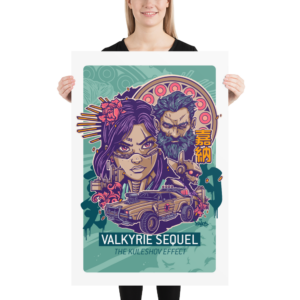
The mural features a cyberpunk Valkyrie, an antagonist with a weathered face, her robotic sidekick and a post-apocalyptic vehicle suggesting a journey through a desert landscape.
Where was Valkyrie Sequel created?
The mural was created in Geneva, Switzerland, as part of the House of Paint project with the support and organization of WallsStreet GVA.