VALKYRIE SEQUEL — THE KULESHOV EFFECT
The Kuleshov effect is a cinematic principle in which the meaning perceived by the viewer is influenced by the image that follows. A single frame can suggest one idea, while the next frame can completely transform its interpretation. For this mural, the wall itself becomes part of that visual experiment. The original Valkyrie was completely painted over, disappearing physically from the surface while remaining present in the memory of those who had seen it. The new mural therefore becomes its next frame.
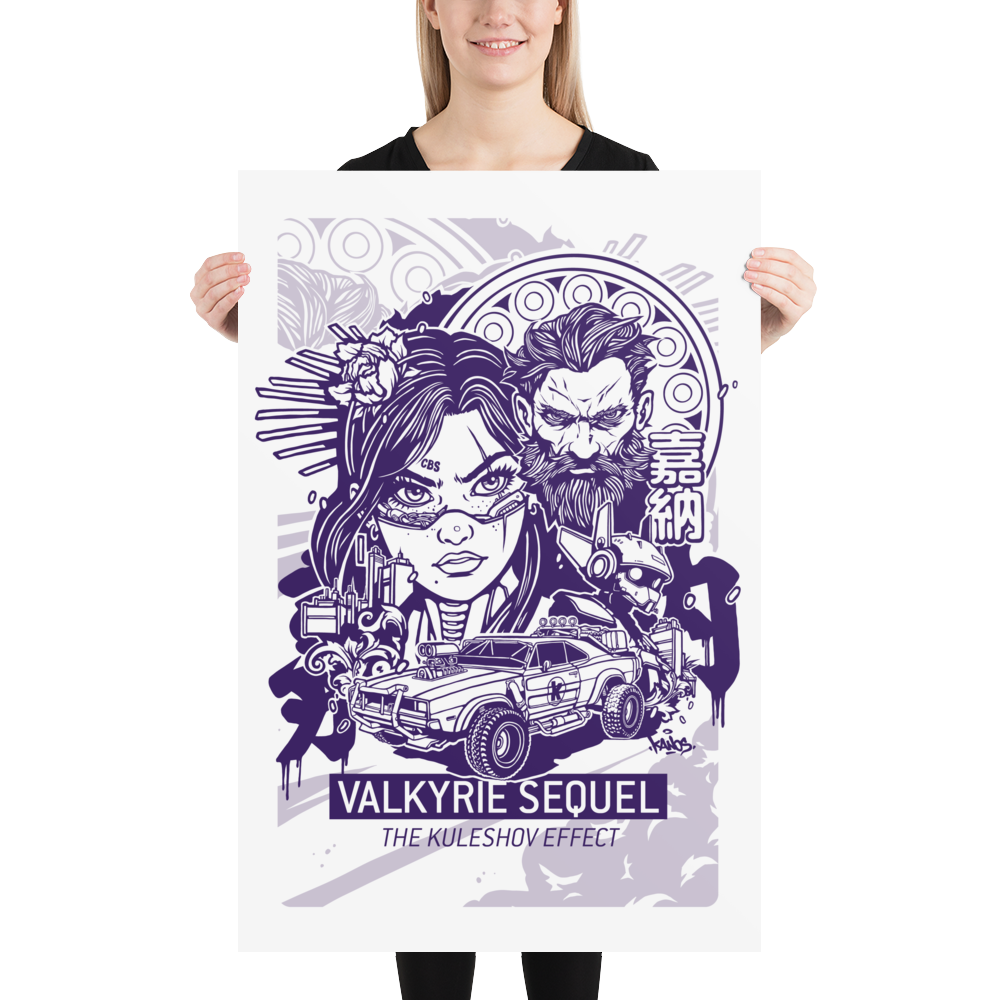
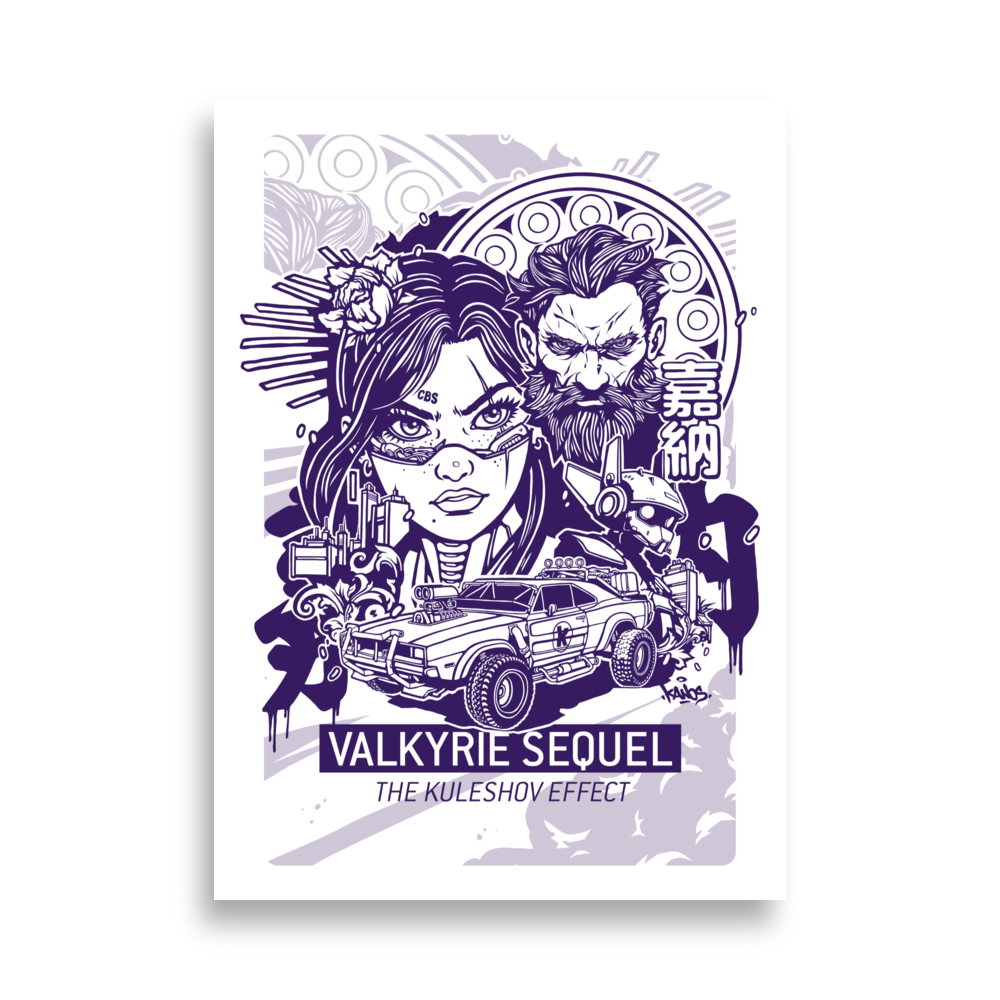
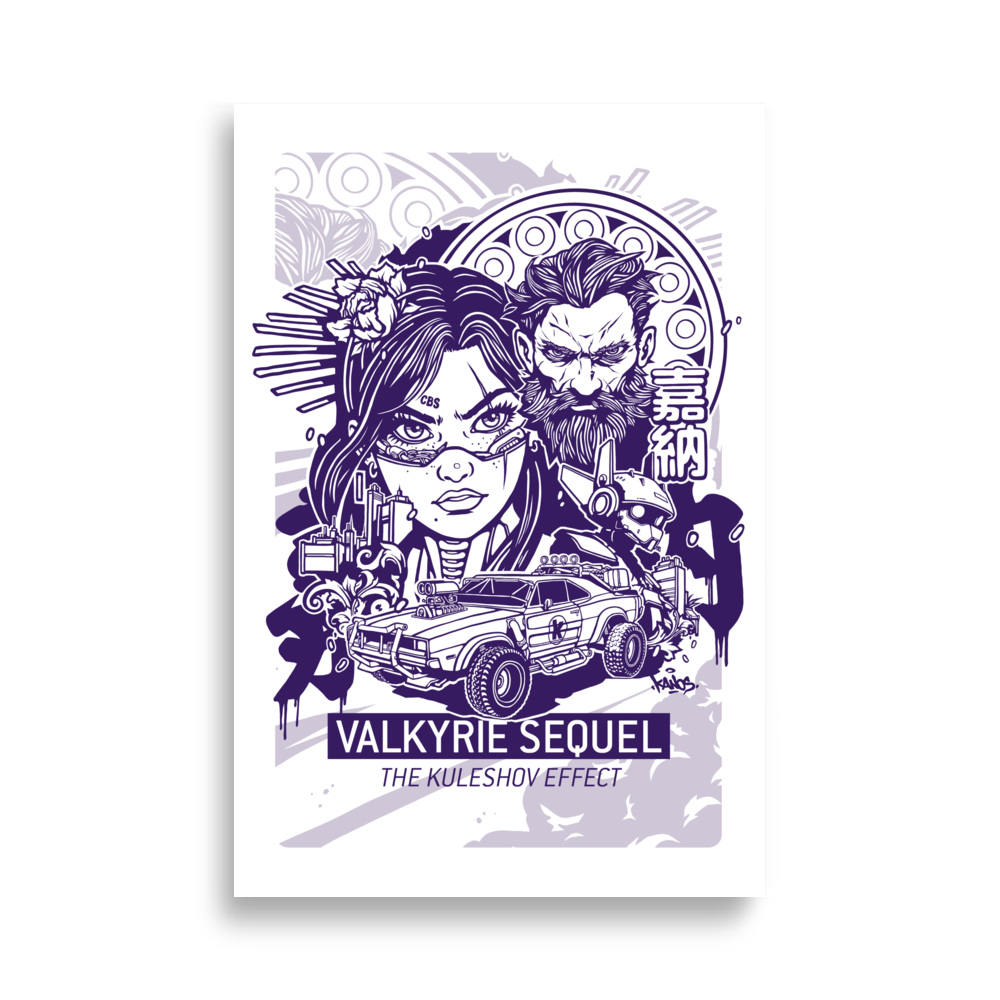
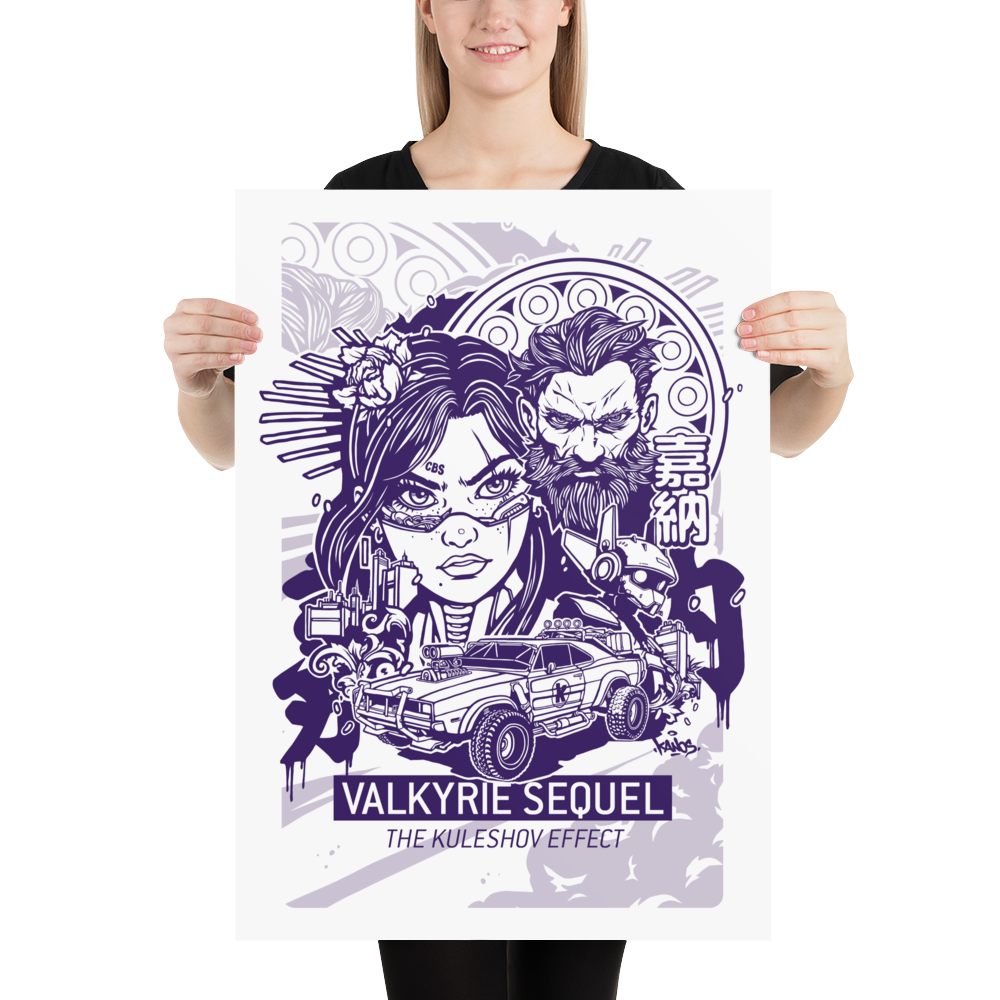
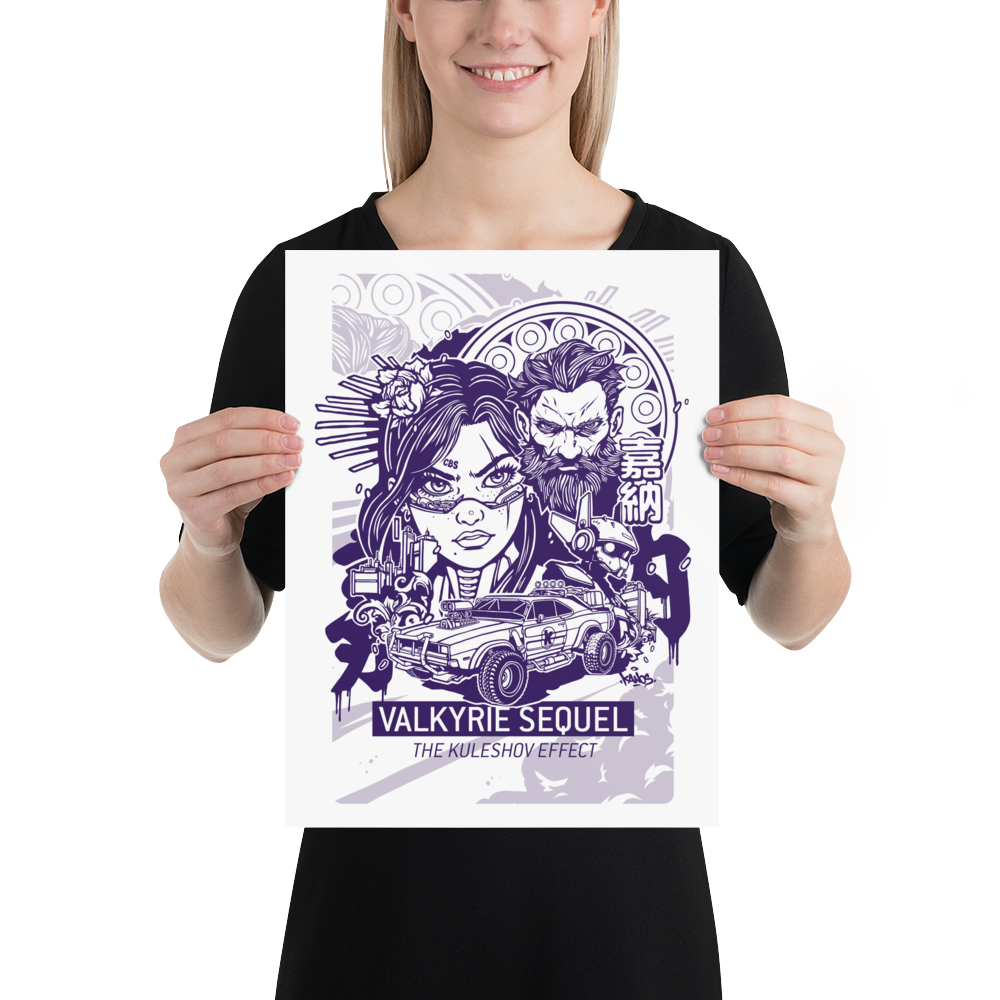
Rather than simply creating another version of the previous artwork, I wanted to imagine what could happen after the original scene. The new Valkyrie is no longer calm and still. She appears alert, focused and aware of something happening beyond the frame. Her gaze suggests the presence of a threat that the viewer cannot fully see. To her right, an antagonist with a weathered face introduces another element of uncertainty. His presence raises questions without providing a clear answer. Is he a threat, an ally, or simply another character caught in the same story? The artwork deliberately leaves this relationship unresolved.
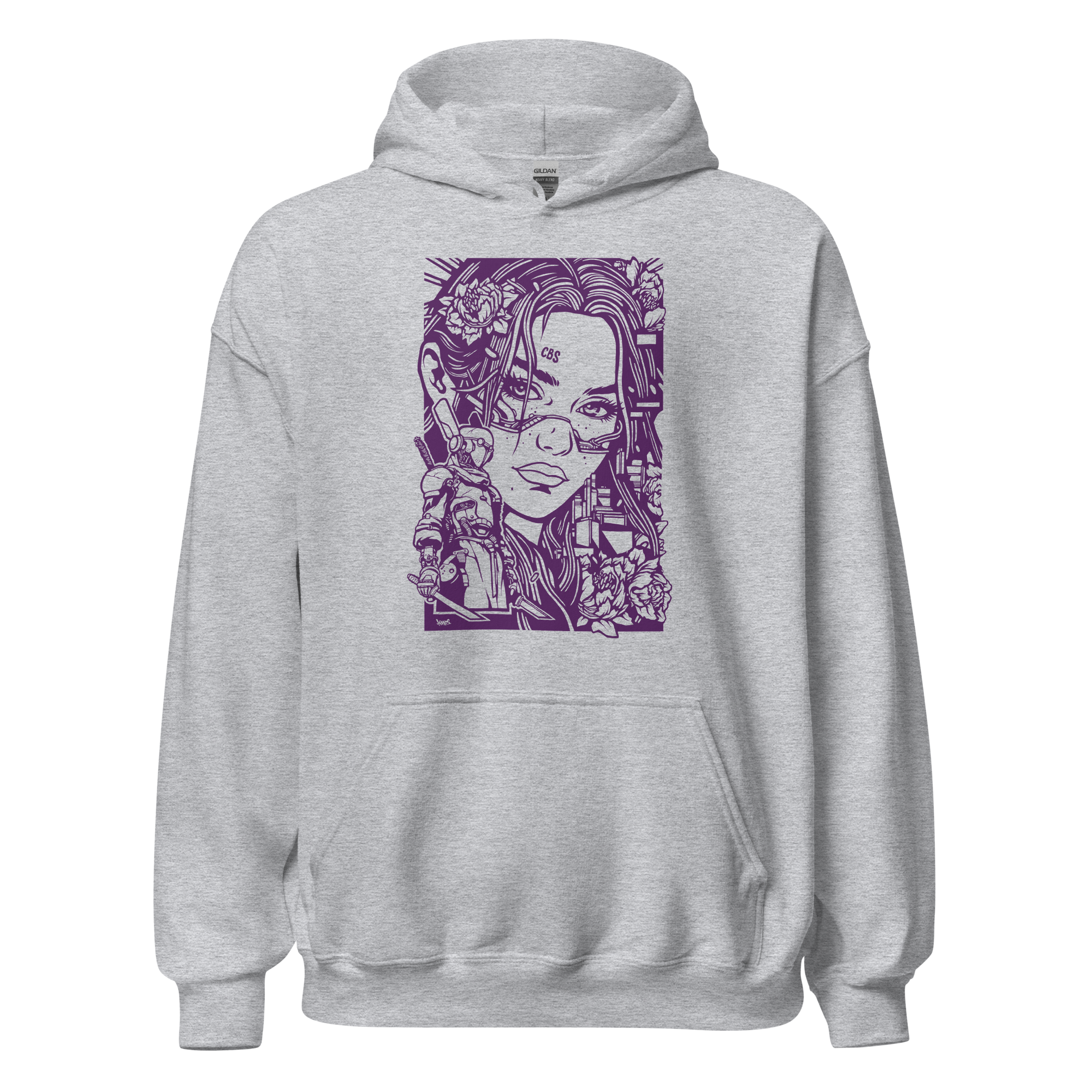
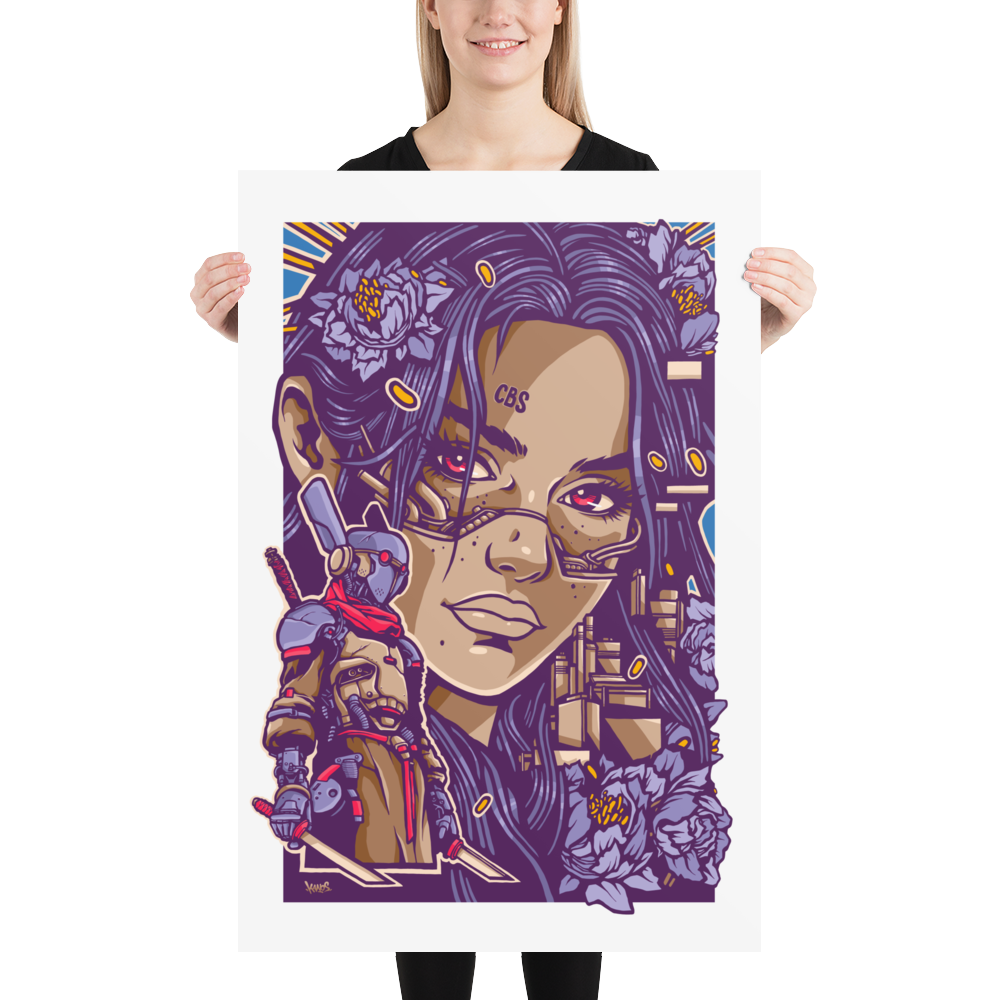
Beside the Valkyrie, her robotic companion remains part of the composition. The character connects the new mural with the visual language of the original artwork while reinforcing one of the recurring themes of my work: the relationship between human identity and technology. At the bottom of the composition, a post-apocalyptic vehicle suggests a journey through a desert landscape. Like a vehicle appearing in a movie scene, it provides another clue without explaining the complete narrative. The viewer is given fragments of a story and invited to construct the missing moments.
THE KULESHOV EFFECT AND VISUAL STORYTELLING
The idea behind Valkyrie Sequel is closely connected to the way cinema creates meaning through editing. A painting normally exists as a single image, but this project treats two different murals as if they were two consecutive frames. The first Valkyrie represented one moment. The second mural changes the way that moment can be remembered. The original painting is no longer visible, yet its disappearance becomes part of the story. Anyone who saw the first mural can mentally place it before the new one, while someone discovering the work for the first time can only imagine what came before.
This relationship between memory and image is central to the project. The wall becomes more than a physical support. It becomes a kind of cinematic space where different moments can coexist through memory. The composition also deliberately resembles a movie poster. It captures a moment of tension without revealing the entire plot. The characters, vehicle and surrounding details function as visual clues, while the missing frames are left to the viewer’s imagination.
BETWEEN HUMANITY AND MACHINE
As with the original Valkyrie, the sequel continues my exploration of the relationship between organic life and mechanical evolution. The central female figure combines human characteristics with a futuristic cyberpunk aesthetic, while the robotic companion introduces another form of technological presence. This contrast between human and machine appears throughout my artistic practice. I am interested in the way technology changes our perception of identity, communication and the future. Cyberpunk imagery provides a natural visual language for exploring these questions because it places human beings directly inside a world shaped by machines, artificial structures and technological transformation.
The artwork also continues the dialogue between organic and mechanical forms that defined the first Valkyrie mural. Decorative lines, human features and organic details interact with hard mechanical structures and futuristic elements. The result is not intended to present technology and nature as simple opposites, but as two forces that increasingly exist together.
THE KANŌ REFERENCE
A discreet reference to Jigorō Kanō is integrated into the composition through the Japanese characters 嘉納, corresponding to the name Kanō. Jigorō Kanō founded the Kodokan and is widely recognized as the founder of modern judo. The reference creates another layer within the image, connecting the artwork to ideas of discipline, movement and strength while remaining integrated into the visual composition rather than functioning as a separate graphic element.
A NEW CHAPTER IN GENEVA
Valkyrie Sequel was created in Geneva as a continuation of the artistic dialogue established through the original Valkyrie mural. The project was made possible through the support and organization of Wall's Street GVA and House of Paint, whose Geneva projects have created opportunities for artists to develop large-scale work in an urban environment. Working on the same wall allowed the project to become more than a new independent mural. The location itself became part of the concept. The disappearance of the first artwork and the arrival of the second created a physical transition between two moments.
This approach reflects one of the reasons I continue to work with large-scale murals. Unlike an artwork contained within a gallery, a mural exists in a real environment and becomes part of the visual memory of a place. Its scale, location and transformation can all contribute to the meaning of the work.
FROM MURAL TO COLLECTIBLE ARTWORK
Valkyrie Sequel brings this cinematic idea beyond the original wall in Geneva. The artwork can be experienced as a color print, a black and white print, or as a wearable design on a hoodie or shirt. Each format offers a different relationship with the image while retaining the identity of the original composition. The print versions allow the viewer to focus on the details, contrasts and visual clues of the mural, while the textile versions transform the artwork into something that can move through different environments. Rather than functioning only as merchandise, these editions extend the life of a mural beyond its original location.
They allow the image to remain connected to the story of the wall while becoming part of a different personal environment.
ABOUT THE ARTIST
Alex Kanos is a French mural artist and visual designer whose work combines Art Nouveau influences, cyberpunk aesthetics, organic forms and contemporary urban culture. His artistic practice explores recurring themes including identity, transformation, technology, memory and the relationship between human beings and the systems they create. Through large-scale murals, paintings and graphic work, Alex develops characters and environments that often exist somewhere between the past and the future. His visual language combines decorative influences with futuristic imagery to create compositions that function both as artworks and as fragments of larger stories.
Valkyrie Sequel / The Kuleshov Effect continues this approach by turning a wall into a sequence. The first image has disappeared, but its memory remains. The second image becomes the next frame. What happened between the two is left deliberately unresolved. The story therefore does not end with the mural. It continues in the imagination of the viewer.