
STREET ART GONESSE FRANCE / From 1999 Graffiti to Public Art
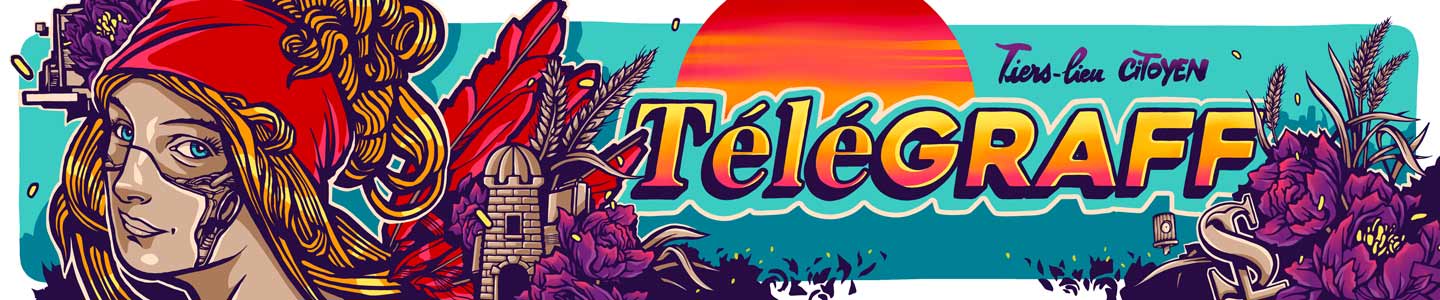
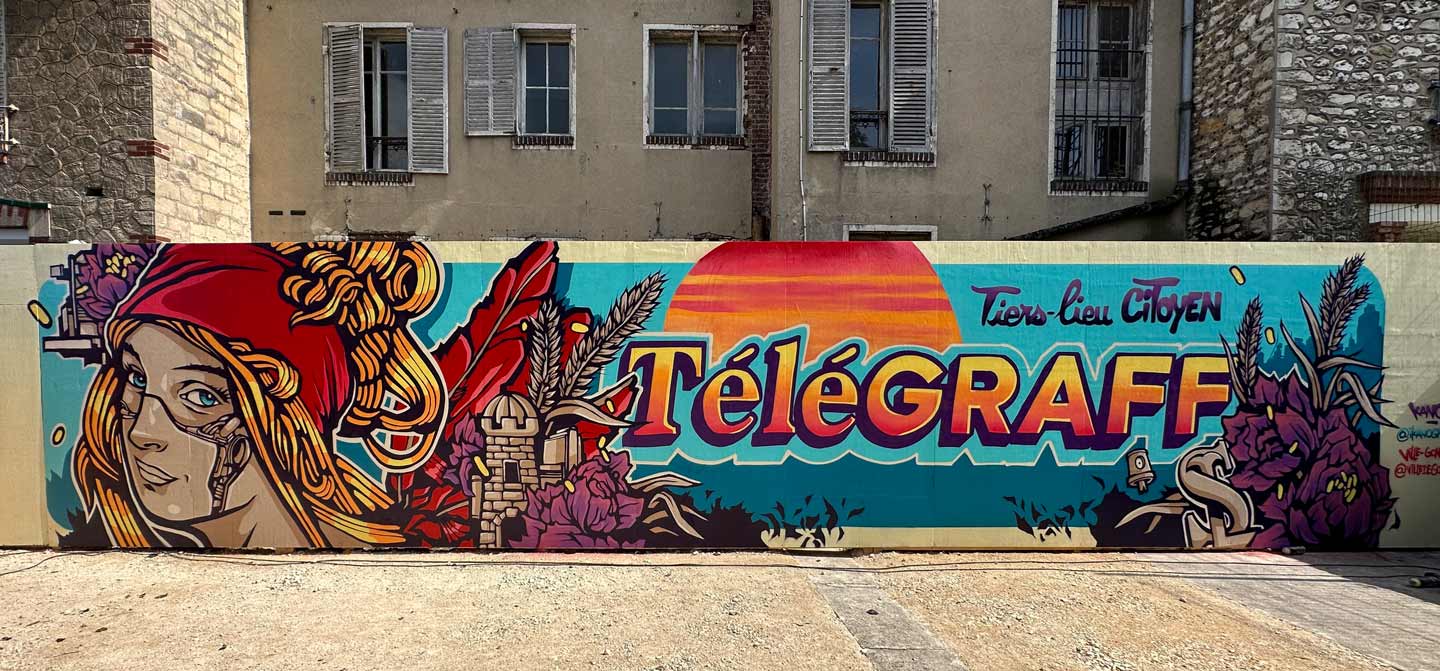
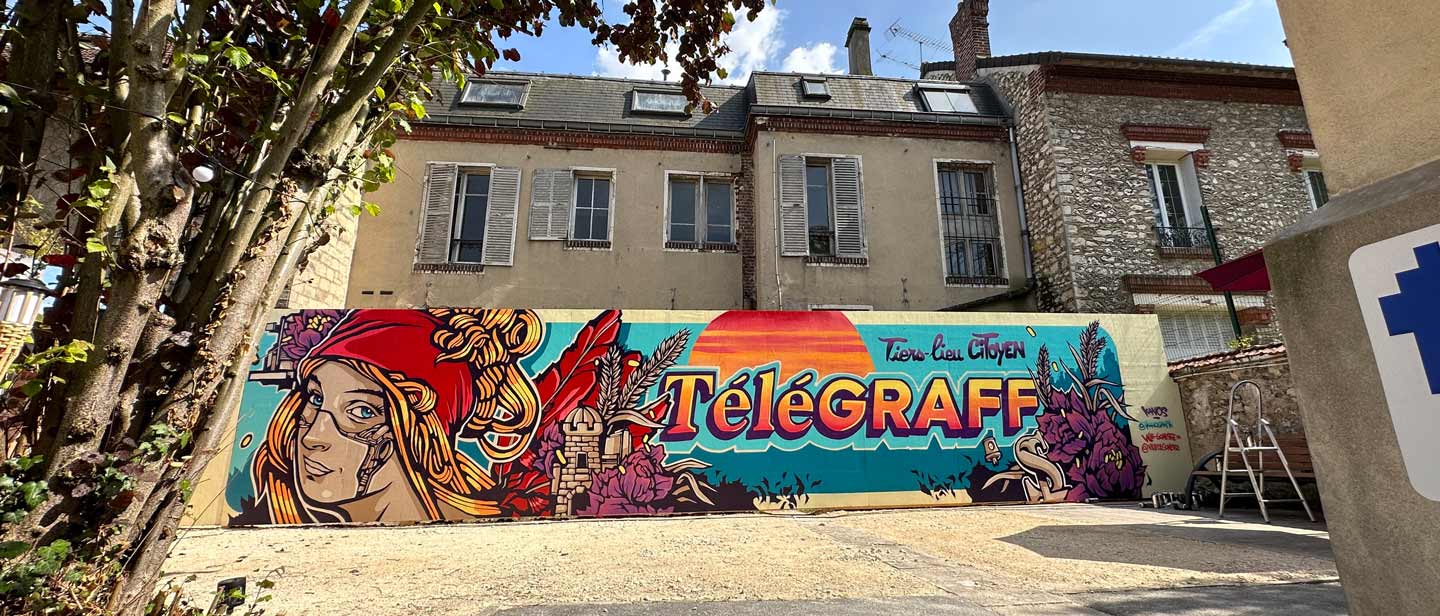
There are murals that mark a career, and there are murals that mark a life. Painting this artwork in Gonesse, France, was unlike any other project I have completed. It was not simply another public commission or another opportunity to create a large-scale mural. It was a return to the place where everything began.
Long before becoming a professional mural artist, before travelling across Europe to paint public artworks, and before founding my artistic practice in 2008, I was a teenager exploring the streets of Gonesse with spray cans, learning through experimentation, making mistakes and gradually discovering my own visual language. More than twenty-five years later, I returned to the same city—not to paint illegally as I had done during my youth, but as an invited artist, commissioned to create a permanent mural for the inauguration of Télégraff, Gonesse’s new cultural third place. For me, it felt like closing a circle.
From My First Graffiti to Public Art
My relationship with graffiti began in 1999. Like many young artists of my generation, I discovered graffiti through curiosity, freedom and the desire to leave a mark on the urban landscape. Gonesse became my first playground, where I experimented with letters, colours and compositions while learning the fundamentals of spray painting.
Those early years were not about recognition or professional ambitions. They were about discovering an artistic identity. Without realizing it at the time, every wall, every sketchbook and every failed attempt was helping shape the work I create today. Many years later, after studying Fine Arts, developing my own artistic universe and producing murals throughout France and abroad, returning to Gonesse carried a special meaning. The city where I had taken my first artistic steps was now inviting me back to contribute to its cultural heritage.
Painting for the Inauguration of Télégraff
The mural was created for the inauguration of Télégraff, a new cultural and community space developed by the City of Gonesse. Designed as a place where creativity, dialogue and local initiatives can meet, Télégraff represents a new chapter in the city’s cultural life.
Creating a mural for such a place immediately felt meaningful. Public art has the ability to transform architecture into shared experiences. Unlike artworks displayed inside galleries or museums, murals become part of everyday life. Residents encounter them while walking to work, students pass by them every day, and children grow up with them becoming familiar landmarks within their neighbourhood.
Knowing that this artwork would become part of that daily environment made the commission particularly rewarding.
Returning to My Roots
Every artist carries places that continue to shape their imagination long after leaving them. Walking once again through streets that had been so familiar during my adolescence inevitably brought back memories. Some buildings had changed. Some places had disappeared. Others remained almost untouched.
Returning as an invited mural artist created an unexpected contrast between past and present. Years earlier, my relationship with walls had been spontaneous, driven only by personal expression. Today, those same skills have evolved into commissioned public artworks created in collaboration with municipalities, cultural organisations and institutions. That evolution reflects not only my own artistic journey, but also the changing perception of urban art itself.
Over the last two decades, graffiti and street art have gradually become recognised as legitimate forms of public artistic expression capable of enriching cities and creating dialogue between communities. Being invited by my hometown to contribute to that transformation remains one of the most meaningful moments of my career.
An Artwork About Transmission
Although every viewer brings their own interpretation to a mural, I wanted this piece to communicate something beyond its visual appearance. For me, it represents transmission. Transmission between generations. Between experience and curiosity.
Between the teenager discovering graffiti for the first time and the professional artist returning years later. The mural is therefore not only connected to my own story. It also belongs to everyone growing up in Gonesse today. Perhaps one young visitor passing through Télégraff will become interested in drawing, painting or creating after seeing this wall. If that happens, the artwork will have achieved something far greater than decoration.
Meeting People Who Helped Shape the City’s History
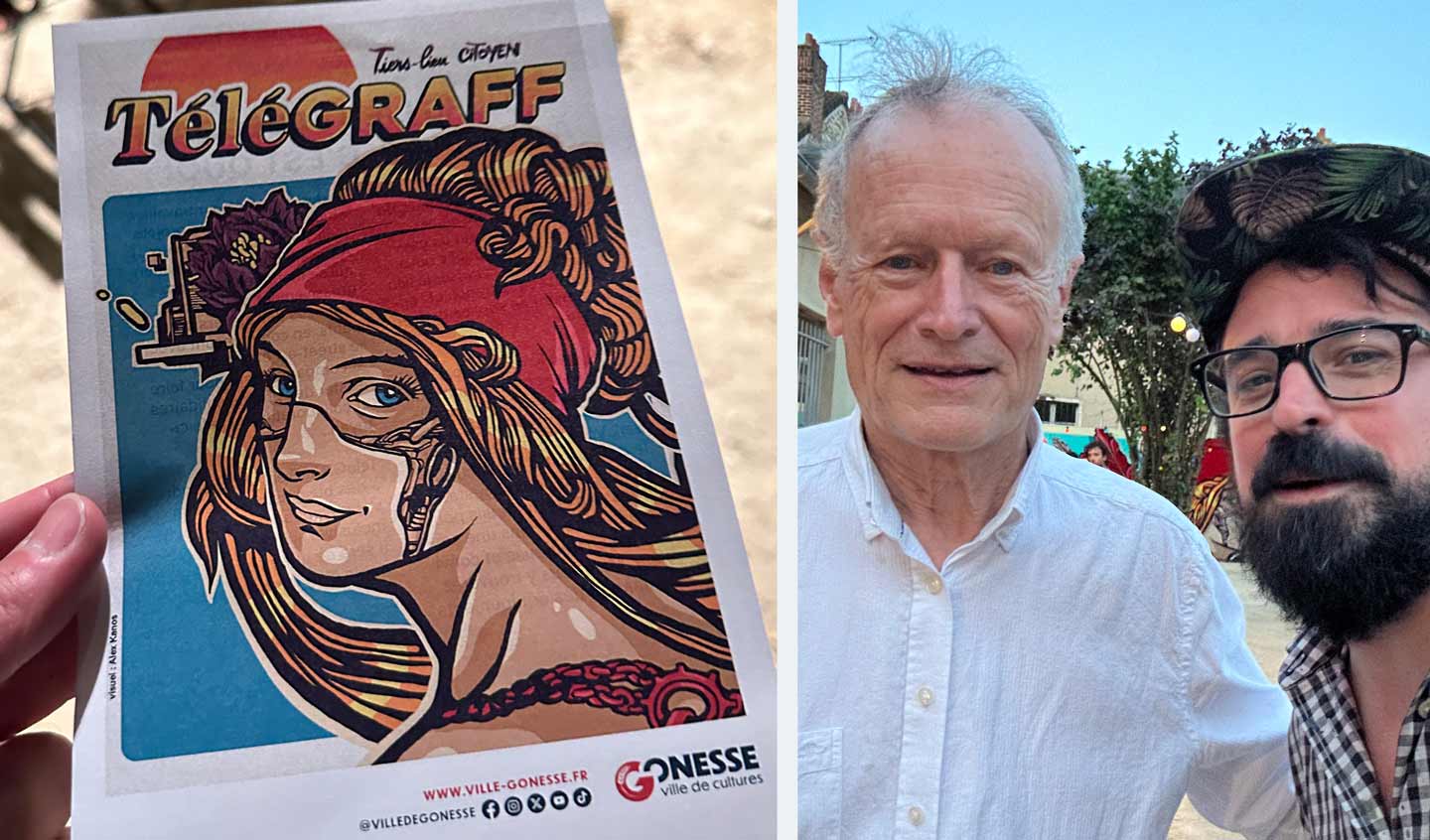
One particularly meaningful moment during the project was meeting Jean-Pierre Blazy, the former mayor of Gonesse. When I was growing up, he was already serving as mayor of the city. Having the opportunity to stand beside him at the end of his final term, holding the event flyer after completing a mural in my hometown, created a powerful sense of perspective. As a child, I could never have imagined that one day I would be invited back by the city to create a public artwork for one of its cultural spaces.
Moments like these remind us that artistic careers are often built over decades through perseverance, continuous learning and countless hours of work that remain invisible to the public.
Creating Public Art for Local Communities
One aspect of mural painting that continues to inspire me is its accessibility. Unlike artworks displayed inside private collections, murals belong to the public space. They become part of the visual identity of a neighbourhood and are freely accessible to everyone. Projects like Télégraff demonstrate how contemporary public art can strengthen connections between artists, residents and local communities while encouraging cultural participation.
For municipalities, investing in public art is also a way of preserving local identity and creating spaces where people feel represented.
A Journey That Comes Full Circle
Looking back, this mural represents far more than a single commission. It brings together many different stages of my life: My first graffiti experiments in Gonesse in 1999 / My Fine Arts education / The creation of my professional studio in 2008 / Years spent painting murals throughout France and internationally and finally, returning to the city where it all began. Every artist has places that remain permanently connected to their story. For me, Gonesse will always be one of them. Returning home as a professional mural artist was not simply a return to a location.
It was the opportunity to see my own journey from a different perspective. Sometimes, the longest journeys do not take us to the other side of the world. Sometimes, they simply bring us back to where everything started.
About Alex Kanos
Alex Kanos is a French mural artist specializing in large-scale public artworks that combine Art Nouveau influences, cyberpunk aesthetics and organic-mechanical compositions. Working throughout France and internationally, his murals explore the evolving relationship between humanity, technology, mythology and memory. Each project is designed specifically for its location, creating artworks that become lasting parts of the urban landscape. If you are interested in commissioning a mural, cultural project or public artwork, feel free to explore the rest of the website or get in touch through the contact page.
Frequently Asked Questions
Where is the mural located?
The mural is located at Télégraff in Gonesse, in the Paris metropolitan area of France.
Why is this mural important to Alex Kanos?
It was painted in the city where he grew up and where he created his very first graffiti in 1999, making it one of the most personal projects of his career.
What is Télégraff?
Télégraff is a cultural third place created by the City of Gonesse to encourage artistic, cultural and community activities.
Who commissioned the mural?
The mural was commissioned by the City of Gonesse for the inauguration of Télégraff.
What themes does the artwork explore?
Beyond its visual composition, the mural reflects ideas of memory, transmission, personal growth and the evolving role of public art within local communities.